Why 360mm Liquid AIOs vs High-End Dual-Tower Air Coolers Matters for South African Builds
If you’ve ever watched your CPU hit thermal limits mid-game on a hot Highveld day… you know the pain. South Africans also buy with reality in mind: power cuts, dust, limited space, and budgets that need to stretch. So when you’re choosing between 360mm Liquid AIOs vs High-End Dual-Tower Air Coolers, it’s not just “cooling vs cooling”. It’s airflow, maintenance, noise, fitment, and long-term reliability. Let’s break it down like a proper tech deep dive. 🔧
360mm Liquid AIOs vs High-End Dual-Tower Air Coolers: The Core Differences, Plainly
Both options can cool high-end CPUs, but they do it differently:
360mm Liquid AIOs: What you actually get
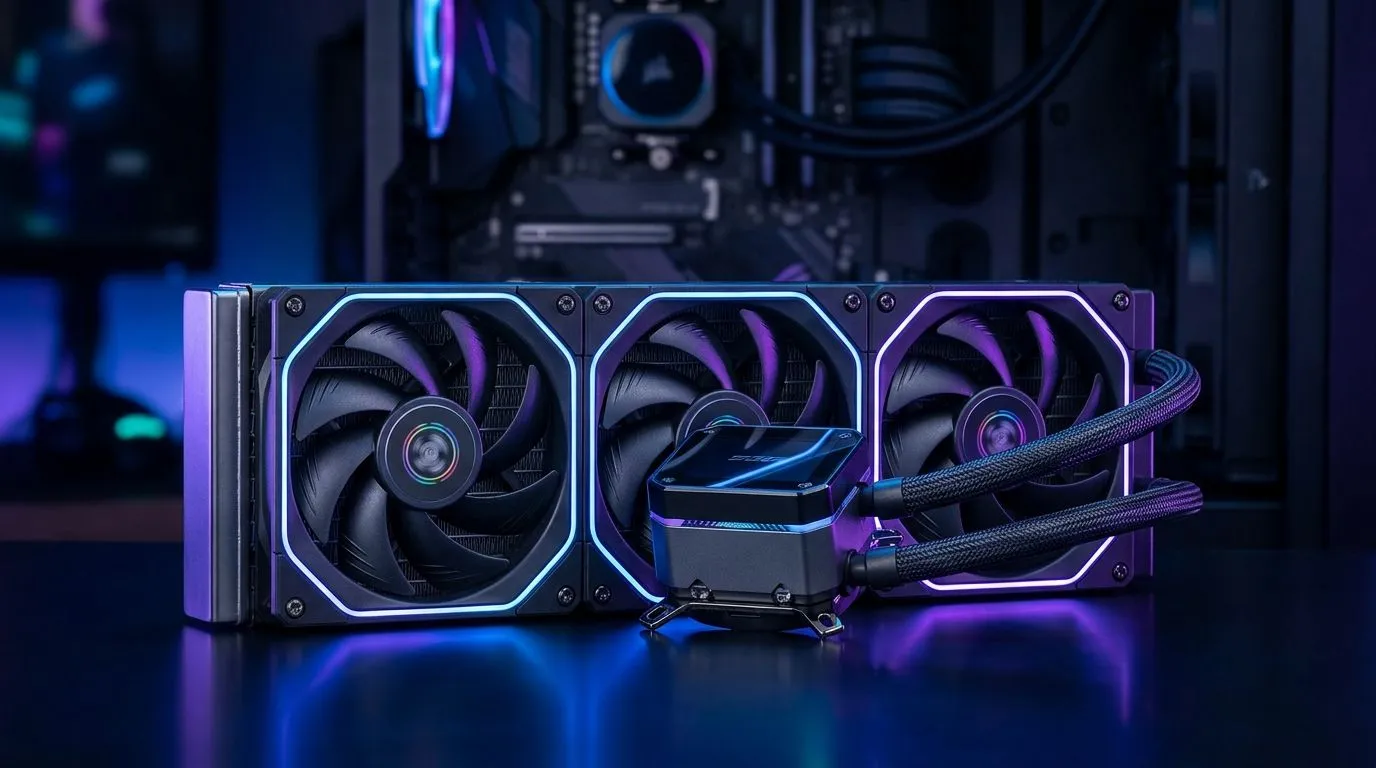
A 360mm liquid AIO uses a larger radiator (and typically three fans) to move heat away from the CPU. The pump handles CPU contact, while the radiator fans handle the rest. In real-world systems, 360mm AIOs often win on keeping temperatures lower under sustained loads, especially in cases with good radiator airflow. 🚀
High-End Dual-Tower Air Coolers: Why they stay popular
A high-end dual-tower air cooler relies on a heavy heatsink stack and multiple heatpipes with front-to-back airflow through the case. The big win is simplicity: no pump to fail, fewer parts that wear, and usually straightforward installation. Also, dust management is often easier to predict.
360mm Liquid AIOs vs High-End Dual-Tower Air Coolers: Performance and Noise in SA Conditions
Performance depends on more than the cooler name. Case ventilation, fan curves, ambient temperature, and whether you’re stress-testing or gaming all matter.
- Gaming: Both can be “good enough” if the case airflow is right and your fan profiles are sensible.
- Sustained CPU loads (streaming, rendering, compiling): 360mm AIOs can be advantageous because they usually have more surface area via the larger radiator.
- Noise: Air coolers can be loud if they need high fan speeds. A 360mm radiator can be tuned quieter by using lower RPM for the same heat rejection… if your case supports it properly.
If you’re building in a smaller case, or you can’t mount a 360mm radiator comfortably, the air cooler often becomes the more practical choice.
360mm Liquid AIOs vs High-End Dual-Tower Air Coolers: Reliability and Maintenance You Should Plan For
This is where many buyers make assumptions.
Liquid AIO realities (and what to watch)
AIOs are generally reliable, but they include more moving parts than air. Think of it like this: you’re trading “simpler mechanics” for “more cooling headroom”. Also, make sure your case supports the radiator size and fan clearance.
Air cooler realities
Air coolers are fewer parts and are usually tolerant of less-than-perfect airflow, as long as you don’t choke the front intake. Clearance is the big enemy: RAM height, motherboard VRM heatsinks, and side panel fit.
Productivity Pro Tip 🔧
"Before you buy a cooler, check your case clearance and motherboard RAM compatibility. Measure your available space for radiator length, fan thickness, and CPU socket height. Then match it to the cooler options on Evetech so you don’t end up with a technically ‘great’ cooler that physically doesn’t fit."
Where 360mm Liquid AIOs Win (and Where Dual-Tower Air Coolers Win)
Choose 360mm Liquid AIOs if…
- You want strong sustained cooling headroom for high-performance CPUs.
- Your case supports 360mm radiator mounting with good airflow.
- You care about quieter operation under load, and you’re willing to tune fans.
Choose High-End Dual-Tower Air Coolers if…
- You prefer simpler systems with fewer components that can fail over time.
- You have a case where radiator fitment is tight or awkward.
- You want easy maintenance and predictable behaviour after dust buildup.
Fitment and Buying Smart: Use Evetech to Compare Options Quickly
Instead of guessing, compare coolers directly using Evetech’s CPU cooler listings. Here are useful starting points so you can filter by cooler type, brand, and radiator size.
Once you see the range side-by-side, it becomes easier to match your case, your CPU, and your preferred sound profile. ✨
Final Take: Which Should You Buy for Your Next SA Build?
If you’re chasing maximum sustained cooling and you can mount it properly, 360mm Liquid AIOs vs High-End Dual-Tower Air Coolers often leans in favour of the 360mm AIO for raw cooling potential. But if you want simplicity, fewer moving parts, and a build that stays consistent with less fuss, a top dual-tower air cooler is still a strong choice.
Either way, don’t skip the boring stuff: case clearance, fan placement, and fan curves. Your cooler can’t fix restricted airflow.
Ready to Find Your Perfect Match?
If you’re building for gaming, streaming, or serious productivity, choosing the right cooler is easier when you can filter by size, type, and brand. Browse Evetech’s tech-ready cooling options and lock in a setup that fits your case and your budget. Explore our CPU cooler range here and get your temperatures under control before the next session.