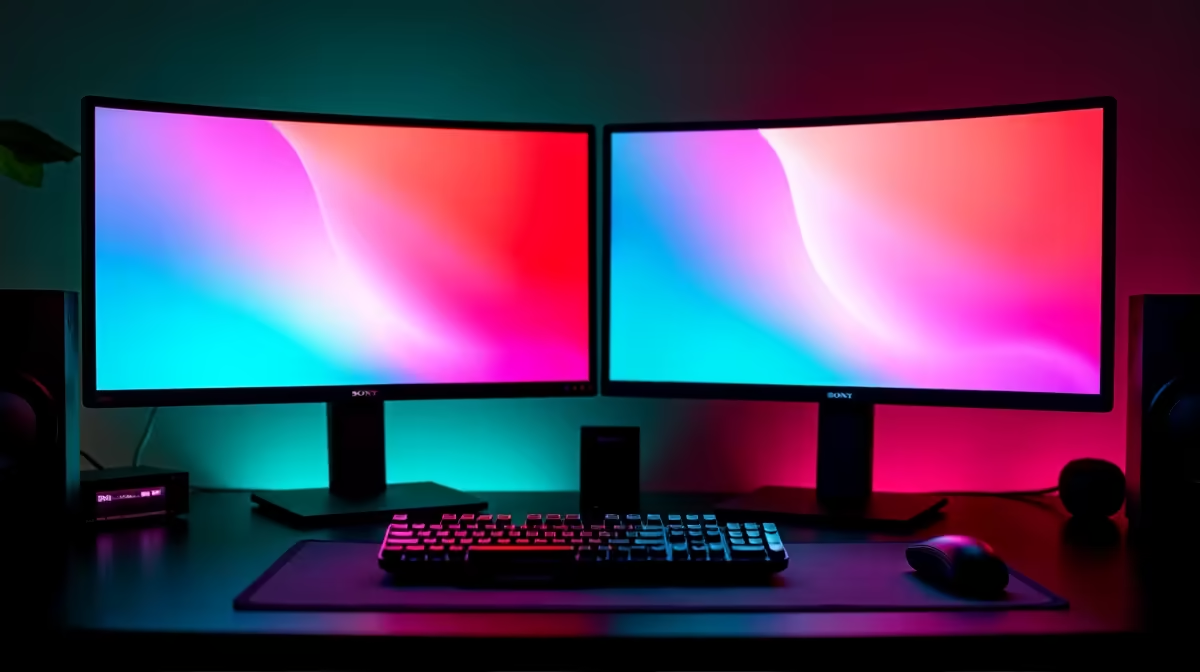
You're staring at two monitor specs online. They look almost identical, but one costs a few thousand ZAR more and boasts "10-bit colour." Is it just marketing jargon, or will it actually make the vibrant streets of Night City look better? Let's cut through the noise. This guide decodes the real-world difference between 8-bit vs 10-bit colour depth, helping you decide if it's a worthy upgrade for your rig or just a pricey gimmick.
What is Colour Depth, Anyway?
Think of colour depth like a massive box of digital crayons. It defines the total number of distinct colours a monitor can display for each pixel. The "bit" number refers to how much data is used for each of the three primary colours: Red, Green, and Blue (RGB).
An 8-bit panel can display 2⁸ (or 256) shades for each primary colour. When you multiply them together (256x256x256), you get the famous 16.7 million colours we’ve seen advertised on PC monitors for years. It's a huge palette and the standard for most content.
A 10-bit panel, however, levels this up significantly. It uses 10 bits per channel, giving you 2¹⁰ (or 1,024) shades for each primary colour. The total? A staggering 1.07 billion colours. 🚀
The 8-bit vs 10-bit Colour Depth Showdown
So, we're talking about 16.7 million versus over a billion colours. On paper, the difference is massive. But can your eyes even see it? In many situations, the answer is a surprising yes... if you know where to look.
The Visual Difference: Gradients and Banding
The most obvious benefit of a higher colour depth is in smooth gradients. Think of a sunset in Red Dead Redemption 2 or the subtle shadows in a dark scene from Alan Wake 2. On an 8-bit screen, you might notice "banding"—visible, distracting steps or lines where the colour should transition seamlessly.
A 10-bit panel has 64 times more colour information to work with, allowing it to render these transitions flawlessly. The result is a more realistic, lifelike, and immersive image, which is a key reason many premium gaming monitors are moving towards this standard.
The "Fake" 10-bit: Enter 8-bit + FRC
Here’s where the marketing specs get tricky. Many affordable "10-bit" monitors aren't true 10-bit. Instead, they use a clever technology called Frame Rate Control (FRC).
8-bit + FRC works by rapidly flickering a pixel between two adjacent colours. Your eye's persistence of vision blends them, perceiving a shade that the panel can't physically produce on its own. It's an effective simulation that gets you very close to a true 10-bit experience, eliminating most banding without the cost of a native 10-bit panel.
Check Your Whole Signal Chain! 🔧
Owning a 10-bit monitor is only half the battle. To actually see those billion colours, your graphics card (most modern NVIDIA and AMD cards do), your display cable (use DisplayPort 1.4 or better), and the game or application itself must all support and be configured for 10-bit output.
So, Who Actually Needs 10-bit Colour?
The real question is whether the difference in colour depth is worth the extra Randelas for your specific needs. Let's break it down.
For the Competitive Gamer 🎮
If your main diet is fast-paced, competitive titles like CS2, Valorant, or Apex Legends, then 10-bit colour is a low priority. Here, high refresh rates (144Hz+) and lightning-fast response times are what give you the edge. An 8-bit panel is more than enough to frag out, and you should rather invest in features like the immersion offered by curved monitors for a wider field of view.
For the Visual Storyteller & Creator 🎨
This is where 10-bit colour truly shines. If you're a photographer, video editor, or digital artist, colour accuracy is non-negotiable. A true 10-bit panel allows for incredibly fine control over colour grading and retouching, ensuring that the final product is free of banding and looks exactly as intended. When working on high-resolution projects, pairing this with crisp 4K monitors is the professional standard.
For the Immersive RPG & Cinema Fan ✨
Here lies the sweet spot for most gamers. If you love getting lost in the breathtaking worlds of single-player epics or enjoy watching 4K HDR movies, a 10-bit panel (even an 8-bit+FRC one) makes a noticeable difference. The richer colours, deeper blacks, and smoother gradients seriously boost immersion. Even some high-end portable monitors are adopting this tech for incredible visuals on the go.
Making the Right Choice
Ultimately, the debate of 8-bit vs 10-bit colour depth comes down to your primary use case and budget. For pure competitive gaming, stick with a fast 8-bit panel. For professional creative work, true 10-bit is essential. For everyone else who loves beautiful, immersive visuals, a modern 8-bit+FRC panel offers the perfect balance of performance and price. Just be sure to pair your new screen with the right monitor accessories to get your setup just right.
Ready to See the Difference?
Now that you can decode the specs, you can choose the perfect display for your rig and budget. Explore the best PC monitor deals at Evetech and find a screen that truly brings your games to life.