

AIO Liquid 240mm Setup and Configuration: Complete Tutorial
AIO Liquid 240mm Setup and Configuration. Clear setup instructions with SA-specific considerations, troubleshooting tips & recommended components.
Read moreAdaptive lumbar support or fixed lumbar support: learn which chair technology reduces back pain, boosts posture, and fits your workstyle. This guide compares comfort, adjustability, durability, and value to help you choose the best support for long sessions. 🪑🔧
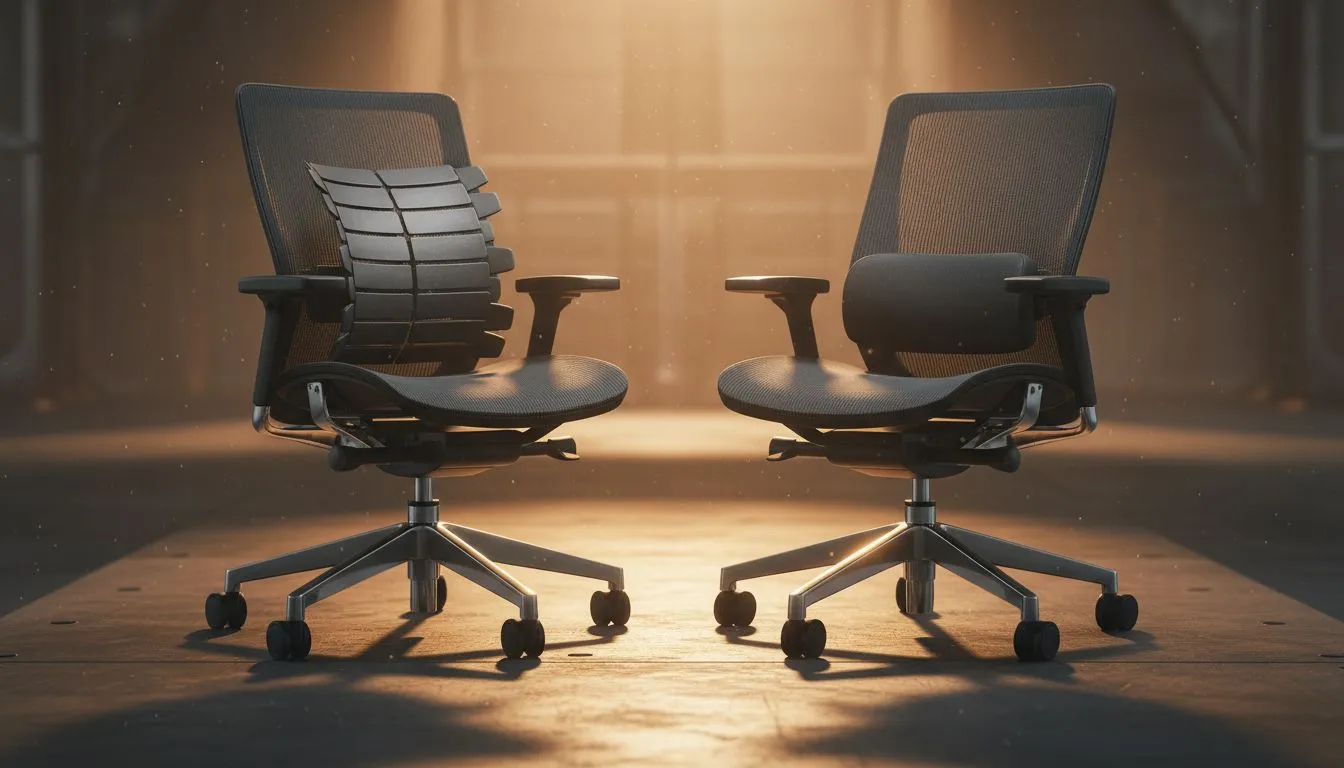
Sitting for eight hours straight in a Johannesburg office or a home setup in Cape Town is tough on your spine. Whether you are grinding through ranked matches or tackling a heavy workload, your lower back eventually feels the strain. Choosing between adaptive lumbar support vs fixed support is the decision that dictates your long-term spinal health. Let’s find out which one keeps you pain-free. 🔧
Fixed lumbar support is the traditional approach to ergonomics. These systems use a static curve built into the frame of the backrest. It provides a consistent point of pressure to maintain the natural "S" curve of your spine. For many users, a well-designed range of office chairs with fixed support offers excellent stability.
The main drawback is the lack of adjustability. If you are taller or shorter than the "average" user, the fixed curve might hit your back in the wrong place. However, if the chair matches your height, it offers a reliable foundation that never loses its shape... making it a cost-effective choice for many South Africans.
Adaptive systems are designed to move as you move. Instead of a rigid plastic or foam piece, these chairs use spring-loaded or tension-based mechanisms. When you lean forward to focus or recline to take a call, the support shifts its angle and depth. Brands like HBADA Office Chairs have mastered this by creating split-back designs that respond to micro-movements.
This dynamic response reduces the risk of "static loading"... a common cause of muscle fatigue. By constantly adjusting to your posture, adaptive support ensures that your lower back is never left hanging without reinforcement. ⚡
To maximise the benefits of any lumbar support, ensure your hips are pushed all the way back against the backrest. If there is a gap between your tailbone and the chair, the lumbar support cannot do its job properly. This simple adjustment can reduce lower back pressure by up to 40% during long sessions.
If you are looking for a straightforward, durable solution, fixed support is often the way to go. High-quality options from Enova Office Chairs prove that you do not always need complex moving parts to achieve comfort. These chairs focus on premium mesh and sturdy frames that provide reliable support for years.
However, if you struggle with existing back pain or spend upwards of ten hours a day seated, the investment in high-end tech is worth it. Hinomi Office Chairs represent the pinnacle of this category... offering multi-segment support that targets different areas of the lumbar region simultaneously. 🚀
The "better" choice depends entirely on your habits. Fixed support is excellent for those who sit with "perfect" posture and rarely move. Adaptive support is the clear winner for fidgeters, gamers, and those who switch between tasks frequently. In the South African market, where value for money is key, choosing a chair that matches your body type is more important than just picking the one with the most features.
Investing a few extra Rands now can save you thousands in physio bills later. Whether you prefer the stability of a fixed curve or the flexibility of an adaptive system, the goal remains the same... keeping your spine happy so you can stay focused on the win. ✨
Ready to Find Your Perfect Match? The debate between fixed and adaptive support is all about your personal comfort, but your back deserves the best quality available in South Africa. Explore our massive range of office chairs and find the perfect ergonomic partner to upgrade your setup today.
Adaptive lumbar support automatically adjusts lumbar pressure to fit your spine, improving posture and comfort. Useful for long sessions and in ergonomic chairs lumbar comparison.
Fixed lumbar support is a set shape or pad that doesn't move. It offers simplicity and consistent support but less adjustability than adaptive lumbar support.
Adaptive lumbar support often reduces back pain by matching your movement, but fixed lumbar support chairs can work if the fit is correct and firm.
Yes, chairs with adaptive lumbar support or smart lumbar support chairs typically cost more due to sensors and mechanics, but value depends on use.
Moving parts in adaptive systems can mean more wear, while fixed designs are simpler and often more durable under heavy use.
Mostly no—upgrading fixed lumbar support to adaptive is uncommon; consider buying a chair with adaptive lumbar or add external lumbar cushions.
Prioritize comfort, adjustability, warranty, and compatibility with your body. Check ergonomic chairs lumbar comparison reviews and trial if possible.
AIO Liquid 240mm Setup and Configuration. Clear setup instructions with SA-specific considerations, troubleshooting tips & recommended components.
Read more
Setting Up DDR5 64GB Kit. Tested & verified settings for best FPS and visual quality on SA hardware budgets.
Read more
Overwatch 2 Setup Guide Gamers. Clear setup instructions with SA-specific considerations, troubleshooting tips & recommended components.
Read more
R and RStudio on Mac: Data Science Setup Guide. Clear setup instructions with SA-specific considerations, troubleshooting tips & recommended components.
Read more
NVIDIA Broadcast Setup with GPU: Streamer Guide. Clear setup instructions with SA-specific considerations, troubleshooting tips & recommended components.
Read more
Core Ultra 7 265K Temperature Guide: Normal Range. Complete product range with SA pricing, key specs & recommendations for different budgets.
Read more
AMD RX 9050 XT: Rumoured Specs, Price & Release. SA-focused analysis with local pricing data, real-world insights & actionable buying advice.
Can RTX 4080 Super Run AI Workloads for SA Developers Detailed answer with SA data, expert analysis & practical recommendations for local buyers.
Can RTX 4090 Run AI Workloads for SA Developers Detailed answer with SA data, expert analysis & practical recommendations for local buyers.
Top Settings for Intel Arc B580 at Ultrawide 1440p picks evaluated on performance, value & SA availability with current Rand pricing from Evetech.

RTX 4060 CS2 Low Settings at 1080p: FPS Results. Real-world benchmark data, FPS numbers & performance analysis. What SA gamers can actually expect.

Visual Artifacts: Possible GPU Issue Issue #1. Diagnosis steps, proven fixes & when to seek professional help. SA-specific support info included.

Can the RTX 4090 Handle 1440p 144Hz Gaming. Performance testing verdict with real data & practical recommendations for SA buyers.

Top ASUS GPU Under R15000 picks evaluated on performance, value & SA availability with current Rand pricing from Evetech.
GTA 6 Max Settings on RTX 5070. Tested & verified settings for best FPS and visual quality on SA hardware budgets.
Cyberpunk 2077 Max Settings on RTX 5080. Tested & verified settings for best FPS and visual quality on SA hardware budgets.
Starfield Max Settings on RTX 5070 Ti. Tested & verified settings for best FPS and visual quality on SA hardware budgets.
Top RTX 5090 Under R5000 picks evaluated on performance, value & SA availability with current Rand pricing from Evetech.