A camera that pings your phone every time a branch sways or a cat crosses the yard quickly becomes a camera you ignore, which defeats the point of having it. AI detection in security cameras fixes that by working out what actually triggered the motion: a person, a vehicle, or a delivered package, rather than wind, shadows, or pets. For a typical SA home with a yard, that difference is what makes the alerts worth reading.
Quick Answer
AI detection classifies what caused motion into categories like person, vehicle, and package, so the camera only alerts you to the things that matter and ignores pets, swaying trees, and headlights. On-device AI does this in under a second and keeps working when the internet drops, which suits SA homes well.
What the camera is actually deciding
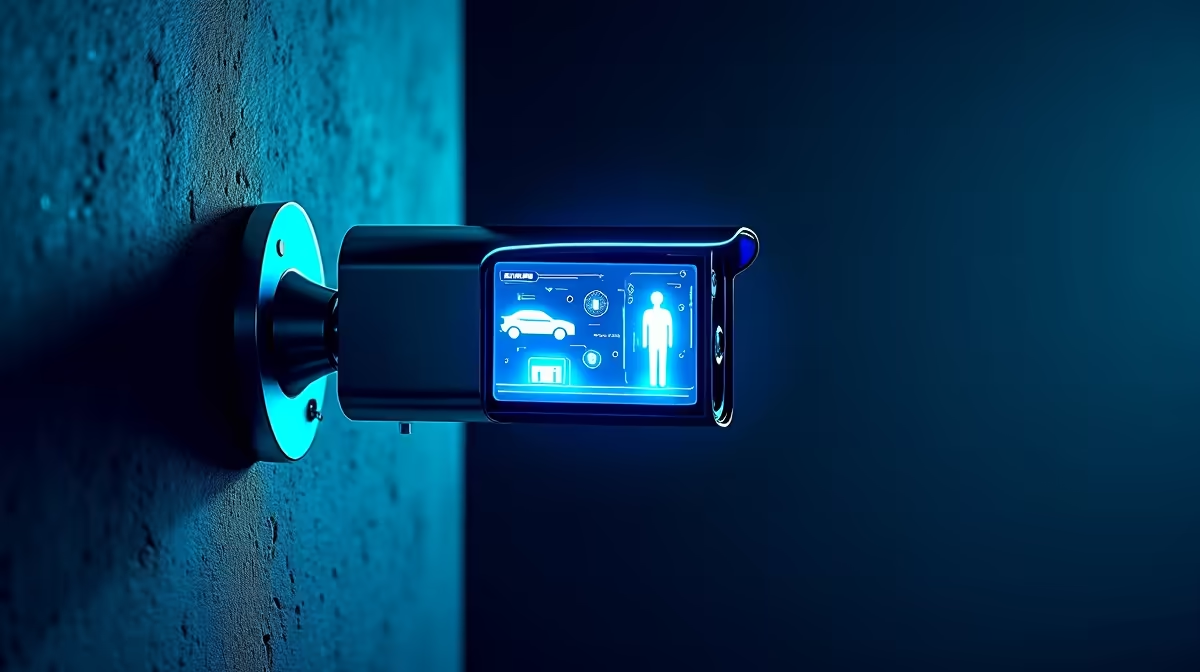
A basic motion camera fires on any pixel change. A swaying branch, a passing cat, a cloud shadow moving across the lawn, all of it counts as motion, and all of it lands on your phone. AI detection adds a layer that classifies the event before deciding whether to alert you. It asks whether the moving thing is a person, a vehicle, or a package, and discards the rest.
That classification is what cuts the noise. Industry figures put false-alert reduction from human and vehicle detection in the 40 percent range upward, with the strongest systems claiming far higher. The practical effect at home is that a tree moving in the wind stops being an alert, because the camera knows it is not a person.
The three alert types that matter
The categories are not marketing labels, they map to different real-world events you want handled differently.
Person detection
This is the core one for security. The camera flags a human figure at the perimeter and ignores the animal traffic that fills most yards. For a property with a fence line, person detection on the boundary is the filter that turns a flood of motion pings into a handful of meaningful ones.
Vehicle detection
Useful for a driveway or street-facing camera, this separates a car pulling in from a person walking past. It also stops passing headlights at night, a notorious source of false triggers, from waking your phone every few minutes.
Package detection
This watches for a delivery being left and alerts you when a parcel appears, which matters for anyone whose deliveries sit at the gate or door. It is the feature aimed squarely at porch and gate theft.
On-device versus cloud, and why it matters in SA
The bigger decision is where the AI runs. Cloud AI sends footage to a server to classify, which can be very accurate but depends on a live connection and often a subscription. On-device AI runs the classification on a chip in the camera itself: the alert fires in under a second, nothing leaves the device, and it keeps working when the line goes down.
For South African conditions, on-device detection has a clear edge. It does not rely on uninterrupted connectivity, it avoids the privacy question of footage leaving your home, and it usually skips the monthly fee. When you compare cameras in the smart home and security range at Evetech, checking whether detection is on-device is worth more than chasing the highest megapixel number. The smaller add-ons like mounts and storage that go with a camera setup tend to sit in the accessories best sellers list.
Detection zones and the settings that sharpen it
AI classification gets you most of the way, but the configuration around it does the rest. Detection zones let you draw the part of the frame the camera cares about, so a street-facing camera ignores the public pavement and only reacts inside your boundary. Pairing person detection with a tight zone is what turns a busy view into a quiet, meaningful alert stream.
Sensitivity is the other dial. Set it too high and even classified events flood in; too low and you miss the things you wanted. The practical approach is to start moderate, watch what gets through over a few days, and tighten from there. AI does the heavy lifting of deciding what an object is, but you still tell it where to look and how eager to be.
Where the footage is stored
Detection and storage are separate decisions worth keeping apart. A camera can classify on-device yet still push recordings to the cloud, or it can store locally to a card or a network recorder. For privacy and for avoiding ongoing fees, local storage pairs naturally with on-device detection, keeping both the thinking and the footage inside your home.
Lighting and night performance
AI detection is only as good as the image it sees, and night is where cheaper cameras fall down. A camera that classifies people perfectly in daylight can struggle in the dark if its low-light sensor or infrared is weak, so check how it performs after sunset rather than only in the showroom-bright sample clips. For perimeter security, night is precisely when you need the detection working.
Pet and animal filtering
Closely related to person detection is the ability to separately classify animals. Many current on-device AI cameras distinguish between humans, vehicles, pets, and general wildlife. For SA properties with dogs, chickens, or regular wildlife movement along perimeter walls, enabling a pet or animal category and setting it to silent mode, where it logs the event without alerting, keeps the alert stream clean without discarding every non-human movement entirely.
Frequently Asked Questions
How is AI detection different from normal motion detection?
Normal motion detection fires on any change in the image, including wind, shadows, and pets. AI detection classifies the cause first and only alerts you to chosen categories like person, vehicle, or package, which removes most false alerts.
Does AI detection need a subscription?
It depends on where the AI runs. On-device detection usually needs no subscription because the classification happens on the camera. Cloud-based detection often requires a monthly plan because the processing runs on the provider's servers.
Is on-device or cloud detection better?
Cloud can be marginally more accurate, but on-device wins on speed, privacy, and reliability, firing in under a second and working when the internet is down. For homes where connectivity is not guaranteed, on-device is the safer default.
Can it tell the difference between my pet and a person?
Yes, that is the main job. Person detection is designed to flag humans and ignore animal movement, which is why it cuts the constant false alerts that pets and yard wildlife otherwise generate.
Smarter alerts start with a camera that knows the difference between a person and a passing cat. Browse the smart home and security range at Evetech to find AI-detection cameras suited to a South African home.