Quick Answer
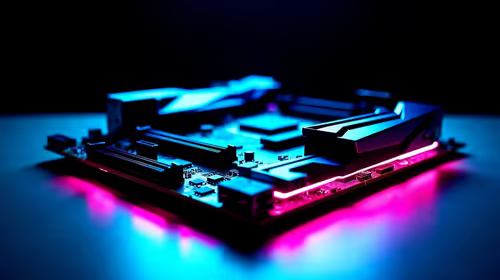
Before you order, confirm four things: CPU socket, chipset, RAM type and form factor. Today's mainstream platforms are AMD AM5 (Ryzen 7000-9000) and Intel LGA1851 (Core Ultra), both DDR5 only. AM4 and DDR4 are end-of-life for new builds. Match these and the board drops straight in; miss one and the parts simply will not work together.
The compatibility checklist that prevents returns
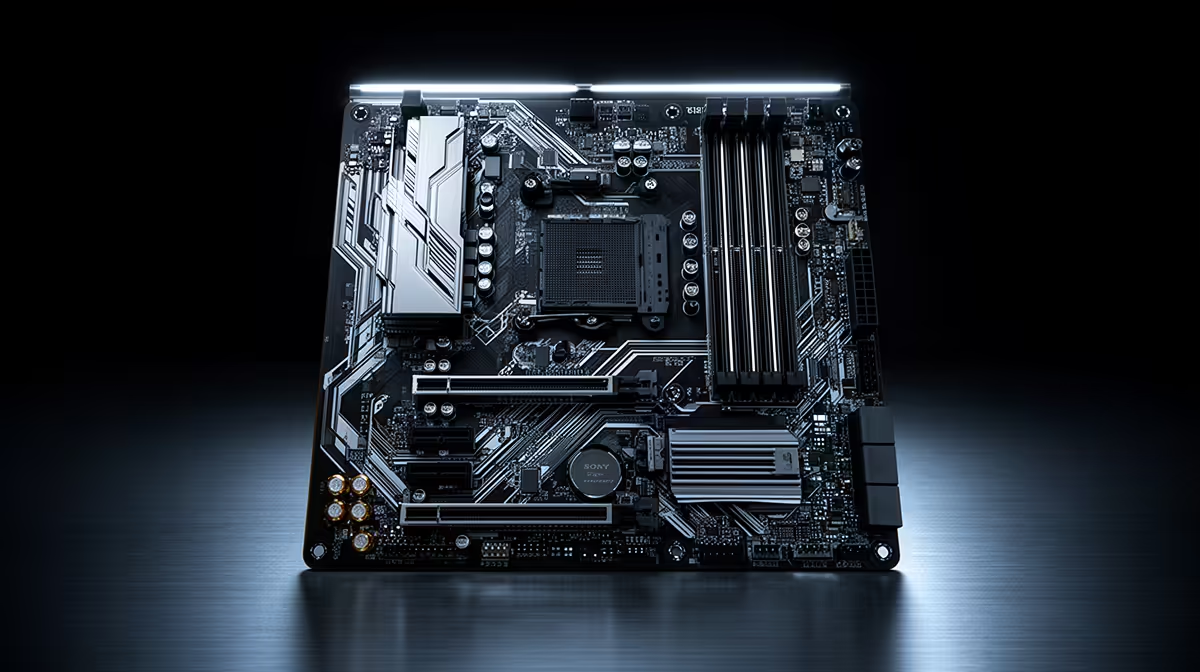
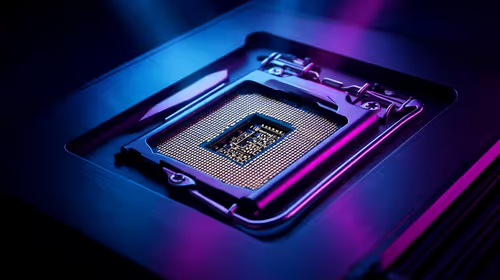
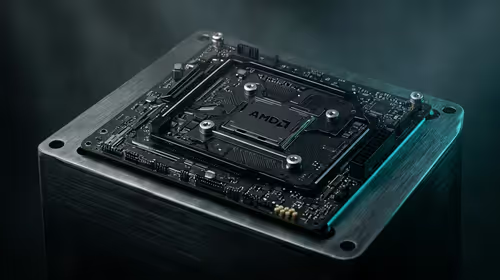
Socket first — AM5 for current Ryzen, LGA1851 for Core Ultra; they are not interchangeable. Then chipset and RAM: every current platform is DDR5, so old DDR4 kits will not fit. Confirm the form factor (ATX, Micro-ATX, Mini-ITX) fits your case, and check the BIOS supports your exact CPU — a stocked board here usually ships ready.
Choosing the right tier for a typical SA setup
A B650/B850 (AMD) or B760/B860 (Intel) board in the R2,800-R5,500 band covers nearly every gaming build. Reserve X870 or Z890 for heavy overclocking or workstation I/O. Count what you actually need: the number of M.2 slots, USB-C ports, and whether you want Wi-Fi 6E built in. VRM quality matters for a Ryzen 9 or Core Ultra 9; for a six- or eight-core chip almost any B-tier board is fine.
Memory, M.2 and SA buying notes
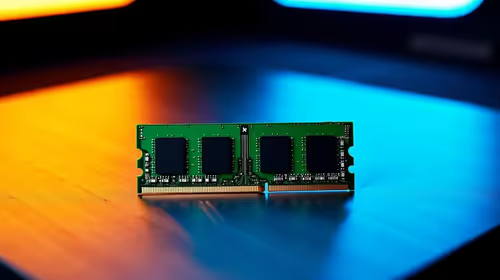
DDR5-6000 CL30 is the gaming sweet spot on AM5; check the board's QVL or buy a kit stocked alongside it. Two or three M.2 slots future-proof storage. Update the BIOS if you pair a brand-new CPU with an older board revision. Stick to brands with proper South African distribution so RMA stays painless if something fails inside warranty.
FAQ
How do I check CPU and motherboard compatibility?
Match the socket and chipset to your CPU, confirm the BIOS version supports it, and check the RAM type — all current boards are DDR5. Form factor must also fit your case.
Do I need an expensive X870 or Z890 board?
Only for serious overclocking or workstation I/O like USB4 and multiple Gen5 slots. For gaming, a B-tier board (B650/B850 or B760/B860) delivers the same gaming performance for far less.
What RAM should I pair with a new board?
DDR5-6000 CL30 is the sweet spot for AM5 gaming; Intel platforms are flexible around DDR5-6000 too. Check the board's QVL or buy a kit validated for it.
chipset, DDR5 RAM and form factor before checkout, and verify the BIOS supports your exact CPU — a B-tier board covers nearly every gaming build.