

Complete Guide: Setting Up AIO Liquid 420mm
Setting Up AIO Liquid 420mm. Tested & verified settings for best FPS and visual quality on SA hardware budgets.
Read moreAMOLED vs LCD smartwatch: Discover which screen wins outdoors — sunlight clarity, battery tradeoffs, and practical tips to boost readability. ☀️⌚
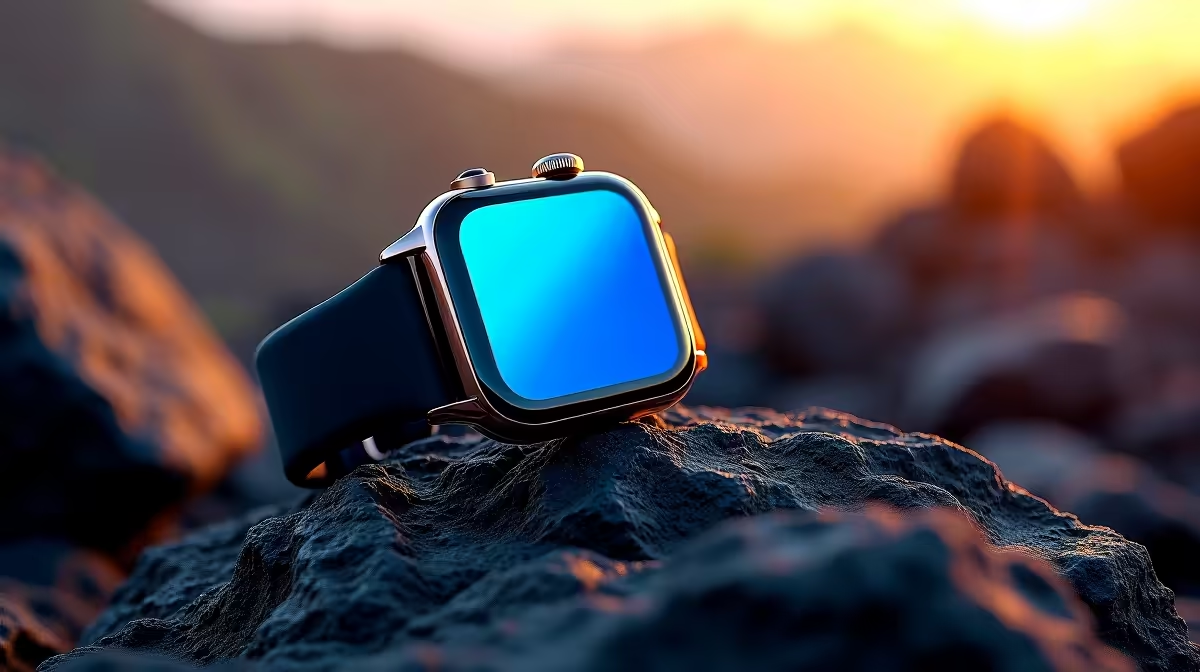
Ever tried checking your notifications during a bright Saturday braai, only to see a dark, reflective smudge on your wrist? We’ve all been there. In the harsh South African sun, the AMOLED vs LCD smartwatch: Outdoor visibility guide isn't just about specs... it’s about usability. Choosing the wrong screen tech can turn your high-tech wearable into a glorified bracelet the moment you step outside. ☀️
When you are out hiking or hitting the streets of Sandton, ambient light is your biggest enemy. Traditional Liquid Crystal Displays (LCD) rely on a backlight that shines through layers of crystals. This often struggles to compete with direct sunlight. If you are looking for high-performance gear, you can explore our full range of smartwatches to see how modern brands tackle this issue.
On the other hand, AMOLED (Active Matrix Organic Light Emitting Diode) screens are different. Each pixel produces its own light. When a pixel is off, it is truly black. This creates incredible contrast. In an outdoor visibility guide context, contrast is often more important than raw brightness. It allows you to distinguish text from the background even when the sun is at its peak.
To win the battle against glare, you need "nits"... a measurement of luminance. Most mid-range LCDs hover around 400 to 500 nits. High-end AMOLED panels can soar past 1000 nits. If you want premium visibility without breaking the bank, you should check out the latest Promate smartwatch models that balance peak brightness with energy efficiency.
Always look for a "High Brightness Mode" or "Auto-Brightness" setting in your watch menu. This allows the sensor to boost the display to its maximum capacity specifically when you step outdoors, saving battery life when you are back in the shade.
Budget is always a factor for South African tech enthusiasts. While AMOLED is superior for outdoor clarity, LCD technology has become incredibly efficient and affordable. If you are a casual user who spends most of your time in an office or gym, you might find that affordable smartwatches under R1000 offer more than enough visibility for your daily needs.
LCDs often provide a more consistent "Always-On" experience at a lower price point. However, if you are an avid runner or cyclist, the investment in an AMOLED panel is worth every cent to ensure you can read your heart rate at a glance. 🏃♂️
If your priority is a vibrant display that pops even in the middle of a Karoo summer, AMOLED is the undisputed champion. It offers deeper blacks and higher peak brightness. LCD remains a solid choice for those who want reliability and value for money. Regardless of your choice, ensuring your device has a high nit rating and an anti-reflective coating will make all the difference. ⚡
Ready to Find Your Perfect Match? Whether you need the vibrant punch of AMOLED or the reliable value of LCD, Evetech has the right wearable for your lifestyle. Explore our massive range of smartwatch specials and find the perfect machine to conquer your world.
LCD (and transflective variants) usually win for direct sunlight due to reflective layers; AMOLED can struggle unless very bright or anti-reflective coated.
AMOLED can save power with dark UIs and sparse notifications, but bright always-on or high-brightness outdoor use reduces that advantage.
LCDs can be rugged and readable, but durability depends on glass, coating, and sealing rather than panel type alone.
Yes — transflective displays excel in sunlight and use ambient light to improve visibility, making them ideal for hiking and long outdoor use.
Raise brightness, enable anti-glare or matte screen protectors, use high-contrast watch faces, and angle the watch to reduce reflections.
Choose a transflective LCD or high-brightness AMOLED with strong anti-reflective coating for the best outdoor readability during activities.
Polarised sunglasses can reduce glare but may darken some AMOLEDs more than LCDs; test your combo before long outdoor use.
Setting Up AIO Liquid 420mm. Tested & verified settings for best FPS and visual quality on SA hardware budgets.
Read more
Intel XTU Download & Setup Guide: Intel CPU. Clear setup instructions with SA-specific considerations, troubleshooting tips & recommended components.
Read more
Cyberpunk 2077 Max Settings on RTX 4090. Tested & verified settings for best FPS and visual quality on SA hardware budgets.
Read more
The Complete Guide to GPU. Everything you need to know with SA pricing, step-by-step instructions & expert recommendations.
Read more
NVCleanstall Download & Setup Guide: NVIDIA. Clear setup instructions with SA-specific considerations, troubleshooting tips & recommended components.
Read more
to Driver Installation for Beginners. Everything you need to know with SA pricing, step-by-step instructions & expert recommendations.
Read more
AMD RX 9050 XT: Rumoured Specs, Price & Release. SA-focused analysis with local pricing data, real-world insights & actionable buying advice.
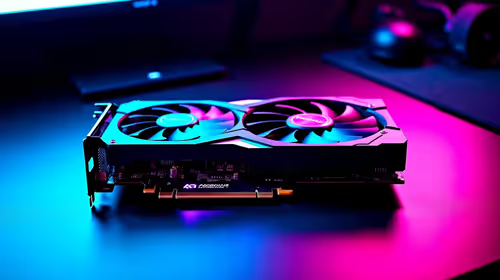
Can RTX 4080 Super Run AI Workloads for SA Developers Detailed answer with SA data, expert analysis & practical recommendations for local buyers.
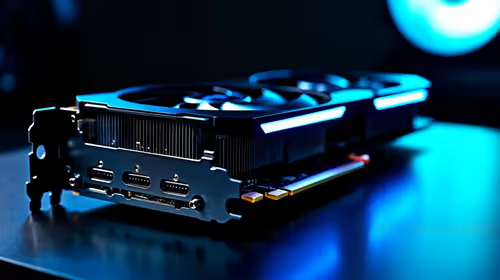
Can RTX 4090 Run AI Workloads for SA Developers Detailed answer with SA data, expert analysis & practical recommendations for local buyers.
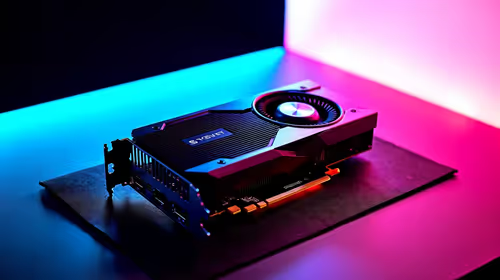
Top Settings for Intel Arc B580 at Ultrawide 1440p picks evaluated on performance, value & SA availability with current Rand pricing from Evetech.
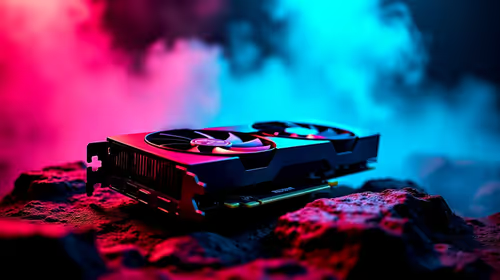
RTX 4060 CS2 Low Settings at 1080p: FPS Results. Real-world benchmark data, FPS numbers & performance analysis. What SA gamers can actually expect.
Visual Artifacts: Possible GPU Issue Issue #1. Diagnosis steps, proven fixes & when to seek professional help. SA-specific support info included.
Can the RTX 4090 Handle 1440p 144Hz Gaming. Performance testing verdict with real data & practical recommendations for SA buyers.
Top ASUS GPU Under R15000 picks evaluated on performance, value & SA availability with current Rand pricing from Evetech.
GTA 6 Max Settings on RTX 5070. Tested & verified settings for best FPS and visual quality on SA hardware budgets.
Cyberpunk 2077 Max Settings on RTX 5080. Tested & verified settings for best FPS and visual quality on SA hardware budgets.
Starfield Max Settings on RTX 5070 Ti. Tested & verified settings for best FPS and visual quality on SA hardware budgets.
Top RTX 5090 Under R5000 picks evaluated on performance, value & SA availability with current Rand pricing from Evetech.