Quick Answer
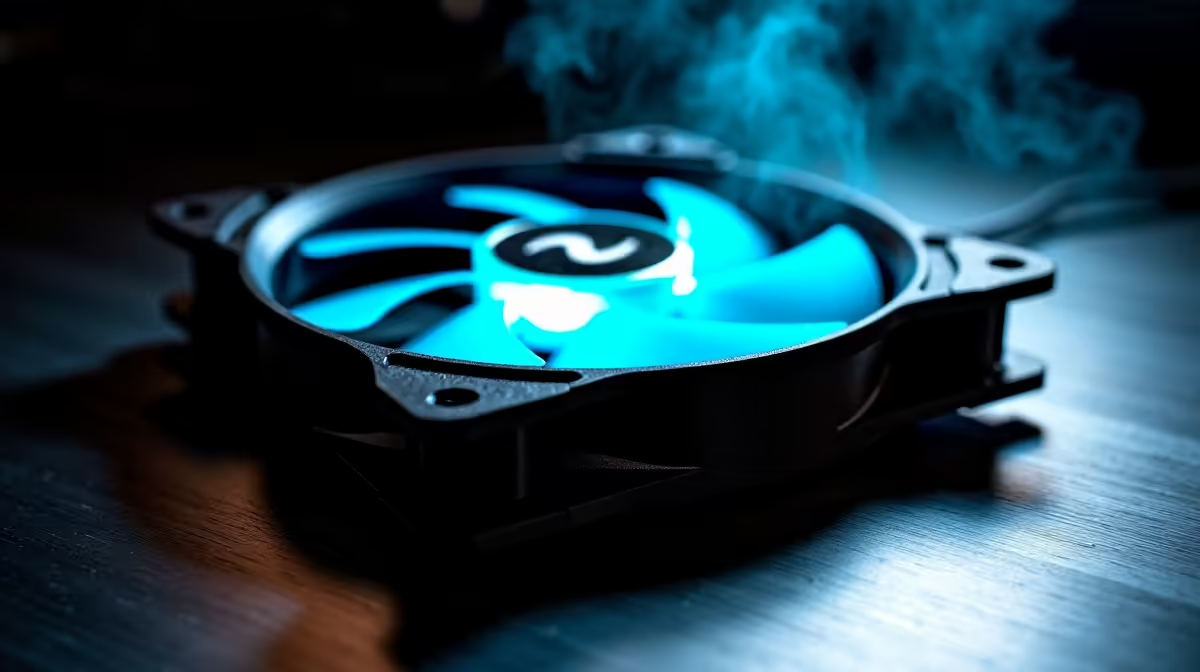
For Rand-conscious builds, the best 120mm fan specs are: fluid dynamic or hydraulic bearing (not sleeve), 4-pin PWM with a minimum duty cycle below 30%, airflow of 50 CFM or above, and noise below 30 dBA at max speed. These specs are available at R250 to R380 per fan locally, delivering 80% of premium fan performance at 60 to 70% of premium fan cost.
The Spec Hierarchy for Value-Focused Buying 💰
Bearing type is the non-negotiable first filter. A sleeve-bearing fan at R100 costs less upfront but will need replacement within two years in daily use, negating the saving. Hydraulic bearing fans at R200 to R280 represent the correct entry for value builds, offering 25,000 to 30,000 hours of service life. FDB at R300 to R380 is the target for any build expected to last three-plus years without fan replacement. Anything below R180 for a 120mm fan in the current SA market is almost certainly sleeve-bearing: fine for low-priority secondary exhaust positions, not appropriate for primary intake or CPU cooler positions.
Matching Specs to Your Build Type 🎮
For a gaming build at R10,000 to R14,000, allocate R200 to R280 per fan for hydraulic bearing PWM units and buy three intake fans. This puts fan spend at R600 to R840 total, freeing R300 to R500 for a better GPU or additional RAM. Skip the rear exhaust fan initially if the case has adequate natural convection; add it later if temperatures prove problematic. For a workstation where CPU render loads run continuously for hours, prioritise FDB at R320 to R380 per fan for all positions: the sustained operation justifies the bearing quality jump. Three fans at R350 each totals R1,050, reasonable against a R20,000-plus workstation build.
Specs That Deliver Value Without Overpaying 🔧
Three specific fan specifications offer high value without requiring premium pricing. A PWM minimum of 25% or below lets you run near-silently without a fancy fan controller. Noise below 30 dBA at max RPM means the fan is acceptable even at peak speed. A CFM rating of 50 to 60 at max speed is sufficient for all standard mid-tower configurations including a 240mm AIO. Specifications that add cost without proportional benefit include: blade count above eleven, ARGB (adds R40 to R80 per fan for zero thermal gain), and max RPM above 2,000 (only useful for very dense radiator applications unavailable in most standard gaming builds).
Reuse Fans Across Build Generations ⚡
Quality FDB or hydraulic bearing fans purchased now can be reused in your next platform upgrade, typically every two to three years. Unlike a GPU or CPU that becomes obsolete, a fan is a fan as long as it spins and moves air. Buying fans slightly above your current build tier means your next build starts with a quality cooling foundation at zero additional fan cost.
FAQ
Can I build a five-fan setup for under R1,500 in SA with decent quality?
Yes, by using hydraulic bearing fans at R220 to R280 each. Five fans at R250 each totals R1,250, within budget with R250 to spare for a basic fan hub. Acoustic performance will be acceptable and thermal performance adequate for mid-range gaming builds.
Does a higher blade count always mean better airflow?
No. Blade count affects the relationship between static pressure and CFM, not the total amount of air moved. Fans with nine blades often move more air at lower noise than eleven-blade fans of identical motor power because fewer blades reduce turbulence interactions at the shroud edge.
What is the minimum CFM for cooling an RTX 5060 or RX 9060-class GPU?
Three 120mm intake fans rated at 45 CFM each provide 135 CFM of total intake, sufficient for a mid-range GPU like the RTX 5060 or RX 9060 in a standard mid-tower. These GPUs have TDPs of 150 to 200W and are well within the capacity of a three-fan positive-pressure setup.
Getting the most from your SA PC cooling budget?
Evetech stocks 120mm fans across the R150 to R500 range, from hydraulic bearing value options to premium FDB units. Browse the cooling section to find the best spec for your build and budget.