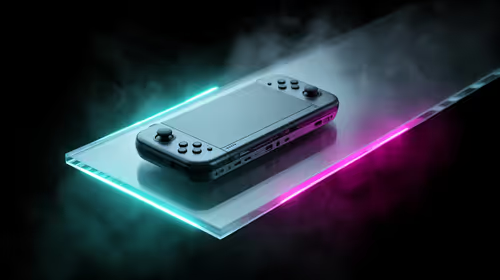
Retro handhelds split into two camps. Linux-based units run a fixed emulator setup and little else, while the Android ones run a full app ecosystem, cloud streaming, and game-store titles alongside their emulators. For most people in 2026 the Android retro gaming handheld is the more flexible buy, and the Retroid Pocket 5 has become the device the rest of the field is measured against.
Quick Answer
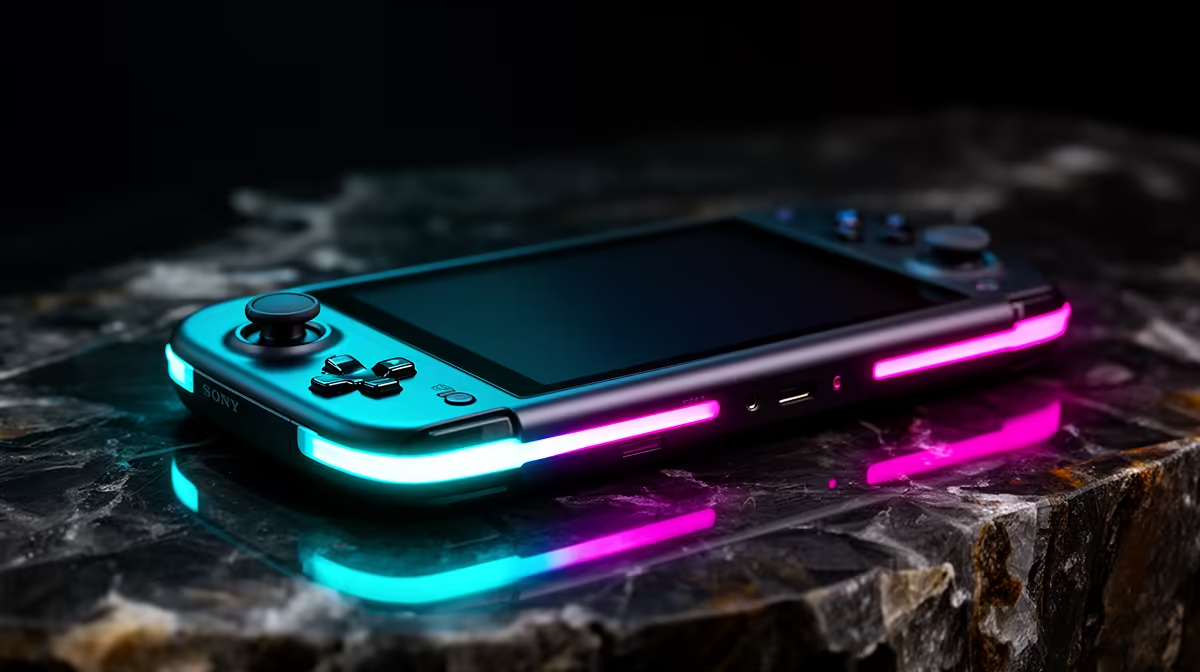
The Retroid Pocket 5 is the standout Android retro handheld for 2026: a 5.5-inch 1080p AMOLED screen, a Qualcomm Snapdragon 865 with the Adreno 650 GPU, 8GB of RAM, drift-free hall-effect analog sticks, active cooling, and a 5000mAh battery. It runs Android 13, so you get Play Store emulators and game streaming, and it handles everything from NES up through most of PlayStation 2 and GameCube smoothly.
Why Android over a Linux handheld
The appeal of Android is that the handheld is also a small games console in the modern sense. You install emulators from an app store, sideload others, run cloud streaming, and even play some native Android titles, all on one device. Linux handhelds boot faster into a clean emulation front end and sip less power, but they box you into whatever the firmware supports.
Android handhelds give you choice at the cost of a little setup. You pick your emulators, configure them once, and from then on the device does far more than a single-purpose unit. For buyers who want one thing that streams, emulates, and runs apps, Android wins. You can see where these sit in the wider category in the handheld gaming consoles range at Evetech.
What makes the Retroid Pocket 5 the pick
The AMOLED screen
A 5.5-inch 1080p AMOLED panel is rare at this size and price. Deep blacks and punchy colour suit old games, where flat LCDs wash out the look the original consoles intended. It is the single feature that separates the Pocket 5 from cheaper rivals most clearly.
Snapdragon 865 performance
The Snapdragon 865 with the Adreno 650 GPU is comfortably enough silicon to clear the libraries most people care about. NES, SNES, Mega Drive, PlayStation 1, PSP, Nintendo DS, and Dreamcast run without drama. GameCube and most of PlayStation 2 are well within reach, with the heaviest PS2 titles being the usual exceptions that need per-game tweaking.
Hall-effect sticks
Stick drift has plagued budget handhelds for years. The Pocket 5 uses hall-effect sensors, which measure stick position magnetically with no physical contact to wear out, so the drift problem is designed away rather than patched. For a device you intend to keep, that alone is worth a lot.
Active cooling
The Pocket 5's fan keeps the Snapdragon 865 at a steady clock under sustained load, which means a two-hour Dolphin session plays the same at the end as it does at the start. Passively cooled Android handhelds thermal-throttle over time and the performance drop is noticeable in demanding games. Active cooling is a practical advantage that matters in daily use, not a paper spec.
Storage and connectivity
128GB of UFS 3.1 internal storage loads games quickly, and a microSD slot lets you expand it. USB-C handles charging and can drive external displays. The 5000mAh battery delivers several hours of emulation depending on the system load, and USB-C fast charging means topping up between sessions is quick. Wi-Fi 6 and Bluetooth 5.1 make wireless controller pairing and cloud streaming reliable at home.
Where it fits, and where it does not
This is a dedicated emulation and streaming handheld, not a Windows gaming PC in your hands. It will not run modern PC titles natively the way an x86 handheld does; for that, the conversation is a different class of device entirely. What the Pocket 5 does is cover the entire retro spectrum and recent streaming in a pocketable, comfortable shell with a great screen.
Setting it up for the first time
Out of the box the Pocket 5 runs a clean Android 13 install. Install RetroArch or your preferred standalone emulators from the Play Store, load your ROM collection to the internal storage or a microSD card, and you are playing within an hour. AetherSX2 handles PS2, Dolphin covers GameCube and Wii, and the Play Store keeps both updated. The Android foundation also means game streaming apps like GeForce NOW or Xbox Cloud Gaming install like any other app, which extends the library well beyond the retro era.
For SA buyers, the practical note is that imported handhelds carry the usual exchange-rate and shipping markups, so the value equation shifts depending on what is locally stocked. If you also game on the big screen, it is worth seeing what is current in the PC best sellers before deciding where your budget goes.
Frequently Asked Questions
What can the Retroid Pocket 5 actually emulate?
Everything from NES, SNES, and Mega Drive up through PlayStation 1, PSP, Nintendo DS, Dreamcast, and into GameCube and most PlayStation 2 titles. The heaviest PS2 games may need per-game settings, but the bulk of the retro era runs cleanly.
Why does Android matter on a retro handheld?
Android gives you a full app ecosystem: Play Store emulators, sideloaded apps, cloud game streaming, and some native Android games. A Linux handheld is locked to its firmware's emulators, so Android trades a little setup for far more flexibility.
What are hall-effect sticks and why care?
They sense stick position using magnets instead of physical contacts, so there is nothing to wear out and develop drift. Drift has been the main long-term failure on budget handhelds, and hall-effect sticks remove the cause.
Is the AMOLED screen worth it for old games?
Yes. The deep blacks and saturated colour suit the look classic consoles were designed around, and at 1080p across 5.5 inches the image is sharp without scaling artefacts that flatten the source.
Can it replace a gaming PC?
No. It is built for emulation and streaming, not for running modern PC games natively. If you want current AAA titles in the palm of your hand, that is a separate, more powerful class of handheld.
How does active cooling help in real use?
It keeps the chip running at its rated speed throughout long sessions. Passively cooled rivals throttle under sustained load and games slow down the longer they run. Active cooling removes that ceiling, which is most noticeable in Dolphin and demanding PS2 titles. The fan is quiet at idle and only audible under peak load, so it does not intrude on general retro gaming. In a category where thermal throttling has been a common complaint, this is a tangible build-quality advantage.
Can I use it for cloud game streaming?
Yes. Android 13 runs streaming apps natively, so Xbox Cloud Gaming, GeForce NOW and similar services install from the Play Store. The Wi-Fi 6 radio handles the bandwidth comfortably on a good home connection, which effectively extends the library to current-generation titles streamed from the cloud.