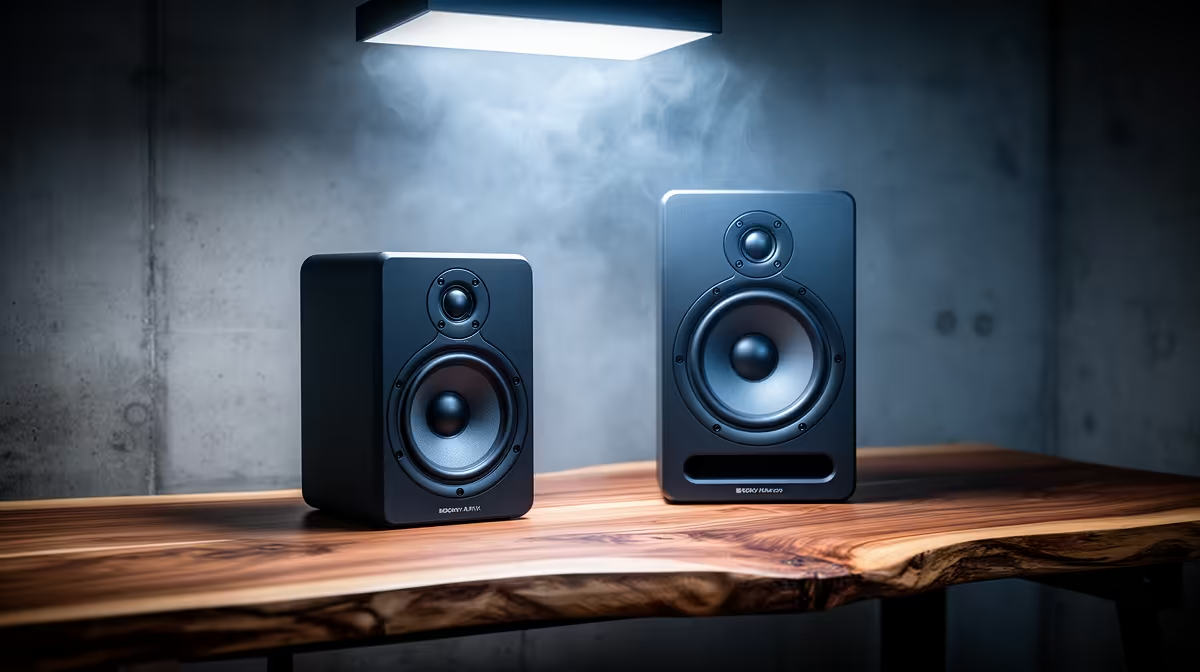
A bedroom studio in a Cape Town flat or a student digs room has a problem an 8-inch monitor makes worse, not better: too much bass energy in too little space. The fix for budget studio monitors for small rooms is to go smaller on purpose. A near-field design with a 3 to 5-inch woofer, voiced flat for listening a metre or two away, gives you an honest mix without flooding the room with low end no amount of foam can tame.
Quick Answer
For most small SA rooms, a 5-inch active near-field monitor is the sweet spot. It is voiced for close listening distances of roughly one to two metres, and the smaller woofer avoids over-exciting low-frequency room modes that wreck mixes in untreated bedrooms and flats. Budget around R5,000 to R9,000 for a solid stereo pair. Step down to a 3 to 4-inch model only if your desk is genuinely tiny.
Why small rooms need small monitors
Bass is the enemy of small spaces. An 8-inch woofer pushes a lot of low-frequency energy, and in a compact untreated room those long bass wavelengths bounce between walls and pile up at certain frequencies, creating peaks and nulls called room modes. The result is a low end that reads loud at your desk but lies to you: you cut bass that is only loud because of the room, and your mix turns out thin everywhere else. A 5-inch woofer simply produces less of the energy that triggers this, so what you hear is closer to what you mixed. Smaller is not a compromise in a small room, it is the correct engineering choice.
Near-field is the design you want
"Near-field" means the monitor is voiced to be accurate at short listening distances, typically one to two metres, with you and the speakers forming a roughly equilateral triangle. At that distance you hear mostly the direct sound from the driver and far less of the room's reflections, which is exactly what you want in an acoustically rough space. Almost every budget studio monitor is a near-field design, but it pays to confirm the stated optimal distance matches your desk.
Picking the right woofer size for your space
Use your listening distance and desk depth as the deciding factors. A 5-inch monitor suits the typical bedroom or home studio with a desk around 1.2 metres or more and a metre-plus of listening distance, giving you enough low-end extension to judge bass and kick without the room-mode chaos of a larger driver. A 4-inch model fits a tighter desk and shorter throw, trading a little bass depth for cleaner behaviour in cramped rooms. A 3-inch monitor is for genuinely small setups, close-up editing, or a second reference, and you will likely want to check the low end on headphones since these roll off early in the bass.
Resist the urge to size up "for more bass". In a small room, more woofer means more problems, and a 5-inch pair plus disciplined placement beats an 8-inch pair fighting the walls.
Active versus passive, and what else matters
For a budget home setup, buy active monitors. Each speaker has its own built-in amplifier matched to its drivers, so you do not need a separate amp and the manufacturer has already tuned the power to the woofer and tweeter. Passive monitors are an extra cost and complication you do not need at this level. Beyond that, look for tweeter quality, since a smooth high end is what reveals detail and sibilance, and for room-tuning controls. Many current budget models include voicing modes or shelf EQ switches that let you compensate for placement, such as cutting low end when the monitors sit close to a wall. Those controls are genuinely useful in a room you cannot fully treat.
Placement beats price in a small room
The single biggest improvement after choosing the right size is positioning. Get the tweeters at ear height, angle the monitors inward so they aim at your head, and pull them off the wall where you can. Stands or isolation pads decouple them from the desk and tighten the low end noticeably. Spend on placement before you spend on bigger speakers. If you also do quiet late-night work or live with others, a good pair of closed-back reference headphones from the best sellers range is the natural companion to monitors, letting you cross-check a mix and keep working when you cannot run the speakers.
Who this setup is for
This 5-inch near-field approach fits the SA producer, student, or hobbyist mixing in a bedroom, flat, or shared digs who wants honest sound without the cost or chaos of large monitors and full acoustic treatment. It is right for music production, podcast editing, and content audio. It is not the call if you are mixing in a large, treated control room or need to fill a space for clients, where bigger monitors earn their keep. For everyone working in the rooms most South Africans actually have, smaller and well-placed is the smart spend, and the broader audio and speaker range at Evetech covers both the monitors and the cans to pair with them.
Frequently Asked Questions
What size studio monitor is best for a small bedroom?
A 5-inch woofer is the sweet spot for most bedrooms and flats. It gives enough low-end extension to judge bass while avoiding the room-mode buildup that an 8-inch monitor causes in a small untreated space. Drop to 4 inches only for a very tight desk.
How much should I spend on budget studio monitors in SA?
A capable stereo pair of 5-inch active monitors typically lands in the R5,000 to R9,000 range. Below that you compromise on tweeter quality and build; above it you are paying for features a small-room setup will not fully use.
Do I need acoustic treatment with small studio monitors?
Smaller monitors reduce the need but do not remove it. Good placement, ear-height tweeters, and pulling the speakers off the wall do most of the work. A few soft furnishings help further. You do not need a fully treated room to mix accurately on 5-inch near-fields.
Should I buy active or passive monitors for a home studio?
Active, without question, for a budget home setup. The amplifier is built in and matched to the drivers, so you avoid buying a separate amp and the speaker is already tuned as a system. Passive monitors only make sense in higher-end or specialised rigs.
Can I just use headphones instead of monitors?
Headphones are a great companion and essential for quiet work, but they present sound differently from speakers. Mixing on monitors and checking on headphones, then on a phone or earbuds, gives you the most reliable result. Use both rather than relying on either alone.