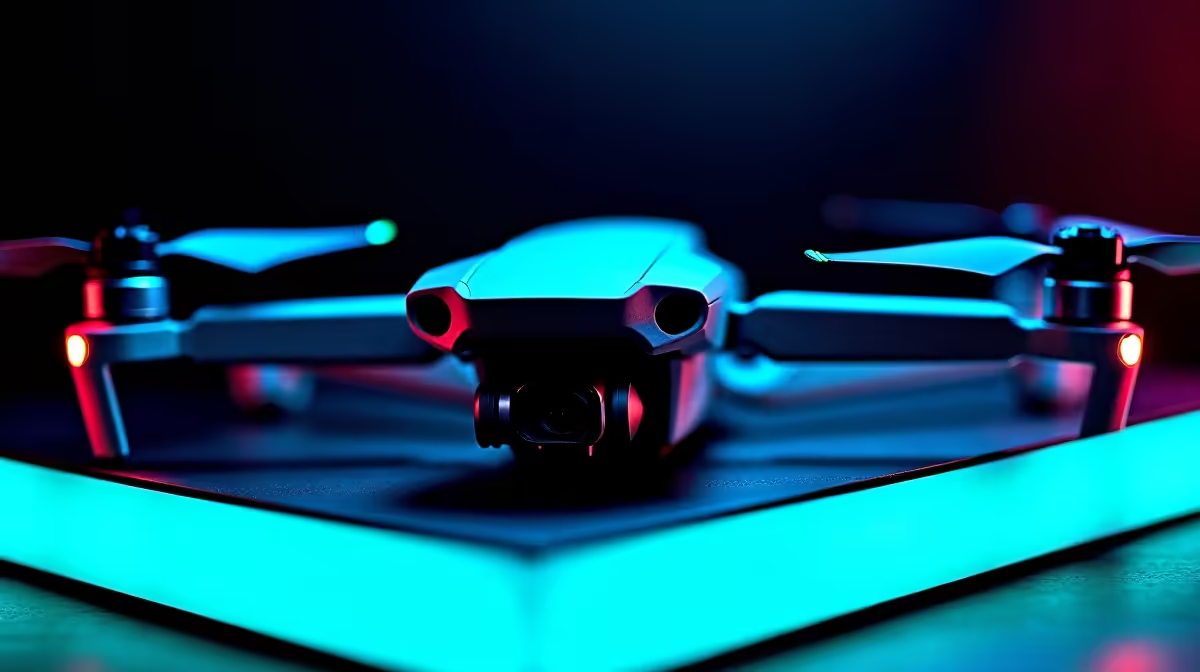
Most "cheap drone with a good camera" claims fall apart the moment you pixel-peep the footage. Soft 4K, tiny sensors that fall apart in shade, jittery video the gimbal cannot save. The Autel EVO Lite+ is the rare budget pick that does not, because it carries a genuinely large camera sensor and records proper 4K HDR at a price that sits below the pro-tier DJI machines South African pilots usually drool over. Knowing where it shines, and where it cuts corners, saves you from overspending or under-buying.
Quick Answer
The best budget drone with real camera quality is the Autel EVO Lite+. It records 4K HDR using a large 1-inch CMOS sensor that holds detail in tricky light, all below DJI pro-tier pricing. Its three-way obstacle avoidance stops at hazards rather than flying around them, so plan your shots with that limit in mind.
What Makes The Camera Genuinely Good
The headline is the sensor. Many sub-flagship drones cram a tiny chip behind their lens, which is why footage looks fine in bright sun and collapses into noise the moment a cloud passes. A larger sensor gathers more light, so the EVO Lite+ keeps detail and clean colour in shadow, at dusk, and across the high-contrast scenes that wreck cheaper cameras.
The EVO Lite+ pairs its 1-inch CMOS sensor with a 20MP resolution and an adjustable aperture ranging from f/2.8 to f/11, which is a feature usually reserved for more expensive platforms. Being able to stop down to f/11 means you can shoot in harsh SA midday sun without blowing out the sky, while opening to f/2.8 keeps the sensor gathering light in the golden hour. The drone captures 6K video at 30fps or 4K at 60fps, giving editors either maximum resolution for cropping or higher frame-rate footage for slow-motion cuts. The moonlight algorithm provides intelligent noise reduction for evening and low-light sessions, boosting clean detail at elevated ISO levels rather than letting the image smear.
Paired with 4K HDR capture, that sensor gives you footage with usable dynamic range: bright skies that do not blow out and shaded ground that does not crush to black. For landscape, property and travel work across South Africa's strong, contrasty light, that latitude is exactly what you want.
Where The Budget Shows: Obstacle Avoidance
No drone at this price is flawless, and the honest compromise here is the obstacle system. The EVO Lite+ uses three-way avoidance: forward, backward and downward. It does not have full side and upward sensing, and crucially it stops at obstacles rather than intelligently routing around them.
In practice that means you cannot fire off a complex automated tracking shot through trees and trust the drone to weave for you. It will halt before a collision, which protects the aircraft, but the creative path is your responsibility. Pilots who fly deliberately and frame their own moves will barely notice. Those expecting the drone to dodge for them should adjust their expectations.
How To Fly Around That Limit
The fix is technique, not money. Scout your environment, keep clear margins from buildings and branches, and use the avoidance as a safety net rather than a co-pilot. Manual, planned flying produces better cinematic results anyway, and it sidesteps the gap entirely.
Autel EVO Lite+ Versus Spending More
The temptation is always to stretch to a pro-tier machine. Before you do, ask what the extra Rand actually buys: usually more advanced omnidirectional sensing, longer range, and ecosystem polish, not necessarily better core image quality at this resolution.
For a pilot whose priority is great-looking footage rather than fully autonomous flight, the EVO Lite+ delivers most of the image quality for meaningfully less outlay. The money you save can go toward spare batteries, ND filters and a decent case, which improve your real output more than a marginally smarter obstacle system. You can see what is currently stocked in the drones and smart devices range at Evetech to check availability and current pricing before deciding.
What Else To Budget For
A drone is the start, not the finish. Spare batteries are non-negotiable, because a single pack gives you a short window and swapping packs is how you actually get the shots. The EVO Lite+ has a flight time of up to 40 minutes per battery and a video transmission range of 12km, so on a calm day you can cover serious ground before you need to land. ND filters tame harsh midday sun and let you keep cinematic shutter speeds. A protective case matters when you are moving between locations.
There are also rules to respect. South African drone regulations govern where and how you may fly, particularly near airports, people and private property, so know the basics before your first outing. To round out a kit with cases, filters and spare props, the accessories best sellers at Evetech are a practical way to grab the supporting gear in the same order.
Who Should Buy It
The EVO Lite+ suits the hobbyist or semi-pro who wants flagship-grade footage without flagship spend, and who is comfortable flying with planning rather than leaning on automation. If you need full omnidirectional avoidance for dense, autonomous tracking work, look higher up the range. For everyone else chasing camera quality on a budget, this is the value pick.
Frequently Asked Questions
Does the Autel EVO Lite+ shoot true 4K?
Yes, it records 4K/60fps with HDR, and its 1-inch CMOS sensor gives the footage cleaner detail and wider dynamic range than tiny-sensor budget drones. The 6K/30fps mode adds resolution headroom for cropping and large-format display.
What does three-way obstacle avoidance actually cover?
It senses forward, backward and downward, and stops the drone before a collision in those directions. It does not have full side or upward sensing and will not automatically route around obstacles, so plan your flight path manually.
Why does sensor size matter more than megapixels?
A larger sensor captures more light, which preserves detail and reduces noise in shade, dusk and high-contrast conditions. Megapixel count alone cannot fix the murky footage a tiny sensor produces in anything but bright sun.
Do I need a licence to fly a camera drone in South Africa?
Recreational flying has rules around location, altitude and proximity to people and airports, and commercial work has stricter requirements. Check the current SA Civil Aviation regulations for your use case before you fly.
What accessories should I buy with it?
Prioritise spare batteries for longer sessions, ND filters for bright conditions, and a protective case for transport. These do more for your actual results than upgrading to a more expensive drone body.
Chasing cinematic footage without overspending? Check current stock and pricing in the drones and smart devices range at Evetech, then add spare batteries, filters and a case so you are ready to fly properly from the first outing.