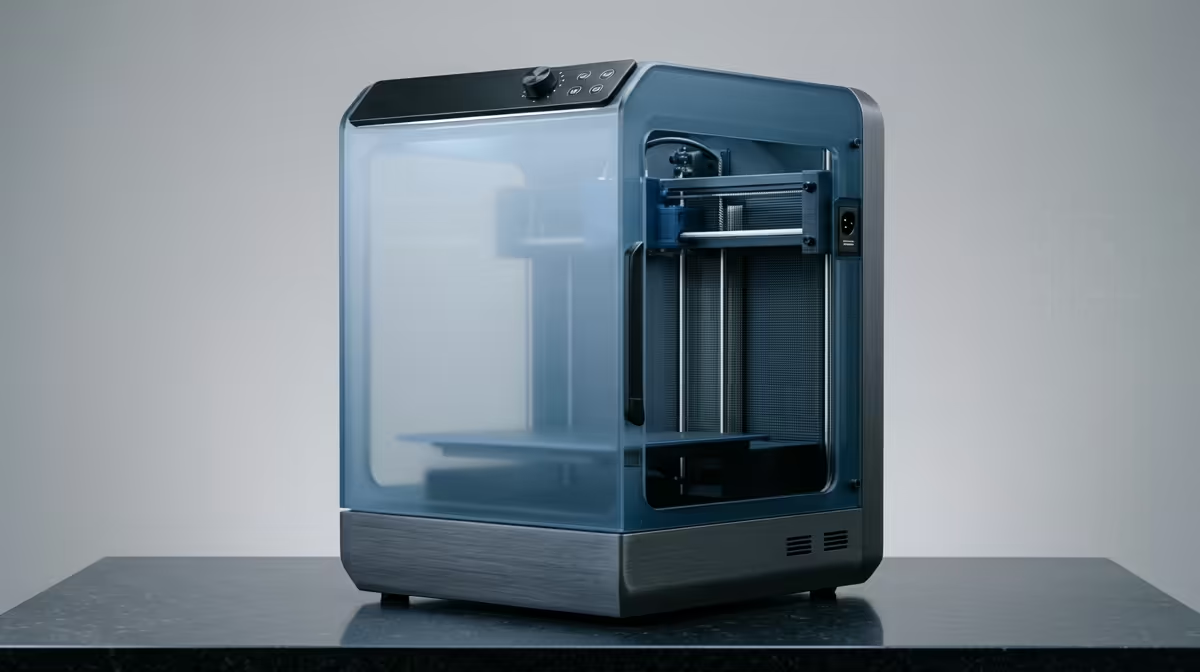
A printer that fully encloses its hot end and bed changes the whole calculation for a household with curious kids and roaming pets. The family-safe enclosed 3D printer worth your money in South Africa today is the Creality K1 SE, because a closed door physically separates small fingers and paws from a nozzle running at 200 to 220 degrees. You get the creative upside of FDM printing without leaving a 230 degree heat source exposed on an open frame.
Quick Answer
The Creality K1 SE at roughly R8,999 is the best enclosed, family-safe pick for low-temperature PLA in South Africa. Its sealed chamber keeps the 200 to 220 degree hot end behind a door, and its CoreXY motion system finishes prints faster than older bed-slinger designs.
Why Enclosure Matters More Than Any Single Spec
Open-frame printers leave the nozzle, heater block and heated bed exposed on three sides. For a hobbyist working alone that is fine. In a home with a toddler or a cat that jumps onto desks, an exposed 230 degree heater block is a genuine burn risk, and a moving gantry at face height is worse.
An enclosure solves three problems at once. It puts a physical barrier between people and the hot zone. It traps the faint warm-plastic smell that PLA gives off so it does not drift through the house. And it stabilises the air around the print, which actually improves layer adhesion on taller models.
PLA Is the Safest Filament to Standardise On
PLA prints at a low temperature band, usually 200 to 220 degrees at the nozzle with a bed around 50 to 60 degrees. That matters for a family machine. Lower nozzle temperatures mean less smell, less energy per print and a more forgiving material if a print is interrupted. PLA is plant-derived and does not need the high chamber heat that ABS demands, so you are never tempted to run the machine hot and sealed for hours.
If you want to compare current enclosed and open models side by side before deciding, the full lineup of 3D printers stocked at Evetech lays out the price bands clearly.
What the K1 SE Brings to a Family Setting
The K1 SE is a CoreXY printer, meaning the print head moves on two motors across a fixed-height bed rather than rocking the whole bed back and forth. That gives it two practical wins for a home. Prints come off faster, so a school project or a replacement toy part is done in a fraction of the time an entry bed-slinger needs. And the rigid frame keeps the noise down, a real benefit when the machine has to share a lounge or a child's bedroom.
The sealed front door and side panels keep the working area contained. A child can watch a print build up through the window without any path to the moving parts. For a first machine in a busy household, that visibility plus separation is the right trade.
Placement and Supervision Still Count
No enclosure removes the need for sensible placement. Keep the printer on a stable surface above counter height where the youngest household members cannot reach the door latch. Run it in a room with normal airflow rather than a sealed cupboard. And treat the first few prints as supervised sessions until you trust the profile.
Running Costs and Consumables in South Africa
A spool of standard PLA covers a lot of small prints, and the K1 SE sips power compared with high-temperature ABS workflows. Budget for a few practical extras early: a spare nozzle, a glue stick or PEI sheet for bed adhesion, and a small set of removal tools. Stocking these alongside the printer saves a stalled weekend when a nozzle clogs. You can pick most of them up from the accessories that move fastest at Evetech, a handy shortcut to the extras local makers tend to order alongside a new printer.
Why Low-Temp PLA Suits a Family Machine Best
It is worth being clear about why PLA, rather than a tougher plastic, is the right default for a household printer. PLA reaches usable strength at a low nozzle temperature, so the hot end spends less time at a dangerous heat and the whole machine runs cooler and calmer. It is plant-derived and gives off only a faint warm-plastic smell, far gentler than the sharp odour ABS produces. And it is forgiving: a paused or interrupted print rarely fails outright, which matters when a child stops a job halfway to show a parent.
Sticking to PLA also keeps the supervision burden light. You are not managing a sealed, superheated chamber or worrying about fumes filling a bedroom. ABS, ASA and nylon all have their place, but they belong to a later stage once an older child has the routine down. For the first year or two of family printing, a low-temp PLA workflow on an enclosed machine is the safest, most repeatable setup you can run.
A Quick Word on Power and Heat in SA Homes
A PLA-focused machine like the K1 SE draws far less power than a high-temperature ABS workflow, because it never has to drive a hot chamber. That keeps your running cost low and makes the printer easy to slot onto a normal wall socket without a dedicated circuit. It also means less waste heat in the room, which is welcome through a Highveld summer or a humid Durban afternoon when you would rather not add a small heater to a child's bedroom.
Who Should Buy It
A parent introducing kids to design and printing, a teacher setting up a classroom corner, or anyone who wants the machine in a shared living space rather than a locked workshop. If your priority is the absolute cheapest open frame and you print alone in a garage, you can save money elsewhere. For a family that wants safety and speed without babysitting an exposed hot end, the K1 SE earns its price.
Frequently Asked Questions
Is an enclosed printer actually safer for children?
Yes. The closed chamber puts a door between a child and the 200 plus degree nozzle and moving gantry. It does not replace supervision, but it removes the most direct burn and pinch risks of an open frame.
What temperature does PLA print at?
PLA typically runs 200 to 220 degrees at the nozzle with a bed of about 50 to 60 degrees. That is low compared with ABS, which keeps smells and energy use down for a home machine.
Why pick a CoreXY printer like the K1 SE?
CoreXY moves only the print head, not the whole bed, so it prints faster and runs more rigidly and quietly. In a shared room that speed and lower noise make daily use far more pleasant.
Do I need to ventilate the room?
A room with normal airflow is enough for PLA. Avoid sealing the printer in a closed cupboard, and never run it in a tiny unventilated space for long stretches.
Can the same printer handle other filaments later?
The K1 SE can run hotter materials, but for a family machine staying on PLA keeps temperatures, smells and supervision needs at their lowest. Step up only once everyone is comfortable with the basics.
Ready to set up a printer the whole household can gather around safely? Browse the current enclosed models in the 3D printers range at Evetech and start your first PLA print this weekend.