Microsoft stopped shipping free security updates for Windows 10 on 14 October 2025, and millions of machines that cannot meet the Windows 11 hardware bar are now living on borrowed time. If your old PC lacks TPM 2.0 or a supported processor, the clean path forward is new hardware running Windows 11, and South African buyers have solid options across every price tier.
Quick Answer
Windows 10 support ended on 14 October 2025. The best replacement is a Windows 11 machine that meets the TPM 2.0 and supported-CPU requirements out of the box. In SA that starts around R8,000 for student and home use, climbs to R12,000 to R18,000 for mainstream work, and runs past R20,000 for professional and creator workloads.
Why the deadline actually matters
A Windows 10 PC will keep booting after the cutoff. The risk is what stops arriving: security patches, bug fixes and feature updates. Every month past October 2025, newly discovered vulnerabilities go unpatched, which is a serious problem for anything that touches online banking, email or work files. Microsoft offered a paid Extended Security Updates path that stretches critical fixes to October 2026, but that is a stopgap, not a destination. If your hardware cannot take Windows 11, replacing it is the cleaner long-term answer.
Check whether your current PC can simply upgrade
Before spending anything, confirm what you have. Windows 11 requires TPM 2.0, Secure Boot, and a processor from Microsoft's approved compatibility list, broadly Intel 8th-gen or newer and AMD Ryzen 2000-series or newer. The built-in PC Health Check app gives a yes or no in seconds. If it passes, the upgrade is free through Windows Update and you may not need new hardware at all. If it fails on the processor or TPM, no setting change fixes that, and a new machine is the sensible move.
Matching hardware to how you actually use it
Buying by price tier rather than by spec sheet keeps the decision simple.
Students and everyday home use
For browsing, documents, streaming and light study work, an entry Windows 11 machine from around R8,000 does the job. Aim for at least 8GB of RAM, an SSD rather than a mechanical drive, and a current low-power processor. This tier replaces an ageing Windows 10 laptop or desktop without overspending.
Mainstream work and multitasking
Spending R12,000 to R18,000 buys real headroom: 16GB of RAM, a faster SSD and a processor that handles dozens of browser tabs, video calls and office apps without stutter. This is the sweet spot for most households and remote workers who want a machine that stays quick for years.
Professionals, creators and light gaming
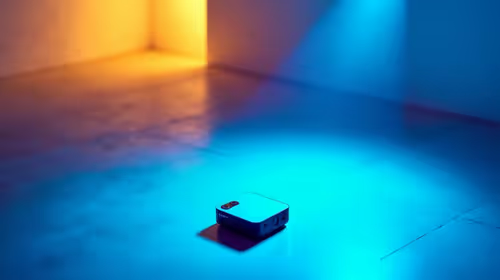
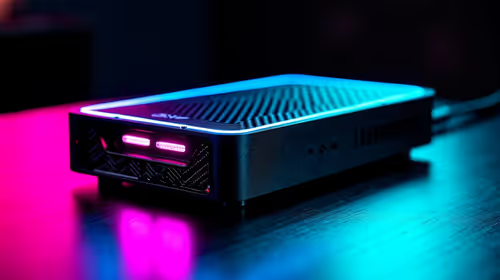
Past R20,000 you move into discrete graphics, 16GB to 32GB of RAM and high-core-count processors suited to video editing, design, development or gaming. If your work depends on the machine, this tier pays for itself in saved time. For a desktop replacement that tucks neatly onto a shelf or behind a monitor, the compact mini PC range at Evetech packs current Windows 11 hardware into a far smaller footprint than a traditional tower.
What to look for in a replacement laptop
Price tier sets the ceiling; the spec choices within that tier determine whether the machine stays useful for five years or struggles by year three.
Processor generation matters more than clock speed
A current Qualcomm Snapdragon X, Intel Core Ultra 5/7 (Meteor Lake or Lunar Lake), or AMD Ryzen 8000 or AI 300 series will handle Windows 11 comfortably and carry a longer support horizon than a previous-generation chip at the same price. Clock speed is easy to compare but misleading: a 2 GHz modern core handles real workloads faster than a 3.5 GHz chip from 2019 in most day-to-day tasks.
RAM and storage minimums for 2026
Windows 11 officially requires 4GB of RAM, but 8GB is the realistic floor for a machine that stays usable. At R8,000 to R12,000, most current laptops include 8GB to 16GB; push for 16GB if the budget allows because RAM is usually soldered and cannot be upgraded later on a laptop. For storage, an SSD is non-negotiable: a 256GB NVMe drive is the practical minimum, and 512GB is noticeably more comfortable once you account for Windows itself, applications and a year's worth of files. Avoid any machine still shipping a mechanical hard drive.
Battery and display in the SA context
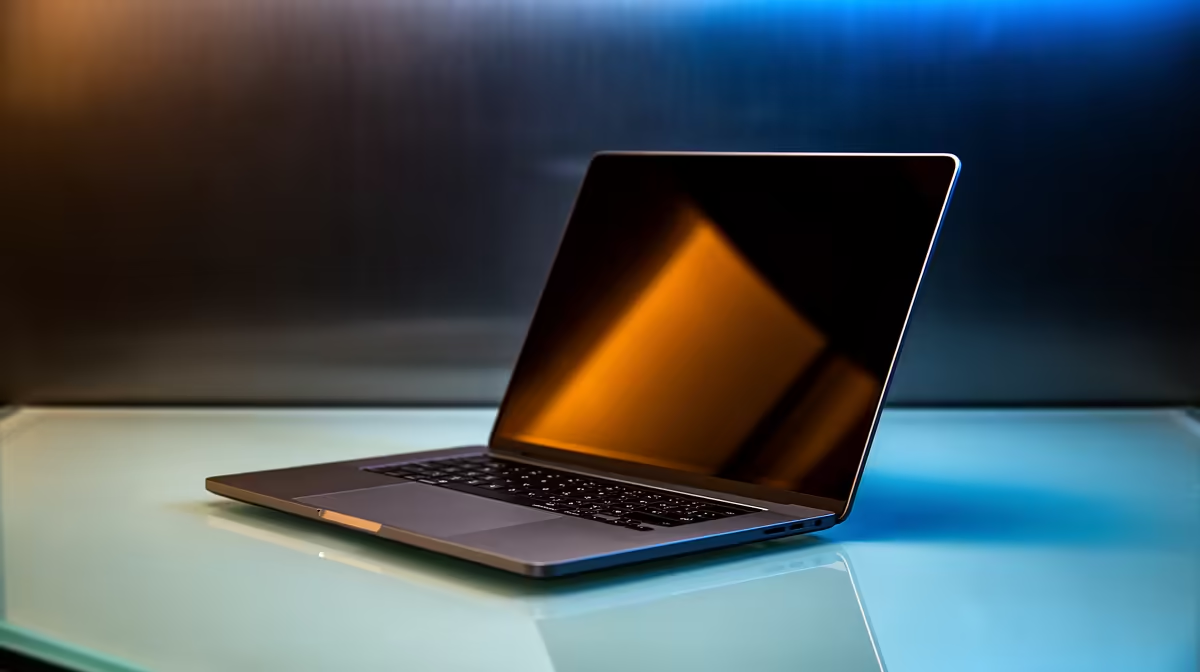
For students moving between lecture halls, residences and study spaces, battery life above 8 hours under mixed workloads is a meaningful differentiator. Most current mid-range laptops quote 10 to 14 hours at manufacturer conditions, which translates to roughly 7 to 10 hours under real use. A 1080p (Full HD) IPS panel is the minimum worth accepting in 2026; screen quality directly affects how long comfortable study sessions last.
Connectivity in practice
USB-C charging is now standard on most mid-range and above laptops and matters for portability. Confirm at least one USB-A port for legacy peripherals, or budget for a hub. For students in SA residences, a combination of Wi-Fi 6 and at least one USB port for a wired adapter covers most campus network scenarios.
Desktop or laptop for the replacement
If your old Windows 10 machine was a tower, a desktop or mini PC usually gives more performance per Rand and is easier to upgrade later. If portability matters, a laptop is the obvious pick. Mini PCs sit neatly in between: desktop-class internals, tiny chassis, ideal for a tidy home office or a lounge media setup. Whichever form factor you choose, prioritise an SSD and enough RAM, since those two upgrades define day-to-day responsiveness more than any other single spec. The current best-selling PCs at Evetech shows the configurations SA buyers are actually choosing right now, which is useful context when matching spec to budget.
Frequently Asked Questions
Will my Windows 10 PC stop working in 2026?
No. It keeps running, but it no longer receives free security updates after 14 October 2025, which leaves it increasingly exposed to new threats over time.
Can I upgrade to Windows 11 for free?
Yes, if your PC meets the requirements, including TPM 2.0, Secure Boot and a supported CPU. Run the PC Health Check app to confirm, then upgrade through Windows Update at no cost.
What if my processor is not on the supported list?
There is no supported way to make an unsupported CPU compliant. A new Windows 11 machine is the reliable path rather than risking an unsupported workaround.
How much should I spend on a replacement in SA?
From about R8,000 for student and home use, R12,000 to R18,000 for mainstream work, and over R20,000 for professional or creator workloads. Match the tier to your actual use rather than buying more than you need.
Is a mini PC a real replacement for a desktop tower?
Yes. Modern mini PCs run full Windows 11 with desktop-class processors and SSD storage, in a chassis small enough to mount behind a monitor, making them an excellent tower replacement for most home and office tasks.