

Complete Guide: Setting Up AIO Liquid 420mm
Setting Up AIO Liquid 420mm. Tested & verified settings for best FPS and visual quality on SA hardware budgets.
Read moreDiscover the best monitor for dark room gaming and why VA panels often win for their deep blacks and superior contrast. 🎮 We break down the pros and cons of TN, IPS, and VA technology to help you choose the perfect display for immersive, low-light sessions. Stop squinting at IPS glow and find your ideal panel!
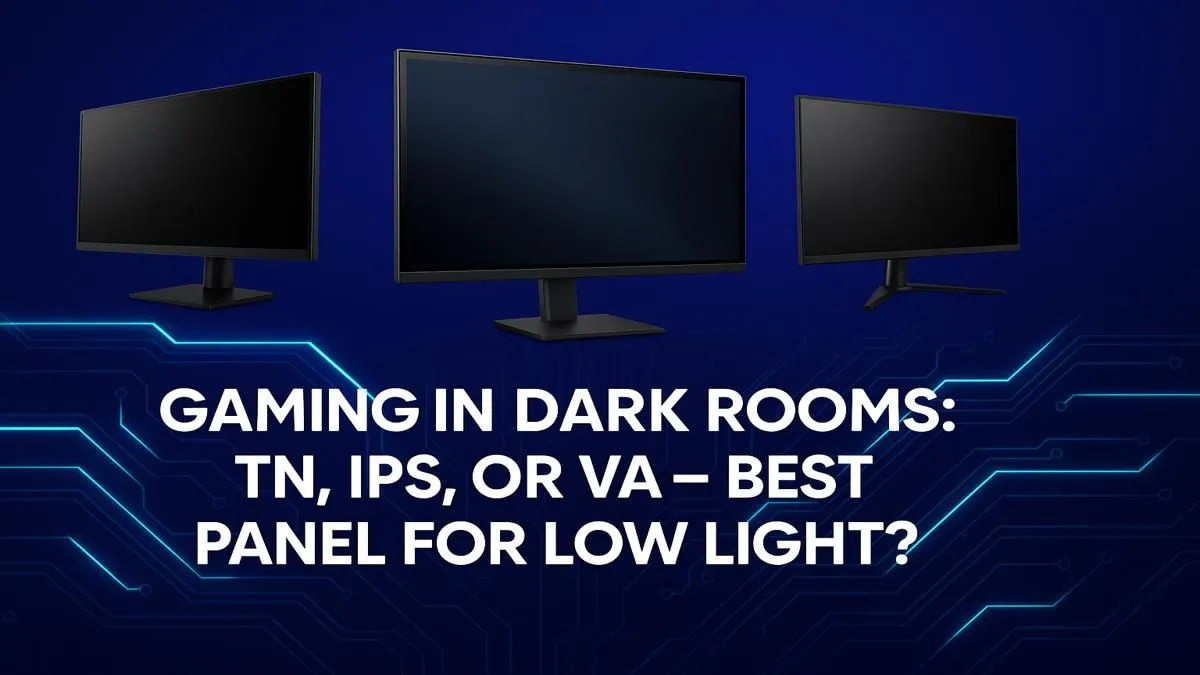
You’re deep into a late-night session of Alan Wake 2. The atmosphere is thick, the shadows are hiding unspeakable horrors… but instead of feeling immersed, you’re distracted by a weird, milky glow in the corners of your screen. Suddenly, those deep blacks look more like a murky grey. Sound familiar? Finding the best monitor for dark room gaming isn't just about specs; it's about preserving the immersion the developers intended. Let's dive in.
When the lights go down, your monitor's weaknesses come out to play. The most critical factor for a great low-light experience is the contrast ratio. This measures the difference between the brightest white and the darkest black a screen can produce. A high contrast ratio means deep, inky blacks and vibrant highlights, making details pop in shadowy environments.
Conversely, issues like "backlight bleed" (light leaking from the edges) or "IPS glow" (a faint haze visible on dark scenes) become much more noticeable, shattering the illusion of reality. Choosing the right panel technology is your first line of defence.
The heart of any display is its panel. Each type—TN, IPS, and VA—has a unique set of strengths and weaknesses, especially when you're gaming in the dark.
If deep, authentic blacks are your top priority, a VA panel is your champion. These panels boast the highest native contrast ratios, often 3000:1 or more, compared to the typical 1000:1 of IPS and TN screens. This makes them the undisputed best monitor for dark room gaming when it comes to horror, sci-fi, or cinematic single-player titles. The difference is night and day... literally.
The trade-off? Some VA panels can exhibit slightly slower pixel response times, leading to "black smearing" in very fast-paced scenes. However, modern VA technology has improved massively, and many gamers find the superior contrast well worth it, especially on immersive curved gaming monitors.
IPS panels are famous for their incredible colour accuracy and wide viewing angles. If you’re a content creator by day and a gamer by night, an IPS monitor offers brilliant, consistent colours that look great from any angle. This makes them a fantastic choice for visually rich games where every hue matters.
However, their lower contrast ratio is their Achilles' heel in a dark room. Most IPS panels suffer from "IPS glow," a noticeable haze on black backgrounds, which can wash out dark scenes. While not a deal-breaker for everyone, it can reduce the sense of depth in a dimly lit environment. Many premium 4K and 5K monitors use IPS for its unmatched colour fidelity.
TN panels are all about one thing: speed. They offer the fastest response times and highest refresh rates on the market, making them the go-to for competitive esports athletes playing games like CS:GO or Valorant. When every millisecond counts, a TN panel gives you the edge.
Unfortunately, this speed comes at a cost. TN panels have the weakest contrast ratios and the narrowest viewing angles. In a dark room, blacks will appear greyish, and colours will shift if you're not sitting directly in front of the screen. While they are a viable option for pro gamers, they are not the ideal choice for an immersive, dark room experience. You can explore a wide variety of panel types across all gaming monitors to see what fits your playstyle.
Even the best monitor for low-light gaming can benefit from bias lighting. Placing a soft, neutral light (like an LED strip) behind your monitor reduces eye strain and makes your screen's blacks appear deeper by tricking your brain. It's a simple, affordable upgrade that significantly improves the dark room experience.
For the majority of South African gamers seeking the ultimate immersive experience in a dark room, a VA panel is the clear winner. Its superior contrast ratio delivers the deep blacks and shadow detail that bring atmospheric games to life.
Of course, the panel is just one piece of the puzzle. You also need to consider resolution, HDR performance, and ergonomics. A great stand or VESA mount can make a world of difference for comfort during long sessions, so don't forget to check out essential monitor accessories. And for those on the move, a modern portable monitor can be a surprisingly capable companion.
Ultimately, finding your perfect screen means balancing features and budget. Keep an eye on the latest PC monitor deals to snag a high-performance display without breaking the bank.
Ready to Upgrade Your Nightly Sessions? Don't let a washed-out display ruin another moment of immersion. The perfect monitor is waiting to transform your dark room gaming experience. Explore our massive range of PC monitors and find the perfect screen to conquer the darkness.
VA (Vertical Alignment) panels are generally considered the best for dark rooms. They offer the highest native contrast ratios, resulting in deep, rich blacks and minimal glow.
Yes, IPS glow can be very noticeable in a dark room, appearing as a faint glow in the corners of the screen on dark scenes. This can detract from the immersive experience.
VA panels excel at horror games because their superior contrast and deep black levels enhance dark scenes, revealing detail in the shadows without washing out the image.
No, TN (Twisted Nematic) panels typically have the worst black levels and lowest contrast ratios. In dark rooms, blacks can appear grayish, reducing image depth and immersion.
For dark room gaming, a high contrast ratio is far more important than peak brightness. High contrast ensures deep blacks and bright whites, creating a dynamic and immersive picture.
You cannot completely fix IPS glow, but you can minimize its appearance by lowering the monitor's brightness, adjusting ambient lighting, or viewing the screen from a direct angle.
Setting Up AIO Liquid 420mm. Tested & verified settings for best FPS and visual quality on SA hardware budgets.
Read more
Intel XTU Download & Setup Guide: Intel CPU. Clear setup instructions with SA-specific considerations, troubleshooting tips & recommended components.
Read more
Cyberpunk 2077 Max Settings on RTX 4090. Tested & verified settings for best FPS and visual quality on SA hardware budgets.
Read more
The Complete Guide to GPU. Everything you need to know with SA pricing, step-by-step instructions & expert recommendations.
Read more
NVCleanstall Download & Setup Guide: NVIDIA. Clear setup instructions with SA-specific considerations, troubleshooting tips & recommended components.
Read more
to Driver Installation for Beginners. Everything you need to know with SA pricing, step-by-step instructions & expert recommendations.
Read more
AMD RX 9050 XT: Rumoured Specs, Price & Release. SA-focused analysis with local pricing data, real-world insights & actionable buying advice.
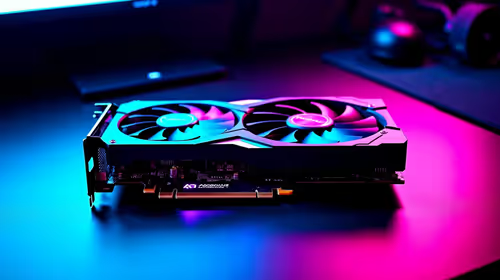
Can RTX 4080 Super Run AI Workloads for SA Developers Detailed answer with SA data, expert analysis & practical recommendations for local buyers.
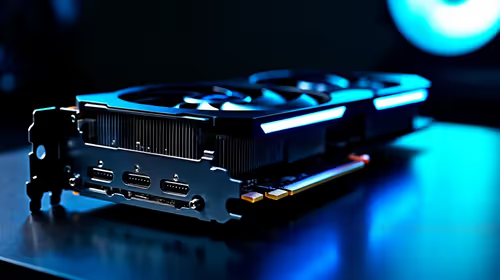
Can RTX 4090 Run AI Workloads for SA Developers Detailed answer with SA data, expert analysis & practical recommendations for local buyers.
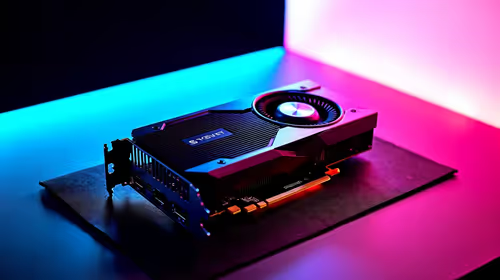
Top Settings for Intel Arc B580 at Ultrawide 1440p picks evaluated on performance, value & SA availability with current Rand pricing from Evetech.

RTX 4060 CS2 Low Settings at 1080p: FPS Results. Real-world benchmark data, FPS numbers & performance analysis. What SA gamers can actually expect.
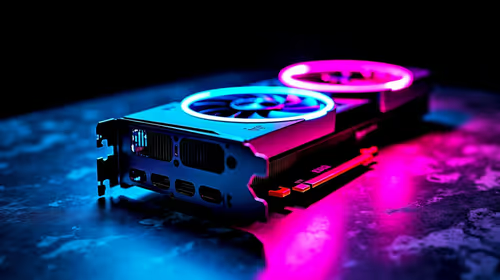
Visual Artifacts: Possible GPU Issue Issue #1. Diagnosis steps, proven fixes & when to seek professional help. SA-specific support info included.
Can the RTX 4090 Handle 1440p 144Hz Gaming. Performance testing verdict with real data & practical recommendations for SA buyers.
Top ASUS GPU Under R15000 picks evaluated on performance, value & SA availability with current Rand pricing from Evetech.
GTA 6 Max Settings on RTX 5070. Tested & verified settings for best FPS and visual quality on SA hardware budgets.
Cyberpunk 2077 Max Settings on RTX 5080. Tested & verified settings for best FPS and visual quality on SA hardware budgets.
Starfield Max Settings on RTX 5070 Ti. Tested & verified settings for best FPS and visual quality on SA hardware budgets.
Top RTX 5090 Under R5000 picks evaluated on performance, value & SA availability with current Rand pricing from Evetech.