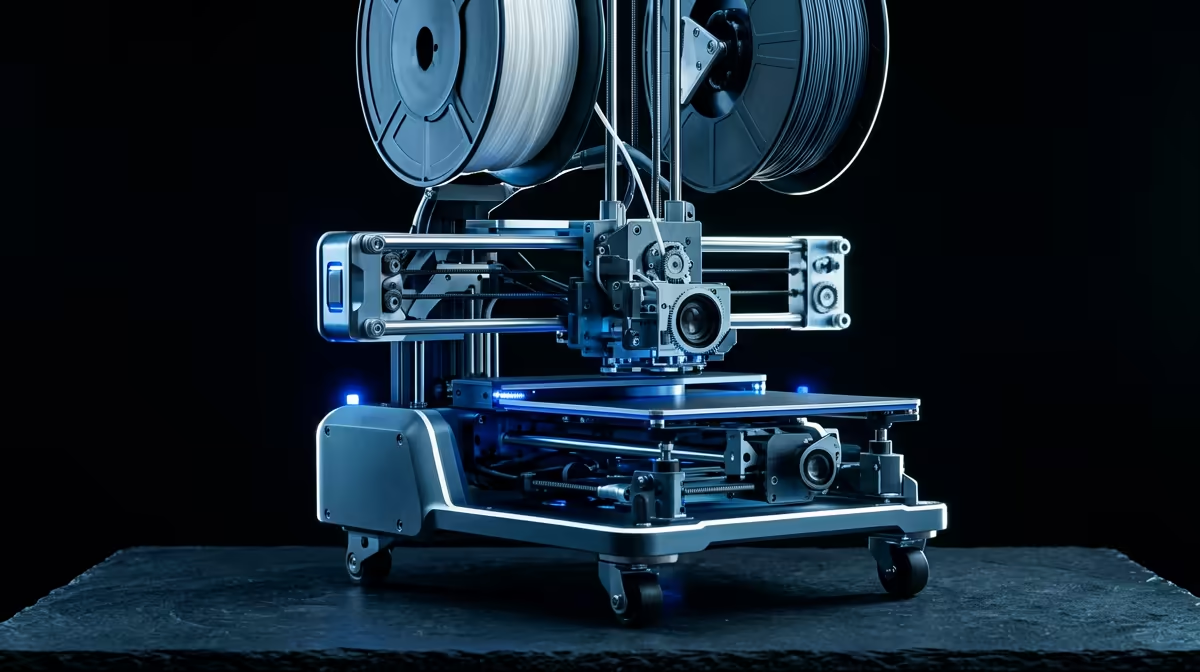
Engineering-grade filaments like ABS, ASA, nylon and polycarbonate warp, crack or jam on most desktop printers because the air around the part cools too fast and the nozzle cannot reach the temperatures those plastics demand. If you want a multi-material and high-temp 3D printer that delivers in South Africa today, the Bambu Lab H2S is the machine to beat, a sealed unit with an actively heated chamber and a hardened hotend that prints functional parts the cheaper open-frame printers simply cannot finish cleanly.
Quick Answer
The Bambu Lab H2S, from roughly R29,999, is the strongest pick for high-temp and multi-material printing in SA. It runs a 65 degree C active chamber, a hardened nozzle rated past 300 degree C, and an automatic multi-filament system, so it handles ABS, ASA, PA (nylon) and PC reliably in a single unattended job.
Why High-Temp Printing Needs Different Hardware
Most budget printers top out around 260 degree C at the nozzle and have no enclosure, which is fine for PLA and PETG but a recipe for failure with engineering plastics. ABS and ASA contract sharply as they cool, so without a warm, stable chamber the lower layers pull away from the bed and the part lifts at the corners. Nylon is worse, absorbing moisture from the air and bubbling mid-print. Polycarbonate needs both very high nozzle heat and a controlled environment or it delaminates under the slightest stress.
A purpose-built high-temp machine tackles all three problems together: an enclosed chamber keeps warm air wrapped around the build, an all-metal hotend climbs to the temperatures these materials need, and a hardened nozzle survives the abrasive glass and carbon fibres often blended into engineering filament. It is worth checking the 3D printers section at Evetech so you can spot which machines ship with a full enclosure built in.
The Bambu Lab H2S in Detail
Active Chamber and Hotend
The headline feature is the 65 degree C actively heated chamber. Rather than relying on the bed and walls to trap a little warmth, the H2S pushes heated air through the enclosure and holds it there for the whole print. That stable environment is what lets ABS and ASA finish a tall part without warping. The hardened hotend pairs with this, reaching the temperatures polycarbonate and high-flow nylon demand while resisting wear from filled filaments.
Multi-Material in a Single Job
The automatic multi-filament system is the other reason this printer stands out for SA makers. It feeds several spools into one print, so you can combine a rigid ASA shell with a flexible TPU gasket, or print a part in one colour and its supports in another for clean removal. Everything runs unattended, which matters when an engineering print can take twelve hours or more.
Build Volume and Speed
The H2S offers a generous build area for parts in the bracket, housing and enclosure category that most prosumers print, and Bambu's motion system keeps speeds high without the ringing artefacts you see on slower machines. For functional prints where dimensional accuracy counts, that combination of a stable chamber and a stiff frame is the practical difference between a part that fits and one that does not.
What These Filaments Are Actually For
ASA is the go-to for outdoor and automotive parts because it shrugs off UV and weather, holding its colour and strength in full South African sun. ABS suits enclosures and brackets that need toughness and a bit of flex. Nylon excels at gears, living hinges and wear surfaces thanks to its low friction and high fatigue resistance. Polycarbonate is the choice when you need real heat resistance and impact strength, such as a part that sits near a motor or in an engine bay. A machine that prints all four covers nearly every functional use case a workshop or product designer will hit.
Living With a High-Temp Machine
Keeping Filament Dry
Engineering filaments are far more sensitive to moisture than PLA. Nylon is the worst, drawing water from the air fast enough to ruin a print within a day of an opened spool sitting out. ASA and polycarbonate are not far behind. A part printed from damp filament shows popping, stringing and weak layers no matter how good the printer is. A sealed dry box or a filament dryer becomes part of the workflow rather than an optional extra, and an enclosed feed system like the H2S uses helps by keeping spools away from open humidity between jobs.
Ventilation and Placement
A sealed, actively heated chamber gives off fumes and warmth, so where you put the machine matters. A garage, workshop or well-aired room is far better than a closed bedroom. The chamber holds the heat the print needs, but the room around it still wants airflow, particularly when you are running ABS or ASA for hours at a stretch. Plan the printer's home before it arrives rather than after.
Bed Adhesion and Surface Choice
High-temp materials shrink as they cool, which puts huge stress on the first layer. A textured or engineering-grade build plate, a clean surface and the right adhesion approach make the difference between a print that stays put and one that warps off mid-job. This is where most high-temp failures actually start, so it is worth getting the plate and prep dialled in before blaming the filament or the printer.
Who Should Buy a Machine Like This
If you only print decorative models and prototypes in PLA, you do not need a sealed high-temp printer and the extra spend is wasted. The H2S earns its price for engineers, product developers, repair shops and serious hobbyists making parts that have to survive heat, sunlight, mechanical load or chemical exposure. If your prints keep cracking, lifting or failing in service, the hardware, not your settings, is usually the limit. The same logic applies to the consumables and upgrades you stock alongside it, and a glance through the accessories best sellers at Evetech gives a quick sense of what other makers are buying to keep these machines running.
Frequently Asked Questions
Can a normal printer print ABS or nylon?
It can attempt them, but without an enclosure and a hot enough nozzle the results are unreliable. ABS warps and nylon bubbles from absorbed moisture. A sealed, actively heated machine like the H2S is what makes these materials practical for parts that must hold their shape.
What does the active chamber actually do?
It heats and holds the air inside the printer at around 65 degree C, keeping the part warm as it builds. That slows cooling and stops the layer separation and corner lifting that ruin tall ABS and ASA prints on open machines.
Is the Bambu Lab H2S worth R29,999 for a hobbyist?
If your hobby involves functional, outdoor or load-bearing parts, yes, because cheaper printers cannot finish those reliably. If you print only display models in PLA, a far cheaper enclosed or open printer will serve you fine.
Which filament should I start with for outdoor parts?
ASA. It is UV-stabilised and weather-resistant, so it survives direct sun without fading or going brittle, which is exactly what South African outdoor prints face.
Do I need a hardened nozzle?
Yes, if you plan to print carbon or glass filled engineering filaments. Those abrasive fibres wear out a standard brass nozzle quickly, while a hardened nozzle holds its dimensions for far longer.
Ready to print engineering plastics that actually survive real-world use? Browse the full 3D printer range at Evetech, compare enclosed high-temp machines like the Bambu Lab H2S, and pick the printer that matches the materials you need.