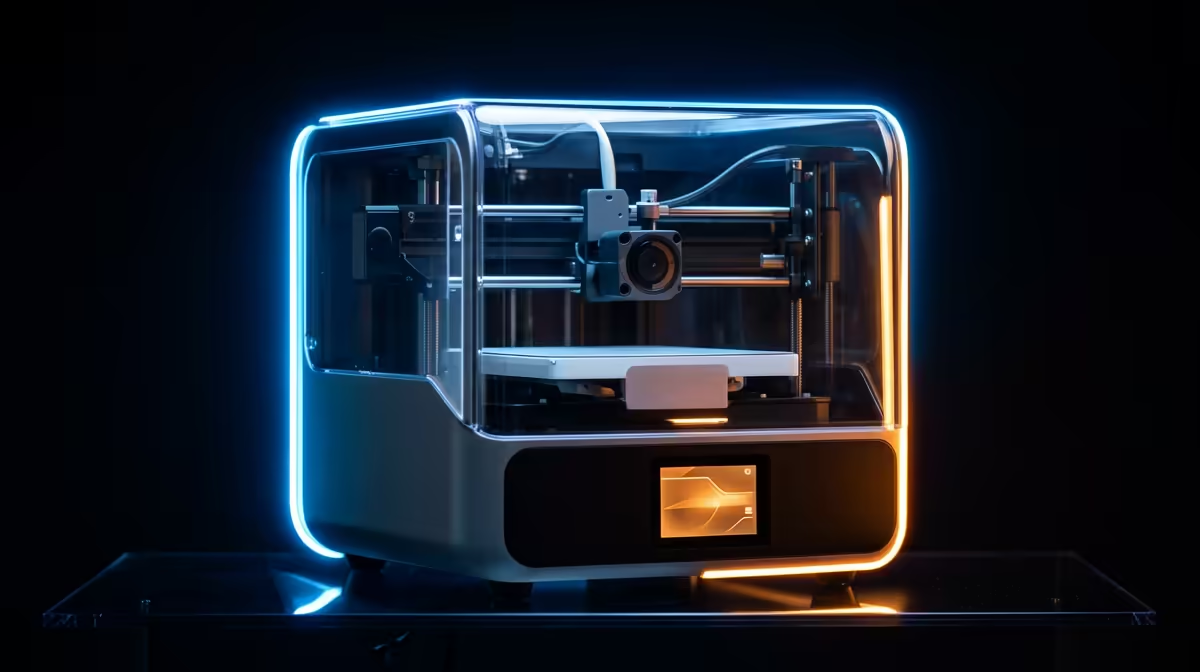
The jump from a sub-R10,000 hobby resin printer to the premium resin 3D printer tier buys you three things that hobby machines cannot match: a bigger build plate, a sharper monochrome LCD, and the kind of mechanical rigidity that lets dental labs and jewellery casters trust a print straight off the plate. The Creality Halot-X1 sits at the top of the R10,000 to R15,000-and-up bracket in South Africa at around R15,499, and it is built for people whose prints earn money rather than sit on a shelf.
Quick Answer
The Creality Halot-X1 at roughly R15,499 leads the R10,000 to R15,000-plus resin bracket in South Africa. It targets professional modellers, dental technicians and jewellery makers who need large-format MSLA printing with build volumes and screen resolutions that no sub-R10,000 resin machine reaches.
What Premium Resin Printing Actually Buys You
MSLA (masked stereolithography) printers flash an entire layer at once through an LCD mask, so print speed depends on layer count rather than model size. At the premium end, the gains are concentrated in areas that matter for paid work.
Build Volume and Throughput
Sub-R10,000 resin machines typically cap out around a 7-inch plate. Premium units widen and deepen the build area, which means you can either print one large object in a single pass or batch a full plate of smaller parts. For a jeweller casting twenty ring shanks at once, or a tabletop sculptor printing a squad of miniatures, that batching ability pays for the printer quickly.
Screen Resolution and Detail
A higher-resolution monochrome LCD shrinks each pixel, so fine surface detail, thin walls and crisp text reproduce cleanly. Monochrome panels also cure faster and last far longer than the older RGB screens, which matters when the machine runs daily. Dental and jewellery work lives or dies on this detail, since a soft edge becomes a misfit crown or a flawed casting.
Who This Tier Is For
This bracket is not for someone printing the occasional phone stand. It earns its price in three professional lanes.
- Dental technicians printing models, surgical guides and try-ins from validated biocompatible resins, where dimensional accuracy is non-negotiable.
- Jewellery makers producing castable wax-like patterns for lost-wax casting, where surface smoothness reduces finishing time.
- Pro modellers and prototype studios running large miniatures, architectural detail or master patterns for moulding.
If you mostly print figurines for fun, a cheaper machine is the smarter spend. The premium tier is justified by repeatability and plate size, not novelty.
Resin, Wash and Cure: The Real Running Cost
The printer is only the start. Professional resin work needs a wash-and-cure workflow, nitrile gloves, a respirator-grade mask for handling uncured resin, and the right resin chemistry for the job. Standard resin is cheap, but castable, dental and tough engineering resins cost more per litre and behave differently in terms of exposure times.
Budget for consumables from the outset. A clogged FEP film, a fresh batch of isopropyl alcohol for washing, and spare build-plate adhesion supplies all add up over a busy month. You can see the supporting gear alongside the printers themselves in the 3D printer components catalogue at Evetech, which keeps the machine and its add-ons in one place.
Setting Up a Professional Resin Workflow
Buying the printer is one decision. Building a workflow around it is the part that determines whether the machine earns its keep. Three things separate a productive print room from a frustrating one.
Ventilation and Safety
Resin gives off fumes, and uncured resin is a skin irritant. A premium machine deserves a properly ventilated space, near a window or with extraction, plus nitrile gloves and a fitted mask for every handling step. This is not optional caution; it is the baseline for running the printer daily without health complaints.
Calibration and Resin Profiles
Each resin type, standard, tough, castable, dental, needs its own exposure profile dialled in. Premium printers reward the time spent calibrating, because a tuned profile is what delivers the crisp detail and reliable adhesion the hardware is capable of. Expect to run a few exposure tests when you switch resin chemistry, and keep notes on what works.
Maintenance Cadence
The FEP or nFEP film at the bottom of the vat is a wear item, and the LCD has a finite lifespan even on long-lived monochrome panels. Building a maintenance rhythm, checking the film, keeping the vat clean, watching for screen wear, protects your throughput. A studio that skips this finds failed prints at the worst possible moment.
Halot-X1 Versus Stepping Down a Tier
A sub-R10,000 machine will produce beautiful single prints. What it will not do is hold tolerance across a full plate, batch reliably day after day, or give you the screen area for genuinely large masters. If your output is occasional, save the money. If a missed tolerance costs you a remake or a client, the premium tier removes that risk.
It is also worth being honest about where resin fits versus FDM. Filament printers are cheaper, cleaner and better for large functional parts. Resin wins on fine surface detail and dimensional precision, which is exactly why dental and jewellery work lives in the resin world. The premium resin tier is not a general-purpose upgrade; it is the right tool for detail-critical, repeatable output where the surface finish itself is the product.
For accessories, curing stations and the smaller add-ons that round out a print room, the current accessories best sellers at Evetech are a useful place to check what is moving and in stock right now.
Frequently Asked Questions
Is the Creality Halot-X1 worth R15,499 over a R7,000 resin printer?
For professional use, yes. The larger plate, sharper monochrome LCD and stronger build let dental, jewellery and prototype users batch parts and hold tolerance reliably. For hobby printing, a cheaper machine makes more sense.
Can I use the Halot-X1 for dental work in South Africa?
The hardware resolution supports dental models and guides, but you must pair it with certified biocompatible resin and follow your lab's validation process. Always confirm the resin is approved for the specific application before clinical use.
What does it cost to run a premium resin printer each month?
Beyond the machine, expect ongoing spend on resin (more for castable or dental grades), isopropyl alcohol for washing, FEP film replacements, gloves and masks. Heavy users should plan for these consumables as a fixed running cost.
Do I need a separate wash-and-cure station?
Practically, yes. Resin prints come off the plate tacky and uncured, so a wash step in alcohol followed by UV curing is essential for safe, durable parts. Many professionals treat it as core equipment rather than optional.
How big are the prints from this tier compared to cheaper machines?
Premium machines widen and deepen the build area beyond the roughly 7-inch plates common below R10,000, letting you print larger single objects or batch a fuller plate of smaller parts in one run.