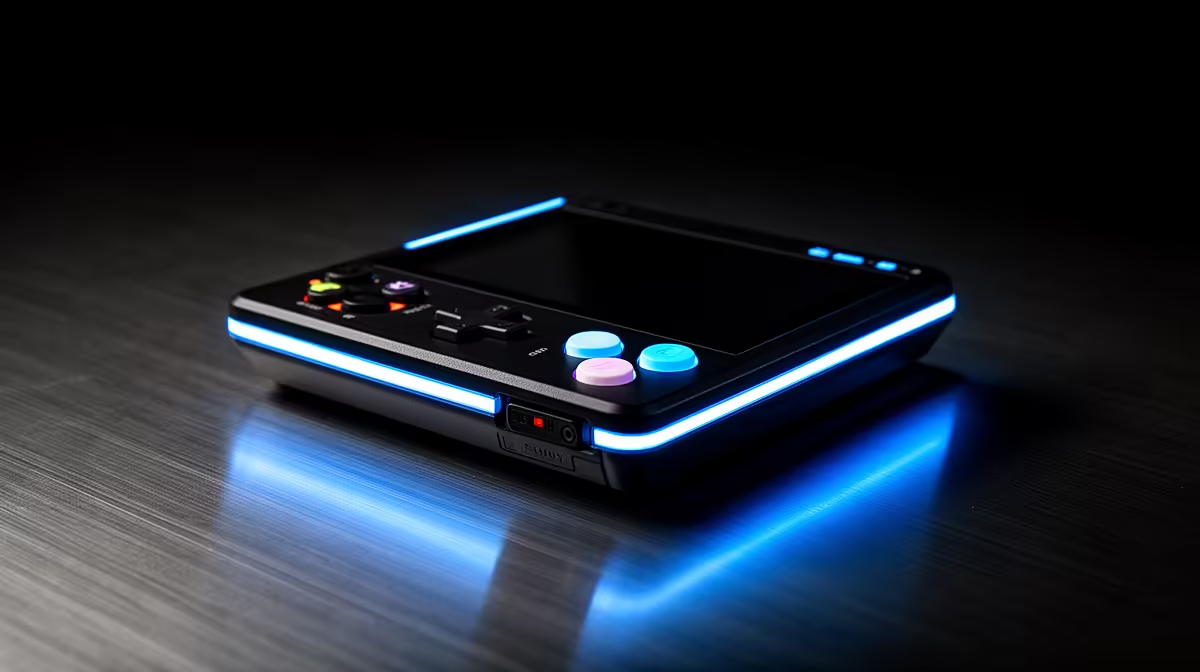
The right handheld for a commute is the one that disappears into a jacket pocket and survives the round trip without a charger. For trains, taxis and buses, the best retro handheld for commuters is a pocketable vertical unit like the Miyoo Mini Plus: roughly four inches tall, palm-sized, and happy running NES, SNES, Game Boy and Mega Drive libraries for hours. A big horizontal handheld is a wonderful living-room device and a clumsy commuting one. Shape and stamina decide this category.
Quick Answer
For commuting, a vertical pocket handheld like the Miyoo Mini Plus wins. It stands about four inches tall, slips into a jacket pocket, and delivers roughly 6 to 8 hours of lighter 8-bit and 16-bit play, dropping closer to 5 hours on heavier PS1 emulation. It comfortably runs NES, SNES, Game Boy, GBA and Mega Drive, with PS1 as the practical ceiling.
Why Shape Beats Specs for a Commute
Most handheld reviews obsess over raw power. For a commuter, ergonomics and pocketability matter far more. A vertical, Game Boy-shaped unit can be drawn out and played one-handed while you steady yourself with the other, and tucked away in a second when your stop arrives. A wide horizontal handheld needs two hands, a bag to carry it, and a moment of setup. On a packed Metrorail carriage or a Golden Arrow bus, that difference is the whole experience.
Pocketability is not just about width. Weight and thickness decide whether the thing rides in your jacket or stays home because it is a hassle. The Miyoo Mini Plus, at palm size and light weight, passes the jacket-pocket test that most handhelds fail.
Battery Life: The Commuter's Real Spec
A commute punishes weak batteries. You want a device that handles a week of round trips between charges, not one you top up every night. The Miyoo Mini Plus lands around 6 to 8 hours of mixed lighter play at moderate brightness, which covers several days of typical to-and-from journeys. Push it with PS1 titles and that figure falls toward 5 hours, since heavier emulation works the chip harder.
The lesson for any commuting pick: favour the systems that sip power. Sticking to 8-bit and 16-bit libraries stretches battery life dramatically compared to leaning on the most demanding emulation the device can manage. For a commute, that is no loss, because those classic libraries are exactly what suits short, interruptible sessions.
What It Should and Should Not Run
The Miyoo Mini Plus is a master of the classics. NES, SNES, Game Boy, Game Boy Advance, Mega Drive and similar era systems run beautifully, and custom firmware turns it into a tidy pocket emulator. PS1 is the realistic ceiling: playable, but it is where the device starts to strain and the battery drops faster. Dreamcast and beyond are a stretch you should not buy this class of handheld expecting.
That ceiling is a feature, not a flaw, for a commuter. Short journeys suit pick-up-and-play classics far better than sprawling 3D epics. A device focused on doing the retro libraries well, in a pocketable shape, is exactly the right tool for the job. The current handheld gaming console range at Evetech covers pocket-class units alongside larger handhelds, so you can match the form factor to how you actually travel.
Custom Firmware and the Commuter Advantage
The Miyoo Mini Plus has one of the best community firmware ecosystems of any pocket handheld, centred on Onion OS. Installing Onion OS opens RetroAchievements, a proper sleep-and-wake function that resumes instantly from where you left off, and a streamlined interface designed for quick navigation. For commuters who play in short bursts and need to resume mid-game without ceremony, a fast and reliable sleep-wake is among the most valuable features a firmware can add.
The setup involves flashing a custom image to a microSD card, which the active community documents step by step. Once done, the device behaves like purpose-built hardware with no ongoing maintenance required. Battery life under Onion OS is consistent with the stock figures, and the additional emulator support covers every system this class of handheld can reasonably handle.
When a Bigger Handheld Still Makes Sense
If your "commute" is a long-haul flight, a road trip as a passenger, or you simply want one device that also plays heavier 3D libraries at home, a larger horizontal handheld earns its place. It trades pocketability for a bigger screen, more grip and more power. For the daily train, taxi or bus though, that bulk works against you, which is why the pocket vertical remains the smart commuter buy.
For those wanting context on how a pocket handheld fits alongside other gaming hardware, the Evetech best sellers show what SA buyers are choosing across the broader category.
Picking the Right Games for Commute Play
Not all retro libraries are equally well-suited to interrupted sessions. The ideal commuter library leans on games you can pause instantly and resume without losing context. Classic platformers, puzzle games and arcade-style titles fit this pattern well. Long-form RPGs with infrequent save points are harder to manage on a commute unless your firmware handles save states reliably, which Onion OS does.
Sports games, fighting games and shoot-em-ups are the most natural commuter genres: rounds or stages that conclude in under five minutes, high replayability, and no requirement to remember a storyline from three days ago. Building a commuter-specific playlist around these genres gets the most out of a pocket handheld on a daily basis.
Frequently Asked Questions
What makes a handheld good for commuting specifically?
Pocketability and battery life. A vertical, palm-sized unit fits a jacket pocket and plays one-handed, while a battery that lasts several round trips means you are not charging it nightly. Raw power matters far less than fitting your routine.
How long does the Miyoo Mini Plus last on a charge?
Roughly 6 to 8 hours of lighter 8-bit and 16-bit play at moderate brightness, dropping toward 5 hours on demanding PS1 titles. That covers several typical commutes before a recharge.
Can it play PS1 games?
Yes, but PS1 is its practical ceiling. Those games are playable, though they push the device hardest and drain the battery faster. Dreamcast and newer 3D systems are beyond what this class of handheld is built for.
Is a big horizontal handheld better?
For home or long-haul travel where you want a bigger screen and heavier 3D games, yes. For a daily train, taxi or bus commute, its bulk is a liability, and a pocket vertical is the more practical choice.
Which systems run best on a pocket handheld?
NES, SNES, Game Boy, Game Boy Advance and Mega Drive run excellently and sip battery, making them ideal for short, interruptible commuter sessions. These libraries are the sweet spot for this form factor.
Want a handheld that actually rides in your pocket every day? Browse the pocket and full-size handhelds at Evetech and pick the shape that matches your commute, not just the spec sheet.