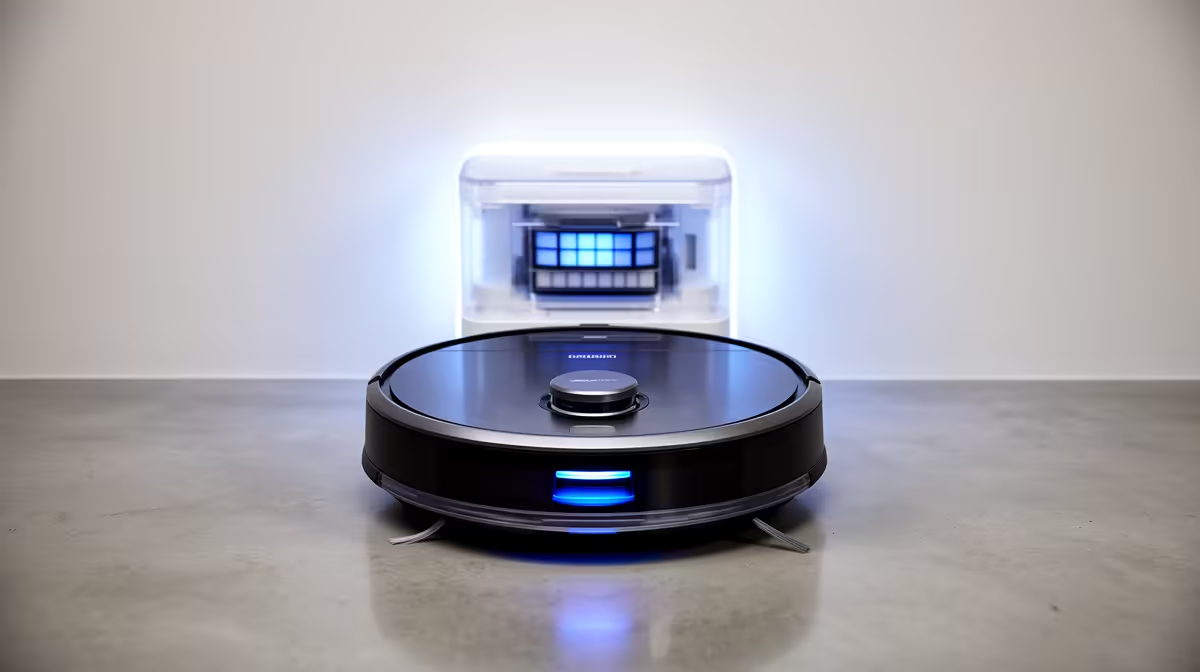
Most vacuums move dust around as much as they remove it, which is exactly the wrong thing for a sneezing, itchy-eyed household. A robot vacuum built for allergy sufferers does the opposite job. It traps the fine particles that actually trigger reactions, pollen, dust mite waste and pet dander, and crucially it holds onto them instead of puffing them back into the air. The two features that decide whether a robot helps or hurts your symptoms are a sealed HEPA-grade filter and a sealed self-empty dock that means you never open a full bin yourself.
Quick Answer
For allergy relief, choose a robot vacuum with a sealed HEPA-grade filtration system and a sealed self-empty dock. The sealed filter traps fine allergens down to dust-mite and pollen size rather than recirculating them, and the sealed dock bag lets the machine empty itself without releasing a dust cloud into the room. Together they remove the two moments when ordinary vacuuming makes allergies worse: leaky exhaust and emptying the bin.
Why Sealed Filtration Is The Whole Point
A HEPA filter is rated to capture the vast majority of particles at the size most likely to lodge in your airways. The catch is that the filter only works if the air is forced through it. Many cheaper machines have a HEPA filter fitted but a body that leaks, so unfiltered air escapes around the edges carrying the very particles the filter was meant to catch. That is why the word sealed matters more than the word HEPA on its own.
What a sealed system actually does
In a properly sealed vacuum, every bit of air that enters the machine must pass through the filter before it leaves. There is no bypass path. For an allergy sufferer this is the difference between a vacuum that cleans the air and one that quietly redistributes allergens at ankle height across every room it visits. When you shop, look for explicit mention of a sealed filtration path, not just a HEPA filter listed in the specifications.
Suction matters too
Filtration only helps with what the machine actually picks up. Strong suction pulls embedded dust-mite debris and dander out of carpet pile and along skirtings where it settles, so the filter has something to trap in the first place. A robot with weak suction leaves the heaviest allergen load in the floor, which is why suction and sealed filtration work as a pair rather than as separate features.
The Sealed Self-Empty Dock Changes Everything
Here is the moment ordinary vacuuming sabotages allergy sufferers: emptying the bin. Tipping a full canister into the rubbish releases a visible cloud of everything you just collected, straight back into your breathing space. A self-empty dock automates that step, sucking the robot's bin into a larger bag in the base so you do not have to.
Why the bag must be sealed
Not all docks are equal. A sealed dock bag captures the transferred dust inside a closed bag that you remove and bin without ever opening it, so the cloud never forms. A cheaper dock that empties into an open bin gives you back the same problem you were trying to avoid. For allergy households the sealed bag is not a luxury feature, it is the reason to buy a self-empty model at all.
How long between emptyings
A good sealed dock holds many cycles of debris, often weeks of regular cleaning, before the bag needs changing. That means fewer encounters with collected allergens per month, which directly reduces how often you are exposed. The longer the dock can go between bag changes, the better for a sensitive household.
Mapping And Scheduling For Consistent Allergen Control
Allergen control is a maintenance problem, not a one-off clean. Pollen settles daily, dust mites breed continuously, and pet dander accumulates between deep cleans. A robot that runs on a schedule keeps the floor allergen load low all the time rather than letting it build up between manual vacuum sessions.
Why daily light cleaning beats weekly heavy cleaning
A floor vacuumed a little every day never accumulates the deep reservoir of allergens that a once-a-week clean has to fight. Smart mapping lets you target the rooms that matter most, the bedroom where you spend a third of your life breathing, and the lounge where pets shed. Setting a daily run while you are out of the house keeps exposure low without you lifting a finger.
Pets, Carpets And South African Homes
Pet dander is one of the most common indoor allergy triggers, and it clings to carpet and upholstery edges that hand vacuuming often misses. A robot with a tangle-resistant brush and strong suction handles pet hair on hard floors and low-pile carpet well, running often enough to stay ahead of shedding. In a typical South African home with tiled living areas and rugs, a robot that transitions cleanly between surfaces keeps both covered.
It is worth being realistic about what a robot does and does not solve. A robot vacuum is excellent at keeping floor-level allergens under control on a continuous basis, but deep carpets and upholstery still benefit from an occasional upright clean. Think of the robot as the daily defence that stops allergens accumulating, paired with the odd deeper clean. The current smart home and robot vacuum range covers the sealed-dock models worth shortlisting, and the fast-moving accessories and replacement parts like spare filters and bags keep an allergy-focused machine working at full strength.
What To Prioritise On The Spec Sheet
When you compare models, weight your decision in this order for allergy purposes. First, a genuinely sealed filtration path, not just a HEPA filter mentioned in passing. Second, a sealed self-empty dock bag so emptying never releases a cloud. Third, suction strong enough to pull allergens out of carpet and corners. Fourth, scheduling and mapping so it runs consistently in the rooms that matter. Replaceable filters and dock bags should be easy to source, because a clogged filter loses effectiveness and a machine that is hard to maintain ends up unused.
Frequently Asked Questions
Does a robot vacuum really help with allergies?
Yes, when it has sealed HEPA-grade filtration and a sealed dock. It keeps floor-level allergens consistently low and avoids the dust clouds that ordinary vacuuming creates, both at the exhaust and when emptying the bin.
What is the difference between HEPA and sealed HEPA?
A HEPA filter captures fine particles, but a sealed system forces all the air through that filter with no leak path around it. An unsealed machine can let unfiltered air escape, defeating the filter's purpose.
How often should the robot run for allergy control?
Daily light cleaning works best. Frequent short runs stop allergens accumulating, which is more effective than a single heavy weekly clean.
Is a self-empty dock necessary for allergy sufferers?
It is strongly recommended, provided the dock uses a sealed bag. The point is to avoid the dust cloud released when you empty a bin by hand, which is one of the worst moments for symptoms.
Will a robot vacuum handle pet dander?
A model with strong suction and a tangle-resistant brush handles pet hair and dander well on hard floors and low-pile carpet, especially when it runs often enough to keep up with shedding.
Do I still need a regular vacuum as well?
For deep carpets and upholstery, an occasional upright clean still helps. The robot handles the continuous daily defence; a deeper clean now and then covers what it cannot reach.