A break-in, a till dispute, or a slip-and-fall claim all come down to the same question after the fact: do you have footage clear enough to prove what happened? For a shop or small office, the best security camera system is not the one with the most features in the app. It is the one that puts sharp cameras over your entrance and till, records everything to a box you own, and does not bill you every month for the privilege.
Quick Answer
For a small business, pair 4MP or higher cameras at the entrance and till with a local NVR or NAS storing footage on-site. A four to eight camera Power over Ethernet system keeps recordings in your own building with no per-camera cloud fee, and 4MP is the practical minimum resolution for identifying a face at the counter. Budget realistically and you own the footage outright.
Why Local Recording Wins for a Shop
The first real decision is where the footage lives. Cloud-only cameras feel convenient until you read the subscription, which often charges per camera per month and locks your own recordings behind a paywall. Multiply that across six or eight cameras and the running cost over a couple of years dwarfs the hardware. A local network video recorder, an NVR, or a NAS configured for surveillance flips that model. The footage sits on a drive in your storeroom, you pay once for the gear, and there is no monthly line item.
Local recording is also more robust in the ways that matter to a shop. If your fibre drops, a cloud camera stops saving; an NVR keeps recording to its own disk regardless. You still get remote viewing through an app, so you can check the shop from home, but the master copy never leaves the premises. For any new commercial install, a local-recording IP system is the sensible default rather than a cloud subscription.
Resolution: Why 4MP Is the Floor
There is a difference between seeing that a person was in your shop and being able to identify who they were. That difference is resolution. A 4MP camera, roughly 2688 by 1520 pixels, is the practical minimum for capturing a recognisable face at the kind of three-to-five-metre distance a till or entrance camera covers. Anything lower and a face dissolves into a smear the moment you zoom in, which is exactly when you need it sharp.
Higher resolution helps for wide floor overviews where you want detail across a large area, but it costs more storage and bandwidth, so there is a balance to strike. A sensible mix puts 4MP cameras on the points that need face detail, the entrance and the counter, and uses them more sparingly across general coverage. Resolution alone is not the whole story either; a camera also needs good low-light performance, because a shop's worst incidents rarely happen under bright midday lighting.
Where to put the cameras
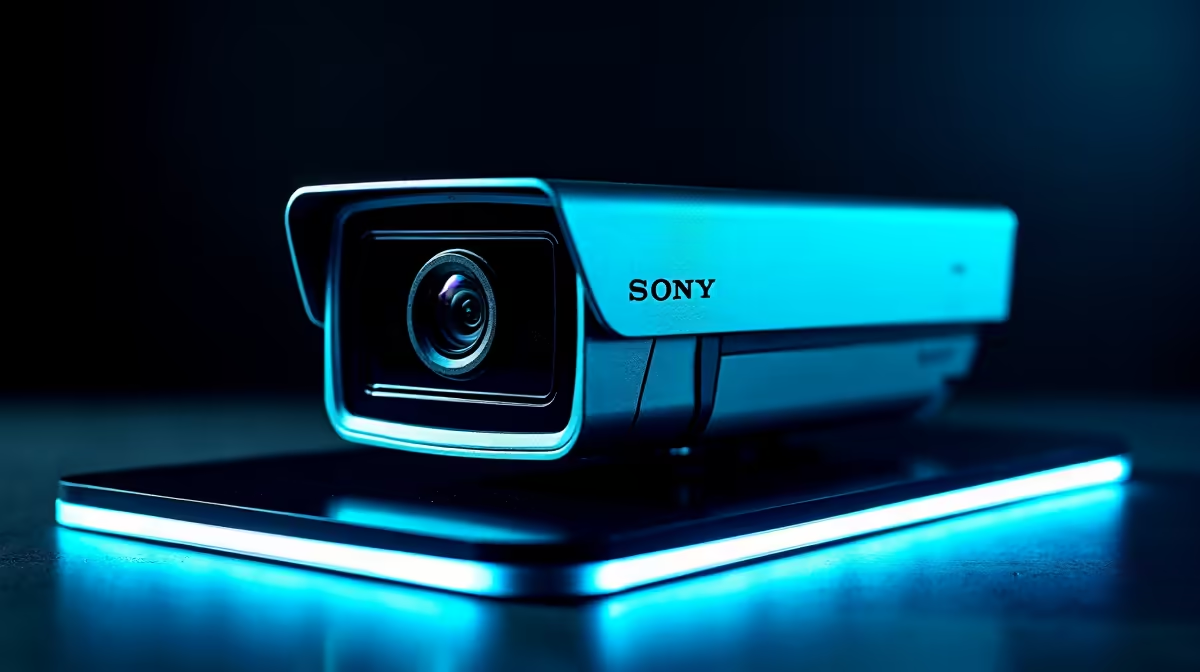
Placement does more for evidence quality than buying a bigger sensor. For a typical small retail floor, four to eight cameras cover the essentials. Put one on the till capturing both the cash drawer and the customer's face, one at the entrance at head height for a clean face shot of everyone walking in, one on the rear or stockroom door where shrinkage often starts, and one or two for a wide floor overview. That spread turns a vague clip into usable proof.
Power over Ethernet Keeps It Simple
A Power over Ethernet system runs a single network cable to each camera that carries both data and power, so there is no separate plug at every camera position. For a shop fit-out that means tidier cabling, easier placement high on a wall, and a straightforward link back to the NVR. A PoE NVR kit with four to sixteen channels is the standard starting point for a small business, giving reliable recording, app-based remote viewing, and room to add cameras later without ripping anything out.
Sizing is about channels and storage. Count your camera positions, add a couple of spare channels for future expansion, and pick an NVR with enough drive capacity for the retention you want. More cameras and higher resolution eat storage faster, so decide early how many weeks of footage you need to keep and size the disk accordingly.
Storage and Retention Planning
How long you keep footage is a business decision as much as a technical one. A dispute or theft might only surface a week or two later, so many shops aim for at least two to four weeks of continuous recording. The drive inside the NVR determines that window, and you can extend it with a larger surveillance-rated hard drive built for constant writing. To compare camera kits, recorders, and the smart-monitoring gear that ties a small-business system together, the smart home and security range is the place to start, and the most popular accessories cover the cabling, mounts, and storage that finish the install.
A note on motion and smart alerts
Modern cameras add person and vehicle detection, which filters out the false alarms a cat or a passing car would otherwise trigger. For a shop this is genuinely useful, cutting the noise so a real alert means something. It does not replace good placement and resolution, but it makes the system far less tiring to actually use day to day.
Matching the System to Your Shop
A small boutique or salon might do everything it needs with four 4MP cameras and a compact NVR. A larger store with a stockroom, multiple tills, and a delivery entrance leans toward eight channels and a bigger drive for longer retention. The principle holds either way: prioritise clear coverage of the entrance and the points where money and goods change hands, record locally, and size storage for the retention you actually need. Spend on resolution and placement where it counts rather than on a long feature list you will never open.
Frequently Asked Questions
What resolution do I need for a shop camera?
4MP is the practical floor for identifying a face at typical till and entrance distances. Lower resolutions show that someone was present but rarely give you a recognisable face when you zoom in, which is when you need it.
Do I have to pay a monthly cloud fee?
No. A local NVR or NAS stores footage on a drive in your building, so you pay once for the hardware and avoid per-camera monthly subscriptions while still viewing remotely through an app.
How many cameras does a small shop need?
Most small retail floors are well covered by four to eight cameras: one on the till, one at the entrance, one on the rear or stockroom door, and one or two wide floor views.
What is the advantage of a Power over Ethernet system?
PoE runs power and data down a single cable to each camera, simplifying installation and placement. It links cleanly to an NVR and makes adding cameras later straightforward.
How long should I keep my footage?
Aim for at least two to four weeks of continuous recording, since disputes and theft often surface days or weeks later. The NVR's drive capacity sets that window, and a larger surveillance drive extends it.