Better recordings come from phasing the upgrade sensibly, and in South Africa a good USB mic plus a few accessories beats rushing to an expensive rig. This guide is written for Rand-conscious buyers, with concrete Rand bands and specs so you can decide fast.
Quick Answer
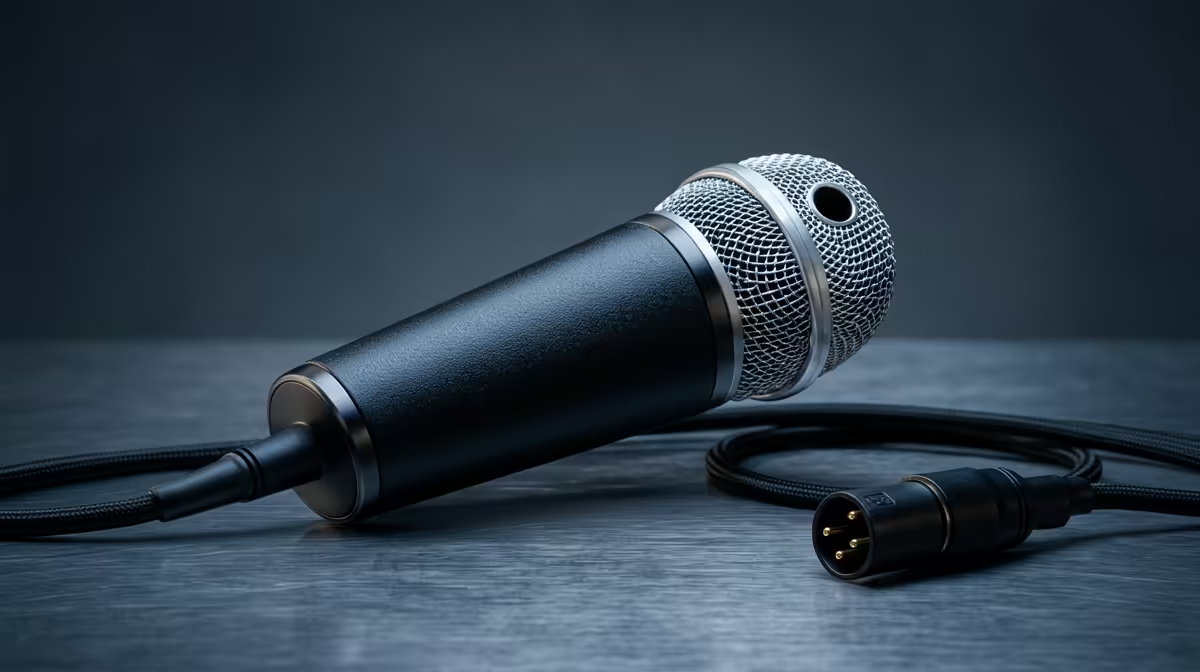
Phase the upgrade: a USB cardioid mic recording at 48 kHz with a built-in pop layer is the affordable starting point around R900 to R2,200 at Evetech. Move to an XLR setup only once you need finer control, not before.
Budget Phasing in Rands
Buy the mic first, then add the arm and pop filter, then treat the room with soft furnishings. Each step gives a clear improvement for modest money. Rushing straight to a premium XLR rig often wastes Rands on gear the room cannot do justice to.
Start With a Good USB Mic
A USB cardioid mic captures clean voice at a 48 kHz sample rate and plugs straight in with no interface. For streaming, voice-overs, and calls it is the smart first step near R900 to R2,200. It removes the room noise a headset mic picks up without complicating the chain.
When XLR Becomes Worth It
Step to an XLR mic and interface only once you want gain control, better preamps, or multiple inputs. That jump adds cost and cabling, so phase it in when the USB mic genuinely limits you. For most home creators, a quality USB mic is the long-term answer.
FAQ
How do I cut keyboard and room noise?
Use a cardioid mic close to your mouth, a pop filter, and a boom arm to keep it off the desk. These cost little and do more than a pricier mic in an untreated room.
Should I start with USB or XLR?
Start with a USB cardioid mic near R900 to R2,200; it records clean voice at 48 kHz and needs no interface. Move to XLR only when you want gain control or multiple inputs.
Where do cheap microphones disappoint?
They pick up room echo and keyboard noise and lack a usable pop layer. A cardioid USB mic with a pop filter and arm fixes the common faults for far less than an XLR rig.
Compare streaming microphones at Evetech by the specs that matter for your use, check the warranty path, then buy the one that fits your budget band.