


Black Myth: Wukong 2 Ultrawide Support: 21:9 and 32:9 Setup Guide
Black Myth: Wukong 2 Ultrawide Support: 21:9 and. Clear setup instructions with SA-specific considerations, troubleshooting tips & recommended components.
Read moreIs your network struggling? Discover why your smart home needs a router that supports 60 or more devices to prevent lag and connection drops. 🌐 Optimize your home ecosystem today! 🚀

If your home Wi‑Fi struggles when the kids stream, the office laptop joins a video call, and you’re still trying to game… you’re not alone. South African households keep adding devices. Think smart TVs, consoles, cameras, phones, tablets, and the “just one more” gadget. 😅 The fix is usually not “better internet only”. It’s the router’s ability to handle real-world load... especially for 60+ devices. Let’s future-proof your smart home.
Most home routers are built for typical households. When you cross 50-60 devices, you start seeing symptoms like:
A router’s job isn’t only “passing internet”. It also manages wireless clients, runs radios, assigns IPs, and handles network features. If those features lag, your experience suffers even on good fibre.
Evetech stocks the key building blocks you’ll need to get this right, from routers to extenders and adapters:
When you’re planning for 60+ devices, prioritise these factors before you buy:
For many buyers, Wi‑Fi 6 is where you start getting better efficiency under load. It’s especially helpful in crowded homes because it improves how the router schedules airtime. If your devices are older (Wi‑Fi 5 or worse), you still benefit, but your network will be limited by the lowest common denominator.
More “range” claims don’t guarantee better performance under heavy client load. Look for routers that support modern multi-client handling. Also consider whether you need a multi-node setup rather than one box.
Routers with faster processing cope better with many simultaneous connections, NAT sessions, and ongoing background tasks (like device management). This is why “budget router” setups can feel fine at 20 devices and messy at 60.
If you add extenders, the backhaul connection matters. Wireless backhaul can reduce throughput versus wired backhaul, but it may still be better than forcing far-away clients onto a weak link.
For the networking hardware side, you can also browse: wireless networking components
Here’s a path that works for real households, not showrooms:
Before you spend, walk through your home and note:
Don’t guess. Your “best router” can still fail if your coverage is patchy.
If you have fibre, even a single wired link from your main router to another node often improves stability. It reduces wireless backhaul strain and keeps latency more consistent for gaming.
Extenders help, but they can also create a slower hop if not placed well. If your router can’t cover the far rooms with acceptable signal, you may need a mesh-style setup or at least a carefully placed extender.
Explore options here: wireless range extenders
Some fibre setups involve a separate ONT/router combo. In practice, your overall Wi‑Fi performance depends on that device. If you’re upgrading for many devices, review the fibre router options too.
See Evetech’s selection: fibre routers
a 60+ device home, you can reduce gaming and streaming pain fast by separating networks: keep 2.4GHz for smart devices and 5GHz (or Wi‑Fi 6) for phones, consoles, and laptops. Then lock high-importance devices near the main router. This reduces radio contention and helps your “real work” devices keep stable connections.
Gaming traffic hates jitter. So besides buying the right router, do this:
Many routers offer Quality of Service (QoS). If yours does, set it so gaming devices get stable priority during busy times. The goal is fewer latency spikes when everyone is online.
New firmware can improve stability and client handling. If your router is stable at 20 devices but struggles at 60, firmware updates are worth trying before you replace it.
Even with the perfect router, weak client Wi‑Fi can drag your experience down. Some desktops need better adapters. Others just need a correct driver update. Evetech makes it easy to match devices with hardware support via wireless adapters. Pair that with a solid router purchase and you’ll typically get more consistent results than relying on extenders alone.
Ready to Find Your Perfect Match? South African homes vary, and so do the Wi‑Fi bottlenecks. The fastest way to future‑proof your smart home for 60+ devices is to choose the right router setup for your coverage needs, then match it with the correct adapters. Start browsing our wireless routers and build your network with confidence.
Most entry-level routers handle 10 to 20 devices. For a modern smart home with over 60 devices, you need a high-performance router designed for high traffic.
IoT devices, streaming, and gaming consume bandwidth. A router for 60 plus devices ensures stable connectivity and prevents packet loss across all sensors.
Yes, Wi-Fi 6 uses OFDMA and MU-MIMO technologies to manage traffic from 60 or more devices efficiently, reducing latency and network congestion.
For large homes with 60 plus devices, a mesh Wi-Fi system provides better coverage and capacity by distributing the load across multiple access points.
You can check your router's admin panel or use network scanning apps to see every device connected to your Wi-Fi, including smart plugs and cameras.
Range extenders often halve bandwidth. For 60 or more devices, a dedicated high-capacity router or a tri-band mesh system is the superior upgrade path.
Black Myth: Wukong 2 Ultrawide Support: 21:9 and. Clear setup instructions with SA-specific considerations, troubleshooting tips & recommended components.
Read more
Setting Up HDMI 2.1 Cable. Tested & verified settings for best FPS and visual quality on SA hardware budgets.
Read more
Every spec on PCIe 5.0 explained in plain English. What matters for gaming and creator work in 2026, what's marketing fluff, and how each number translates to real-world performance.
A head-to-head look at WiFi 7: real-world performance, ZAR pricing and which option delivers better value for SA builders. The clear answer — no fluff.
Everything you need to set up and tune PCIe 5.0 properly: the prep work, the settings that actually matter, and the mistakes to skip. Written for SA builders in 2026.
Everything you need to set up and tune X870E Motherboard properly: the prep work, the settings that actually matter, and the mistakes to skip. Written for SA builders in 2026.
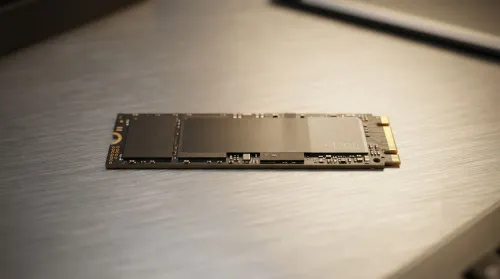
Wondering what a 512GB SSD capacity really holds? This guide breaks down how many games, photos, and documents fit on 512GB, with real-world ranges 📦💾
Every spec on vrm explained in plain English. What matters for gaming and creator work in 2026, what's marketing fluff, and how each number translates to real-world performance.
Every spec on motherboard explained in plain English. What matters for gaming and creator work in 2026, what's marketing fluff, and how each number translates to real-world performance.
Premium vs Midrange Motherboards in South Africa: real-world performance, SA pricing, power draw and which one delivers better value for your build for SA buyers. The clear answer — without the fluff.
Wondering what a 512GB SSD capacity really holds? This guide breaks down how many games, photos, and documents fit on 512GB, with real-world ranges 📦💾
Every spec on PCIe 5.0 explained in plain English. What matters for gaming and creator work in 2026, what's marketing fluff, and how each number translates to real-world performance.
A head-to-head look at WiFi 7: real-world performance, ZAR pricing and which option delivers better value for SA builders. The clear answer — no fluff.
Every spec on USB4 explained in plain English. What matters for gaming and creator work in 2026, what's marketing fluff, and how each number translates to real-world performance.