

AIO Liquid 240mm Setup and Configuration: Complete Tutorial
AIO Liquid 240mm Setup and Configuration. Clear setup instructions with SA-specific considerations, troubleshooting tips & recommended components.
Read moreBluetooth Low Energy vs 2.4GHz USB Receivers: real-world performance, SA pricing, power draw and which one delivers better value for your build. The clear answer — without the fluff.

Tired of cable clutter ruining your pristine desk setup? Going wireless is the obvious fix... but choosing the right connection type is where things get tricky. Whether you are grinding competitive ranks or typing up reports between load shedding schedules, the battle of Bluetooth Low Energy vs 2.4GHz USB receivers is real. Let us break down which wireless keyboard connection is more reliable for your needs.
When you decide to cut the cord, you generally face two distinct technologies. Bluetooth Low Energy (BLE) is designed specifically to minimise power consumption while maintaining a highly stable link. It is built directly into most modern laptops, tablets, and even smart TVs... meaning you do not need to sacrifice a precious USB port just to type.
On the flip side, 2.4GHz technology relies on a dedicated USB dongle. This receiver creates a private, high-speed radio frequency highway directly between your PC and your peripheral. If you are browsing the wide variety of keyboards in South Africa, you will notice that many premium models actually offer both of these wireless options in a single package.
If you play fast-paced titles like Counter-Strike 2 or Apex Legends, latency is your biggest enemy. Here is where the technical comparison becomes incredibly one-sided.
A 2.4GHz USB receiver provides a polling rate of 1000Hz... meaning it reports your keystrokes to your PC every single millisecond. This delivers a wired-like experience with virtually zero input lag. Bluetooth simply cannot match this speed. It typically polls at around 125Hz. That slight delay might not matter when typing an email, but it will absolutely cost you a crucial headshot. For competitive players looking at wireless gaming keyboards, a 2.4GHz connection is strictly non-negotiable.
Experiencing interference on your 2.4GHz receiver? Plug the dongle into a USB extension cable and place it closer to your keyboard. This bypasses interference from your PC case and router... ensuring flawlessly smooth inputs.
While 2.4GHz wins on pure speed, Bluetooth claims the crown for endurance and flexibility. BLE sips battery power. A good Bluetooth keyboard can easily last for months on a single charge or a fresh set of AA batteries... saving you hundreds of ZAR over the device's lifespan. This is incredibly useful during extended power outages where every bit of battery life counts.
Furthermore, BLE allows for seamless multi-device pairing. You can switch from typing on your desktop to replying to a text on your iPad with the push of a single button. If you are building a productivity-focused home office, this convenience is hard to beat. You can often find fantastic deals on these versatile peripherals if you keep an eye on our latest tech specials.
So... which is more reliable? If reliability to you means a flawless, lag-free connection that never drops a keystroke during intense gaming moments, 2.4GHz is the undisputed king. However, if reliability means never worrying about your battery dying during a long workday and easily connecting to any device without a dongle, BLE is the smarter choice.
Ready to Cut the Cord? The Bluetooth Low Energy vs 2.4GHz USB receivers debate ultimately comes down to your daily needs. Whether you crave zero-latency gaming or multi-device office productivity, Evetech has you covered. Explore our massive range of wireless keyboards and find the perfect companion today.
Bluetooth Low Energy vs 2.4GHz USB Receivers is available at Evetech.co.za with local SA warranty, Rand pricing and nationwide delivery. Stock and pricing is updated in real time on the product page.
It depends on your workload and budget. We break down the key performance differences, SA pricing gap and the scenarios where each one is the smarter buy.
Real-world gaming performance varies by title and settings. The article covers head-to-head FPS benchmarks and the resolutions where the gap actually shows up.
We compare current Rand pricing from trusted SA retailers and show which option delivers more performance per Rand for your build tier.
Each option has clear wins and compromises covered in the article — from power draw and thermals to platform cost, upgrade path and feature set.
AIO Liquid 240mm Setup and Configuration. Clear setup instructions with SA-specific considerations, troubleshooting tips & recommended components.
Read more
Setting Up DDR5 64GB Kit. Tested & verified settings for best FPS and visual quality on SA hardware budgets.
Read more
Overwatch 2 Setup Guide Gamers. Clear setup instructions with SA-specific considerations, troubleshooting tips & recommended components.
Read more
R and RStudio on Mac: Data Science Setup Guide. Clear setup instructions with SA-specific considerations, troubleshooting tips & recommended components.
Read more
NVIDIA Broadcast Setup with GPU: Streamer Guide. Clear setup instructions with SA-specific considerations, troubleshooting tips & recommended components.
Read more
Core Ultra 7 265K Temperature Guide: Normal Range. Complete product range with SA pricing, key specs & recommendations for different budgets.
Read more
AMD RX 9050 XT: Rumoured Specs, Price & Release. SA-focused analysis with local pricing data, real-world insights & actionable buying advice.
Can RTX 4080 Super Run AI Workloads for SA Developers Detailed answer with SA data, expert analysis & practical recommendations for local buyers.
Can RTX 4090 Run AI Workloads for SA Developers Detailed answer with SA data, expert analysis & practical recommendations for local buyers.
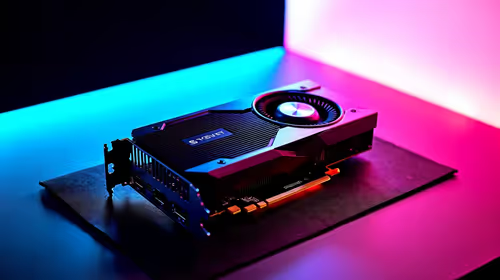
Top Settings for Intel Arc B580 at Ultrawide 1440p picks evaluated on performance, value & SA availability with current Rand pricing from Evetech.

RTX 4060 CS2 Low Settings at 1080p: FPS Results. Real-world benchmark data, FPS numbers & performance analysis. What SA gamers can actually expect.

Visual Artifacts: Possible GPU Issue Issue #1. Diagnosis steps, proven fixes & when to seek professional help. SA-specific support info included.
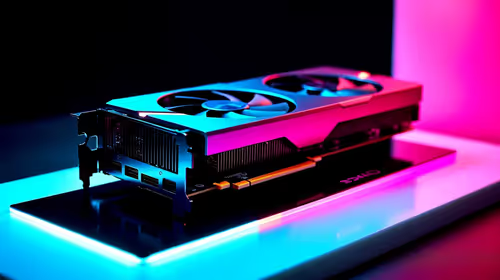
Can the RTX 4090 Handle 1440p 144Hz Gaming. Performance testing verdict with real data & practical recommendations for SA buyers.

Top ASUS GPU Under R15000 picks evaluated on performance, value & SA availability with current Rand pricing from Evetech.
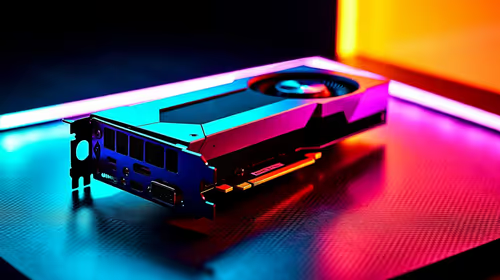
GTA 6 Max Settings on RTX 5070. Tested & verified settings for best FPS and visual quality on SA hardware budgets.
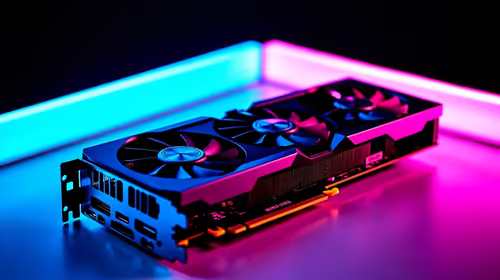
Cyberpunk 2077 Max Settings on RTX 5080. Tested & verified settings for best FPS and visual quality on SA hardware budgets.
Starfield Max Settings on RTX 5070 Ti. Tested & verified settings for best FPS and visual quality on SA hardware budgets.
Top RTX 5090 Under R5000 picks evaluated on performance, value & SA availability with current Rand pricing from Evetech.