

AIO Liquid 240mm Setup and Configuration: Complete Tutorial
AIO Liquid 240mm Setup and Configuration. Clear setup instructions with SA-specific considerations, troubleshooting tips & recommended components.
Read moreRevitalize your slow PC performance with one hidden fix ⚡️. Discover how optimizing system resources can make your computer feel brand new again. 💻✨
Is your PC chugging along like it’s stuck in rush-hour traffic on the N1? A stuttering frame rate during a tense Apex Legends match or slow loading times can ruin any session. Before you consider a whole new rig, what if you could boost your slow PC performance with a few simple tweaks or one key upgrade? Let’s get your machine running smoothly again. 🚀
Before you start shopping for new parts, let's try the free stuff first. Often, a slow PC is just bogged down by software. A few minutes of digital housekeeping can make a surprising difference and is the fastest way to get a quick PC performance boost.
Start by closing unnecessary applications running in the background. Check your system tray… are Discord, Steam, and ten Chrome tabs all running? Close what you don't need. Next, manage your startup programs. Disabling non-essential apps from launching when you boot up can dramatically speed up your PC.
Finally, run Windows' built-in Disk Clean-up tool to clear out temporary files and other digital clutter. It’s a simple but effective step to a snappier system. 🔧
For an easy win, make sure Windows Game Mode is enabled. Go to Settings > Gaming > Game Mode and flick the switch. It helps optimise your PC for play by managing system resources, giving your game priority when you need it most.
If the software tweaks didn't cut it, it's time to look at your hardware. Your PC is a team of components, and if one part is lagging, it holds everyone else back. This is called a "bottleneck," and the most common culprit in an ageing gaming rig is often the Central Processing Unit, or CPU.
Think of the CPU as your PC's brain. It tells every other part what to do. If your powerful graphics card is ready to render beautiful frames but is waiting on instructions from a slow CPU, you get stutters and low FPS. An outdated processor is a frequent cause of poor overall system responsiveness, from slow loading times to frustrating in-game lag. Recognising this is the first step to a meaningful fix for your slow PC. If you suspect this is the issue, it might be time to explore the latest CPU processors available.
Upgrading your CPU is one of the most impactful ways to boost slow PC performance instantly and for the long term. A modern processor can handle more tasks, faster, unlocking the full potential of your other components and delivering that smooth, high-frame-rate experience you're after. ✨
The big question is… Team Blue or Team Red?
For years, Intel has been a powerhouse in the gaming world. Known for strong single-core performance, which is crucial for many games, their Core i5 and i7 series are fantastic choices for gamers looking for reliable power and stability. If you're looking to build a robust gaming machine, checking out the current range of Intel CPUs is a great place to start.
AMD's Ryzen series has completely shaken up the market, offering incredible multi-core performance at competitive prices. This makes them amazing not just for gaming, but also for streaming and content creation. If you do more than just game on your PC, the value offered by AMD CPUs is tough to beat, making them a favourite for many South African builders.
Ultimately, the right choice depends on your budget and what you use your PC for, but either path leads to a massive performance uplift.
Ready for a Lag-Free Experience? Stop letting a sluggish processor hold you back. A simple upgrade can completely transform your PC experience, delivering the smooth gameplay you deserve. Explore our CPU range at Evetech for performance that leaves lag in the dust.
Accumulated temporary files and outdated software often cause sluggish performance. Use Windows Disk Cleanup and driver updates to optimize speed.
Adjust visual effects settings and disable startup programs to improve slow PC performance without system resets. Check Task Manager for resource hogs.
Background apps and automatic updates often drain resources. Use Resource Monitor to identify processes causing performance degradation.
SSD installation delivers dramatic performance boosts for slow PCs compared to traditional HDD upgrades.
Schedule monthly maintenance routines to prevent system slowdowns and maintain consistent PC responsiveness.
Upgrading RAM improves performance when running memory-intensive applications. Check Task Manager to identify memory bottlenecks.
Use Windows' Disk Cleanup tool to remove temporary files without risking important data loss.
AIO Liquid 240mm Setup and Configuration. Clear setup instructions with SA-specific considerations, troubleshooting tips & recommended components.
Read more
Setting Up DDR5 64GB Kit. Tested & verified settings for best FPS and visual quality on SA hardware budgets.
Read more
Overwatch 2 Setup Guide Gamers. Clear setup instructions with SA-specific considerations, troubleshooting tips & recommended components.
Read more
R and RStudio on Mac: Data Science Setup Guide. Clear setup instructions with SA-specific considerations, troubleshooting tips & recommended components.
Read more
NVIDIA Broadcast Setup with GPU: Streamer Guide. Clear setup instructions with SA-specific considerations, troubleshooting tips & recommended components.
Read more
Core Ultra 7 265K Temperature Guide: Normal Range. Complete product range with SA pricing, key specs & recommendations for different budgets.
Read more
AMD RX 9050 XT: Rumoured Specs, Price & Release. SA-focused analysis with local pricing data, real-world insights & actionable buying advice.
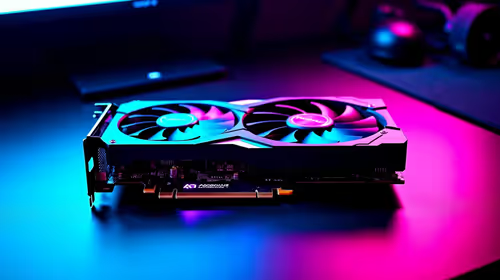
Can RTX 4080 Super Run AI Workloads for SA Developers Detailed answer with SA data, expert analysis & practical recommendations for local buyers.
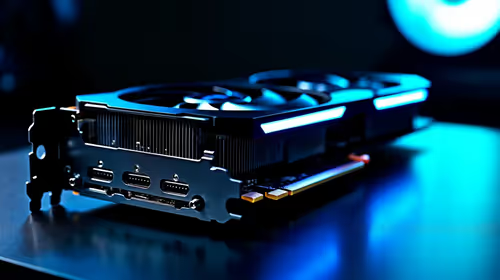
Can RTX 4090 Run AI Workloads for SA Developers Detailed answer with SA data, expert analysis & practical recommendations for local buyers.
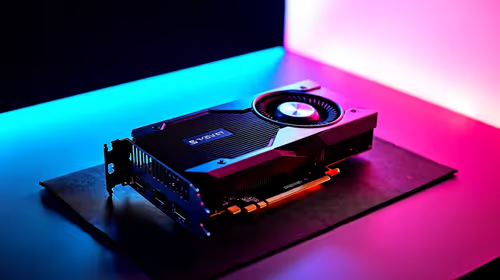
Top Settings for Intel Arc B580 at Ultrawide 1440p picks evaluated on performance, value & SA availability with current Rand pricing from Evetech.
RTX 4060 CS2 Low Settings at 1080p: FPS Results. Real-world benchmark data, FPS numbers & performance analysis. What SA gamers can actually expect.
Visual Artifacts: Possible GPU Issue Issue #1. Diagnosis steps, proven fixes & when to seek professional help. SA-specific support info included.
Can the RTX 4090 Handle 1440p 144Hz Gaming. Performance testing verdict with real data & practical recommendations for SA buyers.
Top ASUS GPU Under R15000 picks evaluated on performance, value & SA availability with current Rand pricing from Evetech.
GTA 6 Max Settings on RTX 5070. Tested & verified settings for best FPS and visual quality on SA hardware budgets.
Cyberpunk 2077 Max Settings on RTX 5080. Tested & verified settings for best FPS and visual quality on SA hardware budgets.
Starfield Max Settings on RTX 5070 Ti. Tested & verified settings for best FPS and visual quality on SA hardware budgets.
Top RTX 5090 Under R5000 picks evaluated on performance, value & SA availability with current Rand pricing from Evetech.