Pick the wrong camera shape and no amount of resolution saves the footage. A dome tucked under an eave fights IR glare all night; a bullet pointed at a wide yard misses half the action. The four common form factors, bullet, dome, turret and PTZ cameras, each solve a different problem, and matching the shape to the location is what separates a security setup that works from one that just records blur. Here is which shape belongs where.
Quick Answer
Bullet cameras suit long-range wall and eave mounting. Dome cameras hide which way the lens is pointing and resist tampering. Turret (eyeball) cameras avoid the IR glare that domes suffer because they have no glass bubble. PTZ cameras pan, tilt and zoom to actively track movement across a large area. In SA homes, turrets and bullets dominate exterior installs, with PTZ reserved for big yards.
How the Shapes Differ
Each form factor is a different package around broadly similar internals, and the housing shape drives where it works best.
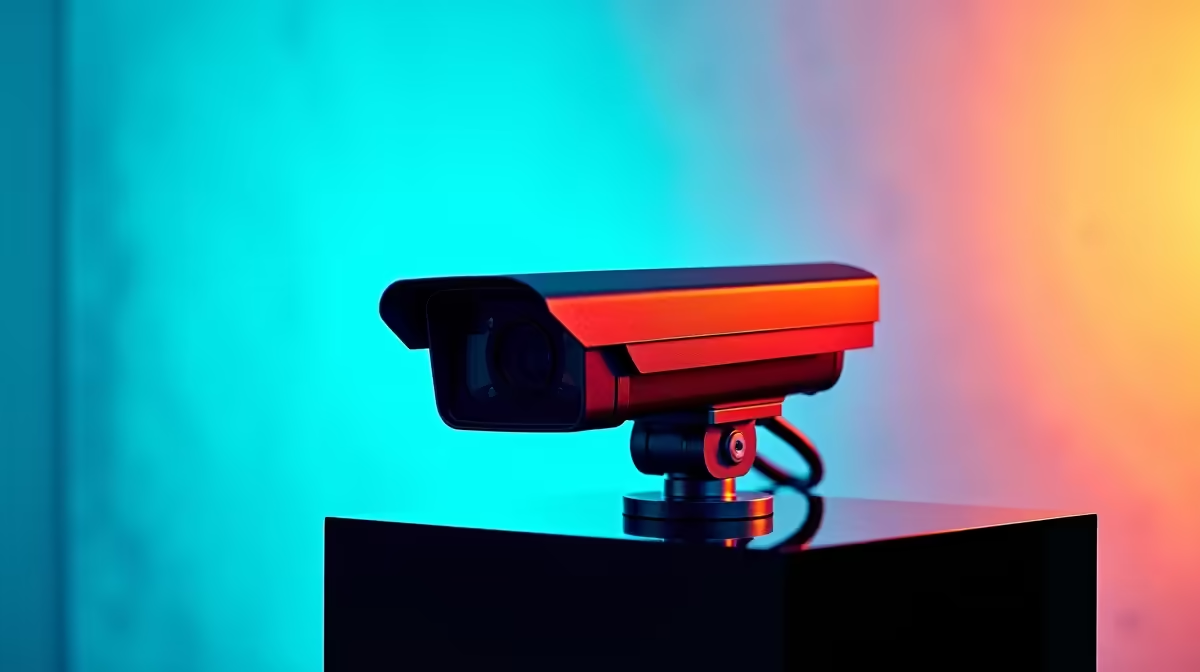
A bullet is the long cylindrical camera most people picture, mounted on a wall or eave with its direction plainly visible. A dome hides the lens inside a tinted bubble, so onlookers cannot tell where it is aimed. A turret, also called an eyeball, sits the lens on an open ball mount with no enclosing glass. A PTZ is the motorised one that physically swivels and zooms under remote or automatic control. The smart home and appliances range at Evetech is where home security cameras sit, so you can plan a mix of shapes around one system.
Bullet Cameras: Long-Range Perimeter
Bullets are the workhorse of outdoor coverage. Their cylindrical body holds longer-focal-length lenses and stronger IR illuminators, which makes them the natural choice for distance: a driveway approach, a perimeter wall, a long boundary fence.
Strengths
The visible, directional shape is a deterrent in itself, since an intruder can see exactly where it is pointed. The form factor handles powerful IR for long-range night vision and accepts varifocal lenses for reaching out across a yard.
Trade-offs
That same visibility means the camera's blind spot is easy to read, and the protruding body is more exposed to tampering than a flush dome. Bullets also tend to collect spiderwebs and dust on the housing over time.
Dome Cameras: Discreet and Tamper-Resistant
Domes hide the lens behind a tinted bubble, so people cannot tell which way it faces, and the low-profile housing is harder to grab or knock askew. That makes them a common indoor and semi-outdoor pick where you want coverage without an obvious, aggressive-looking camera.
The IR glare catch
The dome's biggest weakness outdoors is infrared glare. At night, IR light from the camera's own illuminators can reflect off the inside of the glass bubble and wash out the image. Good domes mitigate this with proper lens spacing and IR correction, but it remains the reason many people avoid plain domes for night-heavy exterior spots.
Turret Cameras: The Outdoor Night-Vision Sweet Spot
Turrets, or eyeball cameras, solve the dome's glare problem by removing the glass bubble entirely. The lens and IR sit on an open ball mount, so there is no surface for IR to bounce off, which gives noticeably cleaner night vision than a comparable dome.
That is exactly why turrets and bullets dominate SA exterior installs. A turret offers much of the discreet, low-profile look of a dome with the crisp after-dark performance of a well-aimed bullet, and the ball mount makes aiming easy. For most home exterior positions that need reliable night footage, a turret is the safe default.
PTZ Cameras: Active Coverage of Large Areas
PTZ stands for pan, tilt and zoom. These motorised cameras physically move to follow action and zoom in on detail, covering a large area that would otherwise need several fixed cameras. They suit big yards, long forecourts and situations with someone actively monitoring or with smart auto-tracking enabled.
The caveat is that a PTZ only looks one way at a time. While it is zoomed in on one corner, it is not watching the rest, so a PTZ usually complements fixed cameras rather than replacing them. They also cost more and have moving parts that can wear. For a large property they earn their place; for a small plot, fixed turrets and bullets cover everything for less. To size the recorder and storage behind a multi-camera mix, the best-selling SSDs and storage at Evetech help you plan capacity for the footage these shapes generate. For the mounts, cables and connectors that any multi-shape install needs, the top camera accessories at Evetech cover the supporting hardware.
Choosing the Right Shape per Spot
Map your property by job. For a long driveway, perimeter wall or boundary, fit a bullet for reach and visible deterrence. For exterior corners and entry points where clean night vision matters, choose a turret. For discreet indoor coverage or a spot where you would rather not advertise the lens direction, a dome works well. For a large open area you want to actively sweep and zoom, add a PTZ to back up the fixed cameras. A typical SA home ends up with a blend, most often turrets and bullets outside, the odd dome inside.
Frequently Asked Questions
What is the difference between a turret and a dome camera?
A dome encloses the lens in a tinted glass bubble, while a turret sits the lens on an open ball mount with no glass. The turret's open design avoids the IR glare that domes can suffer at night, giving cleaner night vision, while the dome better hides which way it points.
Are bullet or dome cameras better for outdoors?
Bullets suit long-range perimeter coverage with strong IR and visible deterrence, while turrets are often the better all-round exterior pick for clean night footage. Plain domes can struggle with IR glare outdoors, so turrets and bullets tend to dominate SA outdoor installs.
Do I need a PTZ camera for my home?
Usually only for a large property. A PTZ actively pans, tilts and zooms to cover a big area, but it only watches one direction at a time and costs more. For small plots, several fixed turrets and bullets give complete coverage more reliably and cheaply.
Why does my dome camera look washed out at night?
That is almost certainly IR glare. The camera's own infrared light reflects off the inside of the glass bubble and floods the image. A turret, which has no glass dome, avoids this, which is why turrets are favoured for night-heavy exterior positions.
Can I mix different camera shapes on one system?
Yes, and it is the recommended approach. Most recorders happily run a mix, so you can use bullets for long range, turrets for clean night vision at entry points, domes indoors and a PTZ for a large open area, all on the same setup.
Match the camera shape to the job, bullets for range, turrets for clean night vision, domes for discretion, PTZ for large areas, and your footage will actually be usable when it counts. Browse Evetech's smart home and security range to build a camera mix that fits your property.