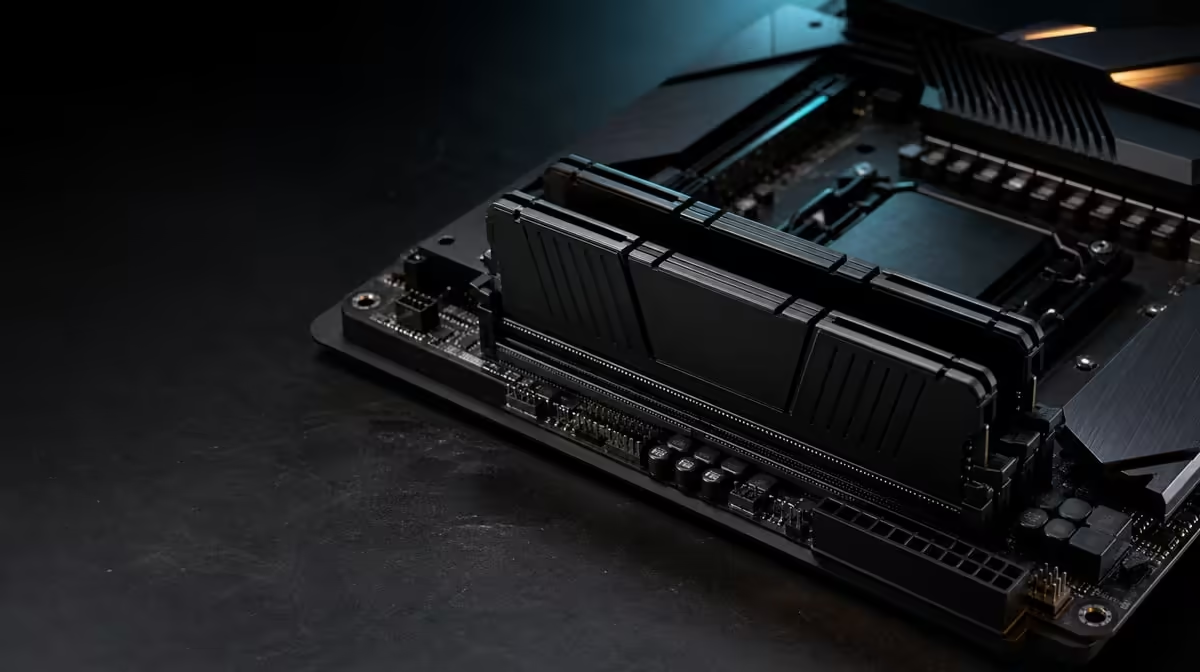
Memory upgrades are valuable when capacity pressure or data movement is a real constraint, not simply because one number is larger. 48GB DDR5-7200 gaming and multitasking combines two distinct resources in the R38,999 AMD kit: a sizeable working pool and a high transfer-rate target. The benefit depends on application demand and a stable configuration.
Quick Answer
The R38,999 kit includes 48GB of KLEVV CRAS V RGB DDR5 rated at 7200MHz. Capacity can help when games, creative tools, browsers and background services run together, while the speed rating targets memory bandwidth. Neither feature guarantees higher frame rates, and stable operation on the 9950X3D and ROG Crosshair X870E Dark Hero matters more than holding an unstable headline setting.
🧮 Separate capacity from memory speed
Forty-eight gigabytes tells the builder how much active data can reside in system memory before the operating system has to manage tighter capacity pressure. A game alone may not need that amount, but the complete session can include capture software, voice chat, a browser, launchers, editing tools or project assets. Those concurrent demands are where additional capacity can become useful.
The 7200MHz figure describes the KLEVV kit's rated transfer target. It does not mean the memory holds more data, just as adding capacity does not automatically increase transfer speed. Keeping these measurements separate makes the buying question clearer: does the workload need more room, faster data movement, or both?
Capacity benefits often appear as reduced interruption rather than a dramatic average-frame increase. A user who regularly approaches a smaller memory limit may see fewer application reloads, less pressure when switching tasks and a smoother path between gaming and creation. Someone whose typical use remains comfortably below that limit may not experience the same return from 48GB.
Speed benefits are also workload-dependent. CPU-limited games and particular applications may respond to memory bandwidth or latency, while a GPU-limited title may barely move. A 7200MHz label therefore needs stable testing in the software that matters.
Evetech's AMD processor category can help buyers place the memory choice beside the 9950X3D rather than considering RAM in isolation.
🎮 Map 48GB to games and background work
Start by measuring the current routine. Launch the normal game, communication tools, browser tabs and any capture or streaming application. Observe memory use across a representative session rather than immediately after boot. The peak and the behaviour near that peak reveal more than a generic recommendation.
Creation workloads can add a different type of demand. Large timelines, layered assets, development environments and simultaneous source applications may retain substantial working data. If the user moves between a game and those tools without closing everything, 48GB can provide practical headroom. The value comes from supporting the actual workflow, not from labelling every creative task as memory-heavy.
The 9950X3D's 144MB GameCache does not replace system memory. Cache is a small, fast layer on the processor for selected frequently used data; DDR5 is the much larger active pool used by the operating system and applications. Both can influence a CPU-focused scenario, but they solve different constraints.
Graphics memory is separate again. The 48GB KLEVV kit cannot compensate for an unsuitable graphics card or insufficient graphics memory in a 4K workload. The GPU choice remains outside this upgrade package and must be budgeted around the intended resolution and applications.
⚙️ Configure the 7200MHz target responsibly
Install the memory according to the exact ASUS ROG Crosshair X870E Dark Hero guidance and confirm that the full 48GB is recognised before adjusting performance settings. A correct capacity reading establishes the first baseline. If the system does not see the expected amount, resolve installation or configuration before benchmarking.
The rated speed may require an appropriate memory profile or manual platform configuration. Use the board's documented controls and change one item at a time. The achievable stable result depends on the specific processor memory controller, motherboard firmware and memory configuration; the printed 7200MHz target is not a universal automatic outcome.
Stability testing should cover more than a quick boot. Use suitable memory tests and representative workloads, then watch for application errors, crashes, corrupted output or inconsistent behaviour. A setting that completes one light task but fails during long mixed work is not a performance improvement.
Record the stable baseline before exploring further changes. Note capacity, chosen memory setting and the tests completed. If a later adjustment introduces problems, return to the known working configuration rather than stacking additional changes.
The kit's DeepCool LQ360 and Dark Hero do not make memory stability automatic. Cooling supports the CPU thermal plan, while the board provides configuration controls. The memory controller inside the processor remains part of the result.
💵 Decide whether memory strengthens the whole kit
At R38,999, buyers are purchasing the 9950X3D, Dark Hero board, 48GB KLEVV DDR5-7200 and LQ360 together. Give the memory its own value row. Record how often capacity above a smaller pool would be used, which workloads may respond to higher bandwidth and whether the chosen speed can be maintained reliably.
Compare that package with other coordinated options in Evetech's AMD upgrade kit range. A different bundle may leave more budget for graphics or storage; this one concentrates substantial resources in the platform core. Neither direction is automatically correct.
Use Evetech's AMD motherboard selection to compare the exact Dark Hero with boards suited to different connection and expansion requirements. Do not assume that a premium chipset guarantees the KLEVV kit's full rated speed in every processor sample and configuration.
Finish with a complete-system budget. Graphics, storage, power and chassis remain outside the R38,999 package. The memory is worthwhile when it solves recurring capacity pressure or bandwidth-sensitive work without starving those other components. Check current availability after the stable platform plan is clear.
Revisit the decision after one month of real use. Compare peak memory demand, application switching and any instability with the pre-purchase expectations. That review helps distinguish capacity that genuinely improved the routine from unused headroom. It also gives the builder a stable reference before later firmware or configuration changes. Performance memory is most valuable when its capacity and rate continue to serve the workload without turning routine sessions into repeated troubleshooting.
Preserve the stable profile used during that review so later tests have a dependable comparison point.
Frequently Asked Questions
What does 48GB help with?
It provides a larger active memory pool for games, creative applications and background tools running together. The value depends on how close the user's current workload comes to a smaller capacity.
What does the 7200MHz rating mean?
It is the KLEVV DDR5 kit's rated transfer target. It is different from capacity and still needs a stable platform configuration.
Will every game use more than 32GB?
No. Many games and sessions may remain below that level, while mixed use, creation tools and heavier assets can change the requirement.
Does the memory run at 7200MHz automatically?
Not necessarily. The board settings, processor memory controller, firmware and configuration influence the stable speed reached.
Can faster DDR5 improve gaming?
Some CPU-sensitive titles can respond to memory performance, but GPU load, latency and engine behaviour affect the observed gain.
How should the setup be tested?
Confirm all 48GB first, establish a stable baseline, then use suitable memory tests and the real games or applications that motivated the change.
Does RGB lighting change memory performance?
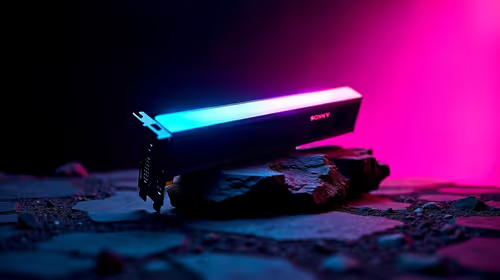
No. The CRAS V RGB styling is separate from the kit's 48GB capacity, rated speed and stability.
Ready to decide whether your workload needs both capacity and a faster DDR5 target?
Compare Evetech AMD platform options and make the 48GB KLEVV configuration earn its place in the R38,999 build.