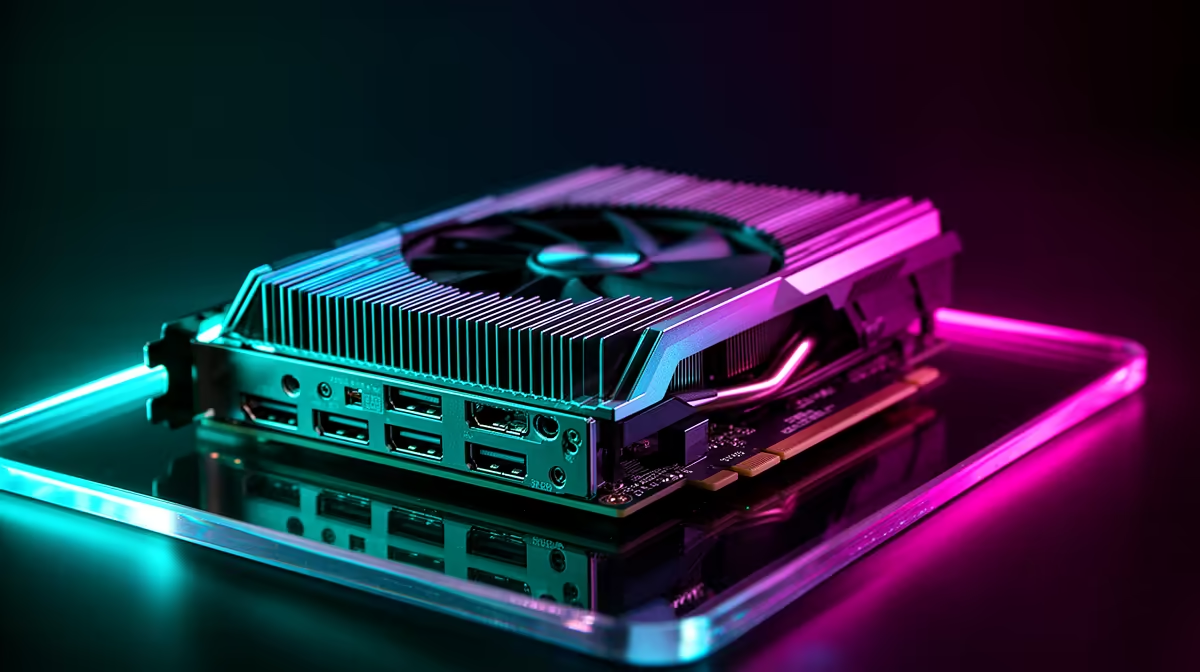
There is a hard line in local AI image generation, and it runs straight through your graphics card's memory. Below it, Flux is forced into heavy compression that smears fine detail. Above it, the model runs clean. The cheapest GPU that can run Flux locally without killing quality is the one that just clears that line, and the line sits at 16GB of VRAM.
Quick Answer
You need 16GB of VRAM. At that capacity, the FP8 version of Flux.1 Dev fits with only negligible quality loss versus the full FP16 model. Drop to an 8GB card and you are pushed onto NF4 compression that visibly softens fine detail. The RTX 4060 Ti 16GB is the budget entry point that clears the bar.
Why 16GB is the real threshold
Flux is a large model, and how much of it fits in VRAM dictates which version you can run. The full FP16 model wants around 24GB, which is flagship territory. FP8 roughly halves that to about 12GB of model weight, and it produces images that are visually indistinguishable from FP16 on most prompts. That FP8 version is the sweet spot, and a 16GB card holds it with working headroom for the rest of the pipeline.
Go below 16GB and the maths stops working in your favour. An 8GB card cannot hold FP8 comfortably, so you fall back to NF4, a more aggressive quantisation that shrinks the model further at a real cost to detail. NF4 will generate Flux images, but fine textures, small faces and intricate edges come out softer. That is the quality loss the question is asking about, and it is avoidable simply by clearing the VRAM bar.
The budget pick: RTX 4060 Ti 16GB
For value, the RTX 4060 Ti in its 16GB trim is the standout. It is not a fast gaming card relative to pricier options, but for Flux it offers the one thing that matters most, enough memory to run FP8, at the lowest sensible price. It delivers the best price-to-performance ratio for this kind of quantised local AI work, which is exactly why it keeps coming up as the entry recommendation.
It is worth being clear about the trade-off: FP8 on a 16GB card can be tight, so a clean ComfyUI setup with sensible memory management helps it run smoothly. But it runs, and it runs at quality you would struggle to tell apart from a far more expensive card.
Quantisation, briefly
Quantisation just means storing the model in fewer bits to save memory, and each step down trades a little fidelity for a smaller footprint. FP16 is the full-quality reference. FP8 halves the size with negligible visible loss, which is why it is the target. GGUF Q8 is a near alternative for those using the GGUF node, marginally smaller again. NF4 is the deep-compression option for small cards, and it is where quality visibly suffers. The goal is to stay at FP8 or better, which is precisely what 16GB enables.
Speed versus quality: two different questions
It is worth separating the two things VRAM affects, because people conflate them. Whether you can run Flux at full quality is a capacity question, answered by clearing the 16GB bar so FP8 fits. How fast each image generates is a compute question, answered by the card's raw processing power. A 16GB 4060 Ti clears the quality bar comfortably but is not a fast generator; a pricier 16GB card produces the same quality images noticeably quicker.
For a hobbyist making images in their own time, the slower generation of the budget pick is a minor inconvenience for a major saving. For someone iterating heavily, batching dozens of variations, or generating commercially, paying up for more compute on top of the 16GB floor starts to make sense. The key insight stays the same either way: 16GB sets the quality, and everything above it buys speed and headroom rather than better-looking output.
Practical setup notes for a 16GB card
Running FP8 Flux on exactly 16GB is feasible but can be tight, so a clean configuration helps. Use a current ComfyUI build with sensible memory management, close other GPU-hungry applications while generating, and keep your resolution and batch sizes reasonable until you know how much headroom your particular workflow leaves. If you do hit a memory ceiling, GGUF quantisation at Q6 or Q8 is a graceful fallback that stays close to FP8 quality while trimming the footprint.
The reassuring part is that none of this requires exotic hardware tuning. A 16GB card, a tidy software setup and modest settings discipline are enough to run Flux at quality you would struggle to tell apart from a far costlier rig. The whole point of the 16GB threshold is that it removes the need for the aggressive compromises that smaller cards force.
What to buy and where it leads
If your aim is clean Flux output on a budget, start at 16GB and do not compromise below it; the saving on an 8GB card is a false economy once you see the softened results. From the 4060 Ti 16GB upward, more VRAM buys you headroom for larger workflows and faster generation rather than a fundamental quality jump. You can compare memory and price across current cards in the AI-ready PC range at Evetech, and line up the GPUs directly through the best-selling graphics cards list.
How this compares to the alternatives
It is fair to ask whether a 16GB card is even the right call versus the alternatives. Renting cloud GPU time avoids the upfront cost, but the fees add up fast for anyone generating regularly, and your prompts and images leave your machine. A pricier 24GB card runs the full FP16 model and larger workflows, which matters for professional work, but it is overkill if FP8 already gives you indistinguishable results. And an 8GB card simply cannot reach the quality the question asks for.
That leaves the 16GB tier as the genuine value sweet spot for local, private, high-quality Flux. You own the hardware, nothing leaves your machine, and you sidestep the detail-softening compromises smaller cards force. The 4060 Ti 16GB anchors the bottom of that tier, with roomier and faster 16GB-plus options above it for those who want more speed or headroom without changing the quality story.
Frequently Asked Questions
Can an 8GB GPU run Flux at all?
It can, using NF4 compression, but with visible quality loss in fine detail. For output you would not want to recompromise, 16GB is the practical minimum so you can run FP8 instead.
Why is FP8 the recommended version?
FP8 roughly halves the memory needed versus FP16 while staying visually indistinguishable on most prompts. It is a single file with no extra setup, which makes it the easiest high-quality option for a 16GB card.
Is the RTX 4060 Ti 16GB fast enough?
For Flux image generation, yes. It is chosen for its memory and value rather than raw speed; it runs FP8 at near-flagship quality, just not at the fastest generation times. More expensive cards mainly buy speed and headroom.
Does more than 16GB improve image quality?
Not the quality of a single Flux image at FP8, which already matches FP16 closely. Extra VRAM buys headroom for bigger workflows, batching and faster generation rather than better-looking output.
What is NF4 and why avoid it?
NF4 is an aggressive quantisation that compresses the model to fit small cards, at the cost of fine detail. It is fine as a last resort on 8GB hardware, but on a 16GB card you should run FP8 and skip it.
Building a rig that runs Flux cleanly on a budget? Compare VRAM and pricing in the AI-ready PC range at Evetech and start at the 16GB mark that keeps your output sharp.