A gas lift, chassis and base form a structural system, but one strong component cannot certify the whole chair. This Class 4 gas lift and reinforced chair chassis guide uses the X7's aluminium-alloy backrest support and stainless-steel base while keeping gas-lift class separate.
Quick Answer
The X7 combines an alloy backrest brace with a five-point stainless-steel foundation, but it does not identify its gas cylinder as Class 4.
Compare Class 4 gas lifts and reinforced chassis by identifying the exact component, applicable rating, construction and complete-chair load guidance. The R14,999 X7 establishes its reinforced back support and metal caster foundation, but not a Class 4 cylinder.
🧭 Define the gas-lift requirement precisely
A gas-lift class applies to the lifting component under a relevant standard or rating. It does not state the strength of the base, seat, backrest or connections. Ask for the exact cylinder class and the complete chair's supported limits.
Height adjustment also has to fit the desk and user. Move slowly through the documented range, choose a position with secure feet and relaxed desk reach, and observe normal operation. Do not bounce, overload or dismantle the lift to create an improvised test.
Keep height travel separate from lift class
Two chairs can use the same class while offering different adjustment travel or desk fit. Obtain the exact height range when it affects the user. A class label alone does not guarantee that the seat reaches the right position.
Use Evetech's office-chair range to select candidates whose lift information can be checked directly. Leave the X7 lift-class row open rather than filling it from a general category expectation.
🧭 Ask what the chassis reinforcement changes
The word reinforced should identify a component, material or construction change. It does not automatically establish steel, wall thickness, joint method or total capacity. Verify what is reinforced and which complete-product rating applies.
A chassis can connect several chair parts, while the base and lift carry different loads and movements. Do not transfer one component's material or rating to the whole system. Exact dimensions and load guidance remain mandatory for the intended user.
Evaluate normal stability without abuse
Position the candidate on its intended floor and set the desk height. Observe ordinary sitting, standing and turning for looseness or unexpected movement. Stop when damage or instability appears and use the appropriate support process.
Never exceed a documented limit to see what happens. Durability is not proven by one aggressive trial, and a reinforced label is not permission to misuse the chair.
🧭 Separate X7 comfort features from structure
The X7 follows lower-back posture automatically and lets users adjust support across directions. Its backrest support is aluminium alloy and its five-claw base stainless steel; lift class, dimensions and capacity remain separate rows.
Test the chair's support and seat only after mandatory physical fit and structural information clears. Switch massage and heat off during height and stability evaluation so active sensation does not distract from movement or control.
Plan powered operation independently
Buyers must obtain the X7 battery separately when powered functions matter. Identify the item before adding its cost, and keep battery type, capacity and runtime outside the structural score.
Browse Evetech's HBADA office-chair category for exact feature comparisons. Keep structural questions visible until the candidate itself answers them.
🧭 Build a complete component matrix
Create separate rows for lift class, height travel, base, chassis, load guidance, room dimensions, lumbar system, seat ventilation and active functions. Mark each row pass, fail or open. An open structural requirement blocks approval even when comfort functions test well.
Compare exact candidates under the same user, floor and desk. The winner is the chair that clears mandatory structure and fit while providing the desired support, not the one with the longest component list and unresolved entries.
Preserve evidence and retest normal use
Keep model-specific guidance and the accepted desk height with the chair. Recheck normal operation after assembly or adjustment under its instructions. Any unexpected movement should be addressed through proper support rather than concealed by further tightening or modification.
Check how structural requirements enter procurement
If a workplace policy or user need requires Class 4, put that exact component class in the mandatory column before comfort testing. Do the same for load guidance, dimensions and any chassis material requirement. A candidate that cannot close a mandatory row remains conditional.
Keep model names beside every documented component. This prevents a Class 4 result from one office chair being transferred to the X7 or a reinforced-chassis label from being applied across a brand. Exact attribution matters more than category expectations. Retain that distinction in procurement notes.
Separate assembly quality from component class
Follow the candidate's assembly guidance and confirm ordinary operation without improvising modifications. A correctly rated lift cannot compensate for incorrect assembly, while a smooth first adjustment does not prove component class. Keep both observations visible.
After the chair is used normally, recheck only the points identified by its maintenance instructions. Stop when unexpected movement or damage appears. Do not tighten unknown parts or exceed capacity to create evidence.
Build a handover for support and facilities teams
Write the chair model, accepted desk height, verified limits and observed symptom if help is needed. Include whether the issue concerns height movement, base stability, chassis, lumbar support or powered comfort. This keeps structural diagnosis separate from massage, heat or tracking.
Preserve the correct battery information with the smart-function note, not the structural record. A clear handover lets the relevant team act on the right component without assigning lift or chassis features the chair does not document.
Close the structural matrix only when every mandatory component belongs to the exact chair. Keep the documented lift, chassis description, capacity, dimensions and observed normal operation together. This evidence prevents a comfortable X7 support trial from filling an unknown Class 4 or reinforced row, and it keeps another candidate's structural result from migrating across the shortlist.
The base is designed for high load bearing, while the aluminium component supports the backrest assembly. Those structural facts can enter the comparison directly. Keep cylinder class as a separate component field rather than using the smart lumbar or massage systems as indirect evidence.
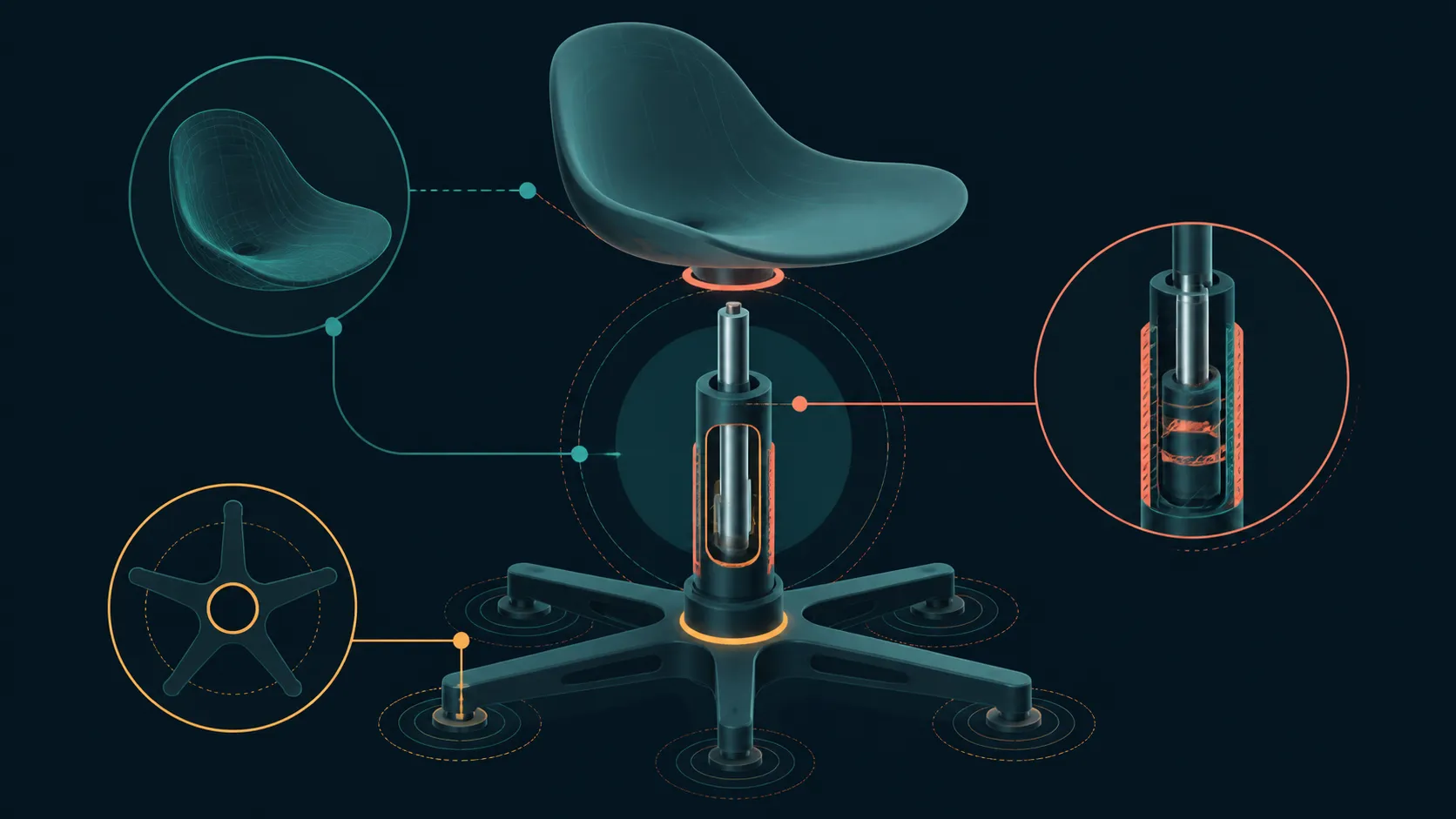
When comparing chassis strength, keep the caster bracket, backrest support and gas lift in separate rows. A known stainless-steel base cannot silently assign a class to the cylinder, and a cylinder label cannot describe the backrest material.
Keep the alloy backrest support and stainless foundation separate from the unresolved cylinder class.
Frequently Asked Questions
What does a gas-lift class need to confirm?
It needs an exact component class tied to the chair. Height travel and complete load guidance still require separate product information.
Can a reinforced chassis prove total strength?
No. Reinforcement must identify its component and construction, while the whole chair needs its own capacity and structural assessment.
When should lift and chassis details be checked?
Check them before purchase whenever capacity, policy or long-term structural requirements are mandatory. Do not wait until active features are being tested.
Which HBADA functions can buyers compare directly?
Buyers can test automatic lower-back following, support movement across directions, massage, heat and cushion ventilation on the X7.
Why must load capacity be checked separately?
No single lift or chassis term defines the complete product. Every connected structural element contributes to safe supported use.
How should height adjustment be evaluated?
Use the documented range under normal operation, then confirm secure foot support and comfortable desk reach without exceeding any documented limit.
Ready to verify every structural row before scoring comfort?
Compare Evetech office chairs with lift, chassis, capacity, fit and smart functions kept separate.