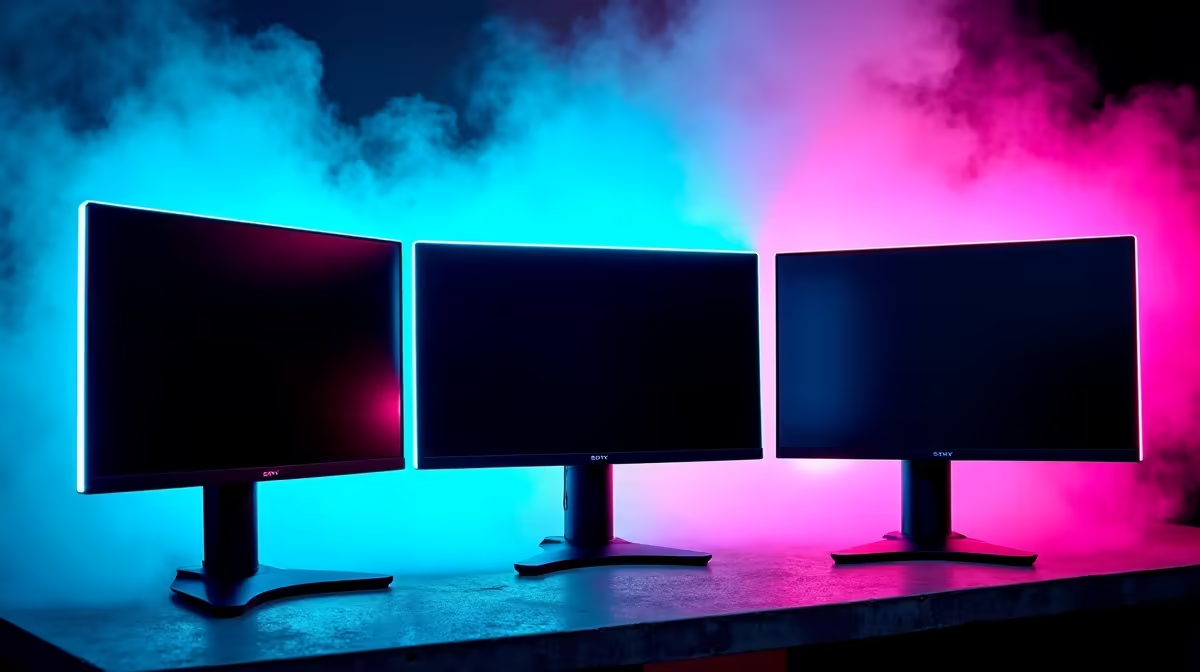
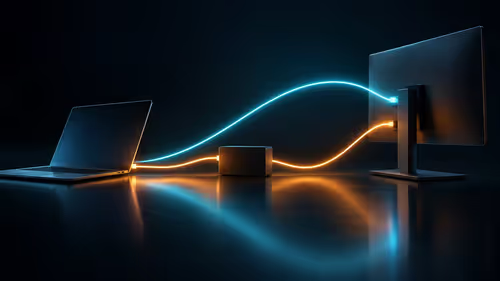
Tired of that snake pit of cables behind your desk? Dreaming of a clean, multi-monitor setup for your rig in Jozi or Cape Town? DisplayPort daisy-chaining promises just that: multiple screens from a single port on your GPU. But there’s a catch... the DisplayPort daisy chain limits aren't always clear. How many monitors can you actually run before your setup gives up? Let’s untangle the tech and find out. ✨
Understanding DisplayPort Daisy Chaining
At its core, daisy-chaining is a beautifully simple idea. Instead of running a separate cable from your graphics card to every single monitor, you connect your PC to the first monitor, then the first monitor to the second, the second to the third, and so on. It’s a clean, elegant solution for anyone who despises cable clutter.
This magic is made possible by a technology called Multi-Stream Transport (MST), a feature built into DisplayPort version 1.2 and newer. MST allows a single DisplayPort connection to carry multiple independent video signals. Your graphics card sends all the video data down one pipe, and each compatible monitor in the chain intelligently picks off the signal meant for it. This is a standard feature on many of the latest PC monitors, but knowing the limits is key.
The Real DisplayPort Daisy Chain Limits
So, what are the actual DisplayPort daisy chain limits? The answer isn't a simple number like "four monitors." It's all about one thing: bandwidth. Every DisplayPort version has a maximum data rate, and every monitor you add consumes a chunk of that bandwidth. The more demanding the monitor, the more bandwidth it uses.
Let's break down the main factors that will determine how many monitors you can run.
Resolution & Refresh Rate: The Bandwidth Hogs
This is the biggest factor. A monitor's resolution (the number of pixels) and refresh rate (how many times the screen updates per second) dictate its bandwidth needs.
- 1080p (Full HD) at 60Hz: This is the baseline. It uses a relatively small amount of bandwidth, allowing you to chain several monitors together.
- 1440p (QHD) at 144Hz: A popular choice for gamers, but it demands significantly more data than a 1080p screen.
- 4K (UHD) at 60Hz or higher: These are the real bandwidth hogs. Running just one or two of these stunning 4K monitors can max out your connection.
If you're a competitive gamer chasing high frame rates, chaining multiple high-refresh-rate gaming monitors might not be ideal, as you could be forced to lower their refresh rates to make it work.
Check Before You Buy! 🔧
Not all DisplayPort monitors support daisy-chaining. You need a screen with both a 'DP In' and a 'DP Out' port. The 'DP Out' is crucial for passing the signal to the next monitor in the chain. Always double-check the product specs on Evetech before adding to your cart!
Your GPU and DisplayPort Version Matter
The capabilities of your graphics card are just as important. The DisplayPort version on your GPU determines the total available bandwidth.
- DisplayPort 1.2: The original standard with MST support. It can handle up to four 1080p@60Hz displays or two 1440p@60Hz displays.
- DisplayPort 1.4: Offers about 50% more bandwidth than 1.2. This opens the door for chaining multiple 1440p monitors or even two 4K@60Hz screens. Most modern gaming GPUs from NVIDIA and AMD support this.
What You'll Need for a Flawless Setup 🚀
Ready to build your own clean, multi-screen workspace? Here’s a quick checklist:
- A Graphics Card with DisplayPort 1.2 (or newer) and MST support.
- MST-Compatible Monitors: As mentioned, they must have both a DisplayPort input and a DisplayPort output.
- Quality DisplayPort Cables: Don't skimp on cables. A poor-quality cable can cause flickering or signal loss.
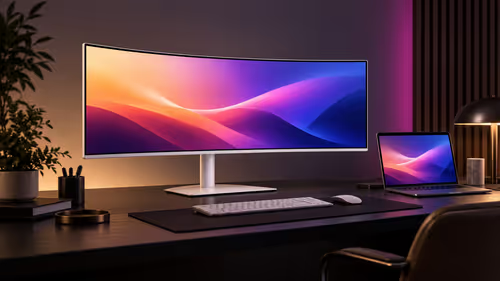
With a decent DP 1.4 card, you could create an incredible productivity station or an immersive flight sim rig with a set of curved monitors. The technology is even becoming more common in premium portable monitors for those who need a multi-screen setup on the move.
To get started, you can often find great daisy-chain compatible screens in our best PC monitor deals. And don't forget the right cables and stands from our range of monitor accessories to complete your setup perfectly.
Is Daisy Chaining Worth It for Your Setup?
For most South African professionals, developers, and casual gamers, daisy-chaining is a fantastic way to achieve a multi-monitor setup without the cable mess. It simplifies your desk and makes managing your workspace a breeze.
However, for elite competitive gamers who need every last drop of performance for a single high-refresh-rate screen, a direct connection is still the way to go. The key is understanding the DisplayPort daisy chain limits and matching the technology to your needs.
Ready to Build Your Ultimate Command Centre?
Daisy chaining is a powerful tool, but it starts with the right hardware. From high-refresh rate panels to immersive ultrawides, your perfect multi-monitor setup is waiting. Explore Evetech's massive range of PC monitors and design your dream workspace today.