Print ABS or ASA on an open machine and you will eventually meet the same enemy: a tall corner that peels off the bed mid-print, or a visible split where one layer never bonded to the next. A 3D printer enclosure fixes that by trapping the heat the print needs to stay dimensionally stable, and the real choice South African makers face is whether to build one from a grow tent or cabinet, or buy a fitted commercial unit. Both keep warping at bay. They differ in how repeatable, sealed and safe they are.
Quick Answer
A DIY grow-tent or cabinet enclosure can cost a fraction of a fitted commercial one and holds heat well enough for reliable ABS and ASA, but seal quality and fume handling vary with the build. A commercial enclosure gives tested, repeatable conditions and proper filtered ports out of the box. If you just want to print ABS reliably this month, buy commercial; if you want a large multi-printer chamber on a budget, the tent route wins.
Why ABS and ASA Force the Question
PLA is forgiving and prints fine in the open. ABS and ASA are not. They shrink as they cool, and uneven cooling is what pulls corners up off the bed and splits layers apart. An enclosed chamber lets the ambient temperature climb and stay there, so the whole part cools slowly and evenly. That single change is the difference between a cracked print and a clean one.
Both materials also release fumes you do not want building up in a home workspace, whether that is a study in Johannesburg or a spare room in Cape Town, which is why any enclosure conversation is really two conversations at once: heat retention and extraction. A setup that nails one and ignores the other is only half a solution.
Browsing the 3D printer range at Evetech lets you compare which current models ship with a built-in chamber versus which are open-frame units you would need to enclose yourself.
The DIY Route: Grow Tents and Cabinets
Fabric grow tents borrowed from indoor horticulture are the standout budget option. They are large, floor-standing, and lined with a reflective insulated interior that holds heat impressively well. A mid-size tent swallows two or three printers, and because tents are built to mount inline extraction fans with ducting, you can route fumes outside through a window with very little extra effort.
Where DIY shines
The cost-to-volume ratio is hard to beat. For roughly what a single fitted enclosure costs, you can build a tented chamber big enough for a small print farm. The reflective lining behaves a lot like the insulation on premium enclosures, and makers printing ABS and ASA daily consistently report enough thermal stability to stop the corner lifting and layer separation that open-air printing produces.
Where DIY asks more of you
Seal quality is only as good as your build. Cable pass-throughs, zips and gaps all leak heat, and a tent with poor sealing will not hold a stable chamber temperature on a cold morning. You also own the safety side entirely: there is no fire rating, no tested electrical routing, and no warranty if something goes wrong. A flammable fabric box around a hot machine demands sensible smoke detection and a habit of not leaving prints running unattended.
A cabinet build (an enclosed shelving unit fitted with acrylic doors and a fan) sits between the two. It looks tidier and seals better than fabric, but takes tools, time and a bit of trial and error to get right.
The Commercial Route: Fitted and Tested
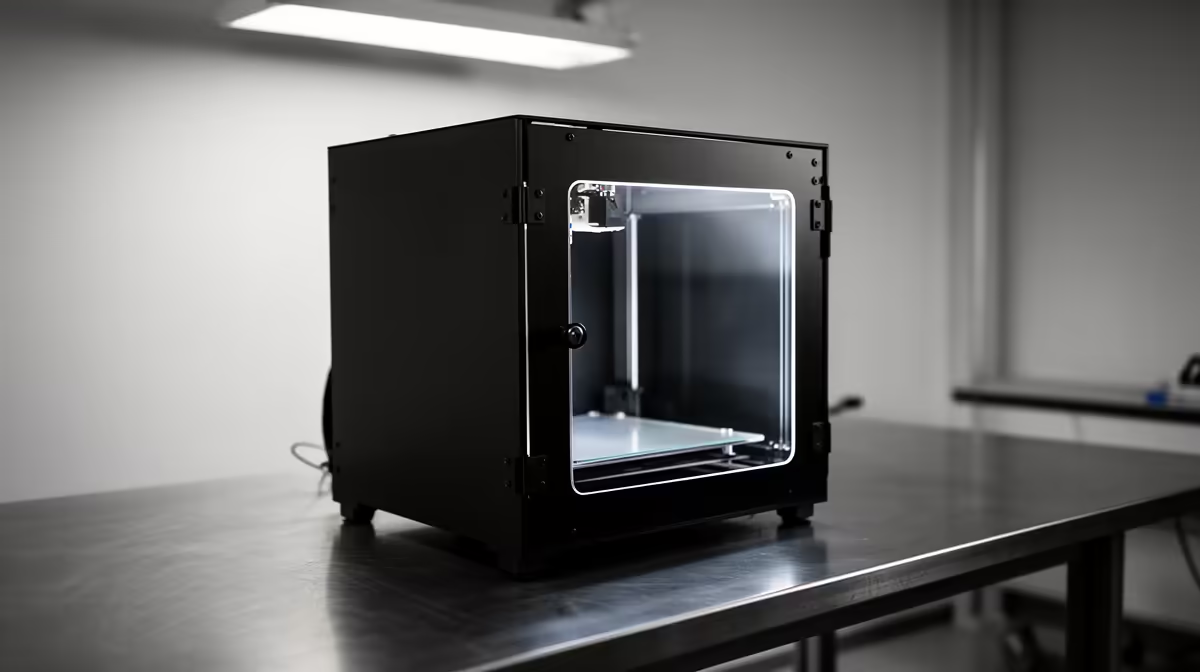
A commercial enclosure arrives sized for your printer with proper fitted panels, sealed cable ports, and often a filtered exhaust port designed for the fume load. Better units add active heating to hold a target chamber temperature, which takes the guesswork out of ASA prints that demand a warm, steady environment.
The case for buying is mostly about reliability and peace of mind. Tested designs, fire-safety considerations and warranty support justify the price for anyone who would rather print than tinker. You lose the cheap-per-litre advantage of a tent, and you are usually locked to roughly one printer per unit, but you gain a chamber that behaves the same way every single print.
Which One Fits Your Setup
Pick the tent or cabinet route if you run several printers, want a big chamber cheaply, and are comfortable handling extraction and fire safety yourself. Pick a commercial enclosure if you run one machine, print ASA often, and value tested, repeatable conditions over saving money. Many serious SA makers end up with both: a commercial unit for the workhorse printer and a tent for the overflow.
Whichever way you go, budget for an inline extraction fan and a length of ducting, plus a smoke detector nearby. Those accessories matter more than the enclosure brand. Checking what other local makers are ordering from the accessories best sellers shows which cooling fans, cabling and small parts come up most often when builders kit out a new print station.
Frequently Asked Questions
Do I really need an enclosure for ABS?
In practice, yes, for anything taller than a few centimetres. ABS shrinks as it cools, and an open machine cools it unevenly, which lifts corners and splits layers. A sealed chamber that holds heat is what keeps large ABS and ASA parts dimensionally stable.
Is a grow tent safe around a hot printer?
It can be, with sensible precautions. Use a smoke detector nearby, keep the electrical routing tidy, and do not leave long prints running unattended. Fabric tents carry no fire rating, so the safety burden is yours to manage rather than something the product handles for you.
How much cheaper is the DIY route?
Significantly. A tent-based chamber large enough for two or three printers can cost a fraction of what a single fitted commercial enclosure runs, which is why it is so popular for small print farms. The trade-off is variable seal quality and the safety responsibility falling on you.
Does an enclosure handle fumes on its own?
No. Heat retention and fume extraction are separate jobs. An enclosure traps fumes, but you still need an inline fan and ducting (or a filtered port on a commercial unit) to move them out of the room. Plan extraction at the same time as the chamber.
Will a commercial enclosure fit any printer?
Most are sized for specific printer footprints or printer families, so check the internal dimensions against your machine before buying. If you run an unusual or oversized printer, a cabinet or tent build is often the more flexible answer.