Quick Answer
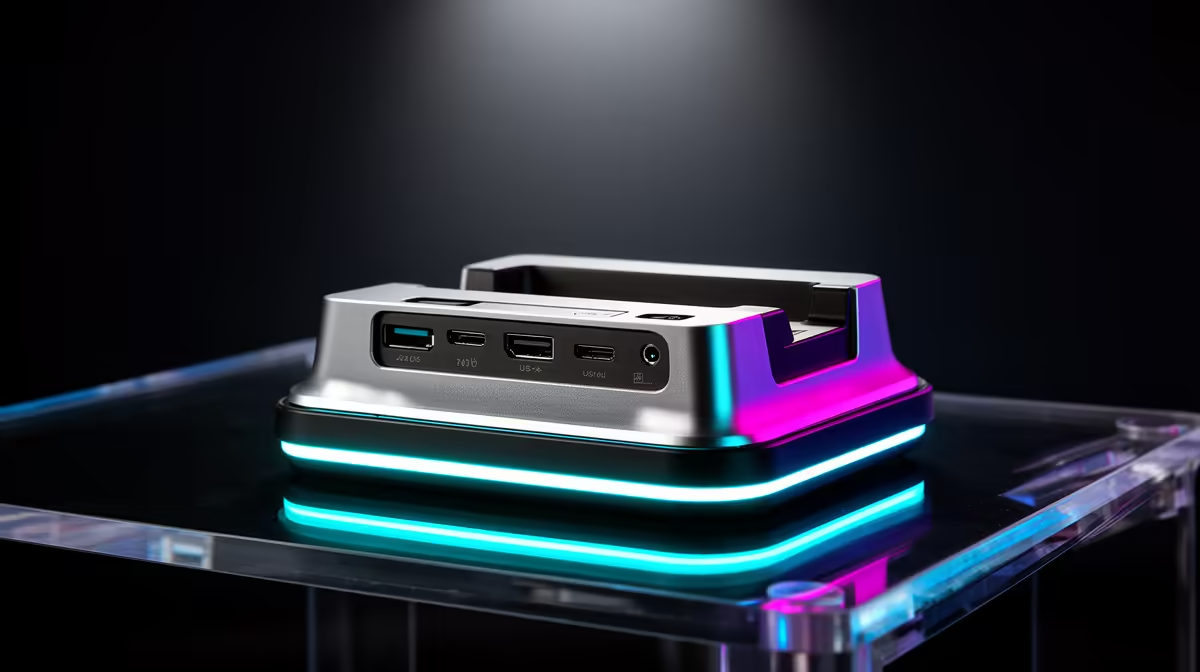
When comparing dock upgrades at Evetech, judge them on three specs: power delivery matched to your laptop's charger (65W to 100W), the display outputs your monitors need (native DisplayPort 1.4 or HDMI 2.1 for high refresh), and connection type (USB-C 10Gbps for most, Thunderbolt 4 40Gbps for fast external storage). Most buyers land in the R1,500 to R3,500 USB-C range.
Compare on power and displays first
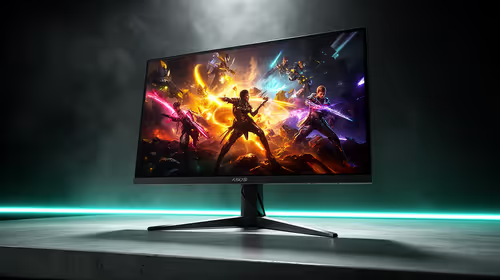
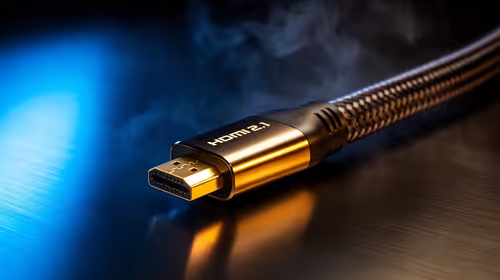
The two specs that decide whether a dock fits your setup are power and display. Match the dock's power delivery to your laptop's charger, 65W for thin laptops, 100W for powerful ones, or the battery drains while docked. Then check the display outputs against your monitors: native DisplayPort 1.4 or HDMI 2.1 if you run high-refresh or 4K screens, since cheaper docks can cap you at 60Hz. Comparing these honestly across options keeps you from over- or under-buying. Most shoppers find a R1,500 to R3,500 USB-C dock fits.
Then weigh connection type and ports
Choose USB-C (10Gbps) unless you regularly move large files off fast external SSDs, where Thunderbolt 4's 40Gbps earns its premium. Count the ports you actually need, a keyboard, mouse, a couple of USB devices, so you avoid a dock with ports you'll never use or one that forces a second hub. Buying locally adds warranty cover under the Consumer Protection Act, typically a one-year term, and easier returns. Compare power, displays, connection type and ports in that order, and the right dock for your setup becomes clear.
FAQ
How do I compare docking stations?
Check power delivery against your laptop's charger, display outputs against your monitors, connection type (USB-C vs Thunderbolt) against your storage needs, and port count against your peripherals, in that order.
USB-C or Thunderbolt for most buyers?
USB-C at 10Gbps suits most setups and costs less. Thunderbolt 4 at 40Gbps only pays off if you move large files off fast external SSDs, so most shoppers don't need it.
Does buying a dock locally matter?
Yes. A local purchase carries warranty cover under the Consumer Protection Act, usually around a one-year term, plus easier returns if it's faulty, which a grey import often lacks.
by matching power to your laptop's charger and display outputs to your monitors first, then weigh USB-C versus Thunderbolt by your storage needs.