Remember the days of clunky tape decks and overnight rendering for a simple video? In South Africa, the editing PC evolution has been a wild ride. We’ve gone from painstakingly slow hardware to AI-powered beasts that can edit 8K footage in real-time. This journey hasn't just changed our tools; it has completely transformed what's possible for local creators. Ready to see how far we've come and what your next upgrade should be? 🚀
The Early Days: Clunky Hardware and Endless Rendering
For anyone who started their creative journey before the 2000s, the memory of linear tape-to-tape editing is probably still fresh. It was a physical, destructive process that required expensive decks and a whole lot of patience. A single mistake could mean starting over. The first digital editing PCs offered a glimpse of the future, but they were far from perfect. We're talking about spending an entire weekend just to render a five-minute project, with hard drives that groaned under the strain of tiny video files.
The barrier to entry was immense. A basic setup could cost a fortune, limiting professional-quality video production to established studios. For the average South African creative, this level of technology was simply out of reach.
The Digital Revolution: Non-Linear Editing Arrives
The arrival of consumer-grade non-linear editing (NLE) software like early Adobe Premiere and Final Cut Pro was a massive leap. Suddenly, you could chop, change, and experiment without permanently altering your source footage. This shift marked the true beginning of the editing PC evolution in South Africa, as the computer became the heart of the creative studio.
Still, the hardware struggled to keep up. Processors had fewer cores, RAM was measured in megabytes, not gigabytes, and a fast hard drive was a luxury. Today, the landscape is completely different. It's incredible to think that you can now get powerful editing rigs for under R20,000 that would outperform the most expensive systems from just a decade ago.
The Modern Powerhouse: What Defines an Editing PC Today?
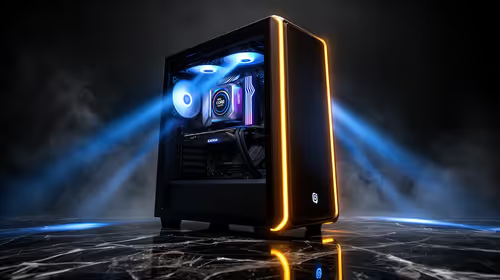
Fast forward to today, and the components that make up a top-tier editing PC are laser-focused on crushing creative workloads. The modern evolution of editing PCs is all about parallel processing and lightning-fast data transfer.
Here’s what truly matters:
- CPU (The Brains): High core and thread counts are king. They allow your software to tackle multiple tasks at once, like encoding video while you continue to edit. This is where the battle between Intel and AMD gets interesting. While many custom-built Intel PCs offer incredible single-core speeds and features like Quick Sync for faster encoding, the high core counts found in many AMD Ryzen-powered systems are a dream for heavy-duty rendering and multitasking.
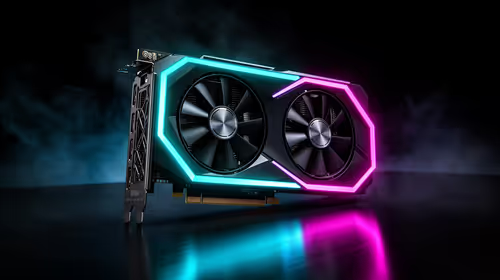
- GPU (The Muscle): Your graphics card isn't just for gaming. In video editing, the GPU accelerates effects, colour grading, and timeline playback, especially with high-resolution footage. NVIDIA's CUDA cores are widely supported in creative apps, making a huge difference in performance.
- RAM (The Workspace): 16GB is the bare minimum, but 32GB or even 64GB is the sweet spot for 4K/8K workflows. More RAM means you can handle more complex timelines and larger files without your system slowing to a crawl.
- Storage (The Speed): This is non-negotiable. An NVMe SSD is essential for your operating system, applications, and active project files. The speed difference between an SSD and a traditional hard drive can cut your loading and export times in half. ⚡
Pro Editing Tip: Use Proxies! 🔧
Even with a powerful PC, editing 4K or 8K raw footage can be demanding. Create low-resolution "proxy" files to edit with. This gives you a super-smooth timeline experience. When you're ready to export, your software automatically links back to the high-quality original files for the final render. It’s the best of both worlds!
The AI Frontier: How Artificial Intelligence is Reshaping Editing
The latest chapter in the editing PC evolution is being written by artificial intelligence. AI is no longer a futuristic concept; it's a practical tool integrated directly into the software you use every day. These features automate tedious tasks, freeing you up to focus on the creative side of things.
Think about tools like:
- Adobe Sensei: Automatically reframing video for different social media aspect ratios.
- DaVinci Resolve's Neural Engine: Performing complex tasks like object removal, smart re-timing, and even AI-powered audio isolation.
- Topaz Video AI: Upscaling old footage to stunning new resolutions with jaw-dropping clarity.
These AI tools rely heavily on powerful CPU and GPU hardware. A PC that was great for 1080p editing five years ago might not have the power to leverage these new features effectively. This ongoing evolution ensures that the demand for more powerful, efficient hardware will continue to grow. ✨
Ready to Evolve Your Editing Rig?
The editing PC evolution in South Africa is happening now. Whether you're rendering 8K footage or leveraging AI tools, the right hardware is everything. Explore our range of powerful editing PCs and build the machine your creativity deserves.