Quick Answer
An ergonomic PC installation means positioning your monitor at eye level, setting your chair height so your feet rest flat and your arms form a 90-degree angle at the keyboard, and routing cables to eliminate desk clutter that forces awkward postures.
Setting Up Your Monitor and Desk Height Correctly
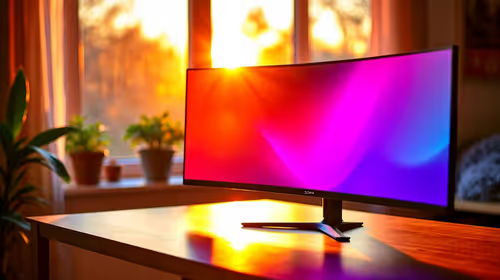
The single most impactful ergonomic change most South African PC users can make is getting their monitor height right. The top of your screen should sit at or just below eye level when you are seated in a natural, upright position. If your monitor sits too low - which is common when using a flat desk without a stand or arm - you end up craning your neck downward for hours at a time, leading to chronic neck and upper back strain.
Monitor arms or height-adjustable stands are a practical investment for any home office or gaming setup. If you use a dual-monitor configuration, align the primary screen directly in front of you and angle the secondary screen to reduce how far you need to rotate your neck. The distance from your eyes to the screen should be roughly 50 to 70 centimetres - far enough that you are not leaning forward, but close enough that you can read text comfortably without squinting.
Desk height matters equally. Your elbows should be at approximately 90 degrees when resting on the desk with your hands on the keyboard. If your desk is fixed and too high, a chair with full height adjustment can compensate. If the desk is too low, monitor arms and keyboard trays can help reclaim the correct positioning without replacing your furniture.
Chair Setup and Lower Body Positioning
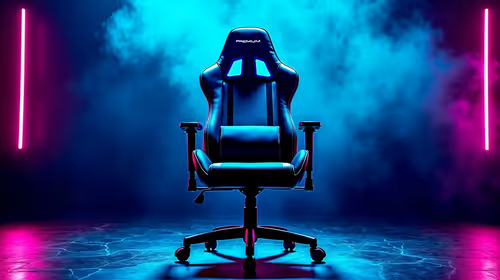
A good ergonomic chair is one of the best investments for any serious PC user - whether you are working from home, studying, or gaming for extended sessions. Look for a chair that offers lumbar support, adjustable armrests, seat depth adjustment, and a recline function. Gaming chairs from reputable brands often include these features in a form factor that appeals to SA gamers.
When seated, your feet should rest flat on the floor or on a footrest. Your thighs should be roughly parallel to the ground, with no pressure cutting into the back of your knees from the seat edge. Armrests should be set so your shoulders are relaxed and your forearms hover comfortably above the keyboard without forcing your wrists to angle sharply up or down.
For SA gamers who play long sessions, adding a lumbar support cushion to an existing chair can make a significant difference if a full ergonomic chair upgrade is not yet in the budget. Combining this with regular standing breaks every 45 to 60 minutes helps prevent the compounding effects of prolonged sitting.
Cable Management for a Clean, Safe Setup
Cable clutter is not just an aesthetic issue - it creates genuine ergonomic risks. Cables running across your desk force you to work around them, restrict mouse movement, and can pull monitors or peripherals into positions that undermine all your other ergonomic adjustments. Sorting your cable management is the finishing step of any proper ergonomic installation.
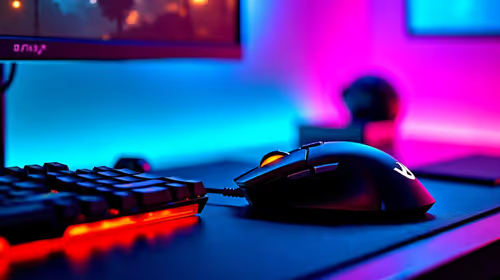
Start by grouping cables behind the desk using cable ties or velcro straps and routing them down the back of a desk leg or through a cable management tray. Keep your mouse and keyboard cables (if not wireless) long enough that they never pull taut during normal movement. Power cables should be kept well away from where you rest your wrists or arms.
Going wireless for your keyboard and mouse is one of the cleanest solutions available and removes the most intrusive cables from your workspace. Wireless peripherals have matured to the point where latency is negligible for most use cases including competitive gaming, and the ergonomic freedom they provide is a genuine quality-of-life improvement.
Frequently Asked Questions
Q: How high should a gaming monitor be positioned for ergonomic use?
A: The top edge of the monitor should sit at or slightly below your eye level when seated in your normal upright posture. This keeps your neck in a neutral position and reduces strain during long sessions.
Q: Are gaming chairs ergonomic enough for all-day use?
A: Quality gaming chairs with adjustable lumbar support, armrests, and seat depth can be ergonomically sound for all-day use. The key is configuring all the adjustments correctly rather than leaving them at factory defaults.
Q: What is the ideal keyboard and mouse position for ergonomics?
A: Your keyboard should sit at a height where your elbows are at approximately 90 degrees and your wrists remain flat or slightly negative-tilted. The mouse should be at the same level as the keyboard and close enough that you do not need to reach forward, keeping your shoulder relaxed.
Also at Evetech: Graphics Card Deals | Evetech Best Sellers
Ready to Find Your Perfect Match? Shop at Evetech