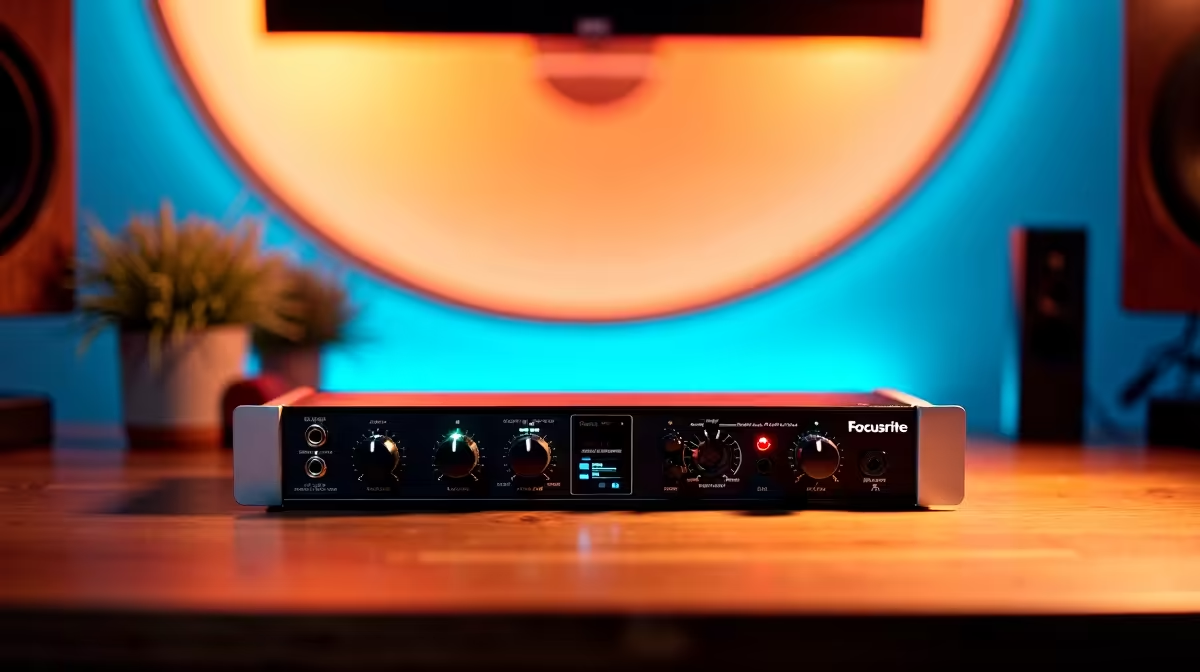
The Focusrite Scarlett 4th Gen is less a redesign than a quiet promotion. Focusrite poured technology from its high-end RedNet line into its most popular budget interfaces, and the result reads like a spec sheet that used to cost a great deal more. The standout changes are RedNet-derived converters with up to 122dB of dynamic range, a reworked Air mode that adds high-frequency presence, and 48V phantom power you can set independently per channel. For creators, those are not marketing bullet points, they fix real annoyances.
Quick Answer
The Scarlett 4th Gen brings 24-bit/192kHz converters from Focusrite's RedNet interfaces delivering up to 122dB of dynamic range, a revised Air mode with analogue Presence to add console-style clarity, per-channel 48V phantom power on the multi-input models, Auto Gain across up to eight preamps, and Clip Safe monitoring that checks levels up to 96,000 times per second. The per-channel phantom is the most practical upgrade: you can now run a condenser and a dynamic mic side by side safely.
RedNet converters and 122dB of headroom
The most meaningful change is invisible until you record. The 4th Gen models use the same AD/DA converters found in Focusrite's RedNet interfaces, the line that sits in professional studios, and they deliver up to 122dB of dynamic range. In plain terms, that means a cleaner, quieter signal path with more room between the noise floor and the point where loud sources distort.
For a creator that translates to two practical wins. Quiet sources like an acoustic guitar or a softly spoken voice sit further above the hiss, and loud sources like a belted vocal or a snare have more margin before clipping. You spend less time fighting gain settings and more time recording, and the recordings need less cleanup afterward.
Air mode, now with Presence and Harmonic Drive
Earlier Scarlett interfaces had an Air switch that emulated the bright, open character of Focusrite's classic ISA console preamp. The 4th Gen Air mode adds two new dimensions. The analogue Presence mode enhances clarity in the way the original ISA console genuinely did, making voices and instruments sit forward in a recording without reaching for an equaliser. Alongside it, a new Harmonic Drive mode adds vintage warmth and the kind of weight associated with running through a large studio console. Both are selectable per channel, so you can apply the right character to each input independently rather than committing the whole interface to one mode.
Per-channel phantom power solves an old headache
On many older two-input interfaces, the 48V phantom switch was shared across both channels. That created a real problem: condenser microphones need phantom power, while some ribbon and certain dynamic setups can be damaged or behave oddly when fed 48V they did not ask for. Sharing the switch forced an awkward choice when you wanted to use two different mic types at once.
The 4th Gen multi-input models give each preamp its own independent 48V control. You can power a condenser on channel one for vocals and run a dynamic on channel two for a guest or an instrument, with no compromise and no risk to gear that should not see phantom. For podcasters and anyone recording two people at once, this single change removes a recurring frustration.
Auto Gain and Clip Safe
Two new automation features address the frustration of dialling in levels on the fly. Auto Gain listens to your input for a few seconds and sets the optimal recording level for up to eight preamps simultaneously, removing the guesswork from initial setup. Clip Safe goes further: it monitors each input up to 96,000 times per second and automatically pulls the gain back if a loud transient risks clipping, then restores it once the level is safe. Together they reduce the need to hover over the gain knobs during a live take or an interview.
Which model fits which creator
The range scales by how many inputs you need. A Solo or 2-input model suits a single voice or a voice-plus-instrument setup, which covers most podcasters, streamers and singer-songwriters. A 4-input model like the 4i4 adds room for a fuller setup with multiple mics or line sources and extra outputs for monitoring. The 16i16, 18i16 and 18i20 models added in 2024 complete the range with professional-level connectivity for project studios. The headphone outputs and monitoring controls on the 4th Gen are designed for the work creators actually do, and you can see how interfaces sit alongside related gear in the headphones and headsets range at Evetech.
Who should upgrade
If you are on a 3rd Gen Scarlett and your recordings are already clean, the upgrade is a refinement rather than a necessity. The people who should pay attention are anyone routinely recording two different microphone types at once, anyone who has been fighting noise on quiet sources, and newcomers buying their first interface who now get RedNet-grade converters at the entry tier. For matching the right monitoring gear to a new interface, the headset best sellers list is a quick starting point.
Frequently Asked Questions
What is the biggest improvement in the Scarlett 4th Gen?
The RedNet-derived converters with up to 122dB of dynamic range, which give a cleaner, quieter signal with more headroom. Per-channel phantom power on the multi-input models is the most practical day-to-day upgrade.
What does the Air mode actually do?
The 4th Gen Air mode has two options: a Presence mode that adds the open, forward character of Focusrite's classic ISA console preamp, and a Harmonic Drive mode that adds vintage warmth and weight. Both are selectable per channel.
Why does per-channel phantom power matter?
It lets you safely run a condenser mic that needs 48V and a dynamic mic that does not on separate channels at the same time. Older shared-switch designs forced a compromise, which is solved here.
Should I upgrade from a 3rd Gen Scarlett?
Only if you record multiple mic types at once or struggle with noise on quiet sources. If your current recordings are clean and your setup is simple, the 4th Gen is a nice refinement rather than essential.
Which Scarlett model should a podcaster buy?
A 4-input model like the 4i4 if you record two or more people with separate mics, thanks to per-channel phantom power. A solo voice can do well on a smaller 2-input model.
The Scarlett 4th Gen puts studio-grade converters and flexible phantom power within reach of everyday creators. Pair one with the right monitoring gear from the headphones and headsets range at Evetech and build a recording setup that grows with you.