Quick Answer
A game launch day checklist helps you avoid the common frustrations of a stuttery first session: driver conflicts, outdated software, storage bottlenecks, and network issues. Running through these steps before you launch means your rig is ready the moment a new release unlocks.
Pre-Launch Day Preparation
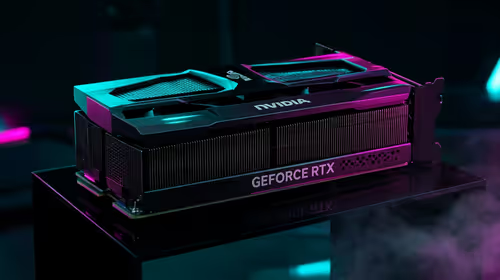
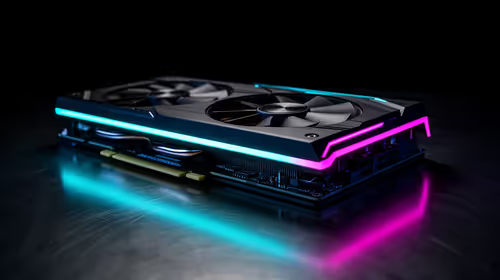
The best time to prepare for a new game launch is 24 to 48 hours before it goes live, not in the middle of a midnight unlock. Start with your GPU drivers. Game-ready driver updates from both AMD and NVIDIA typically ship in the week leading up to a major release. These updates include optimisations and bug fixes specific to the new title. Install the latest driver version and do a clean reboot before launch day.
While you are in your GPU software, check that your resolution, refresh rate, and any upscaling features (DLSS, FSR, XeSS) are configured correctly. Some driver updates reset these settings. Confirm that your display is running at its native refresh rate and that any G-Sync or FreeSync setting is still active.
Update Windows and all other system software before launch day. Windows Updates that require a restart can take significant time. Completing these updates in advance means you are not waiting on a system restart when the game unlocks.
Storage and Download Checks
Game file sizes have grown considerably. A major AAA title in 2026 typically requires 60 to 150GB of storage space. Confirm that your install drive has enough free space before the pre-load completes. Running a drive that is nearly full causes performance issues beyond just storage: Windows and your operating system need working space to manage virtual memory and temp files.
If you are installing to an HDD rather than an SSD, expect longer load times on launch day. If you have a spare M.2 or SATA SSD slot, even a budget SSD for game installations will reduce load screen times significantly compared to spinning disk storage.
Verify the pre-loaded game files before launch where the launcher allows it. Steam, Epic, and other platforms have file verification features that check data integrity. A corrupted pre-load file discovered at midnight is a frustrating delay that verification beforehand prevents.
Launch Day Network and Settings Optimisation
Many games push day-one patches that can be several gigabytes. Ensure your internet connection is ready to pull these down quickly. If you are on a data-capped connection, check the patch size before launch day to plan accordingly.
For SA gamers, server selection matters. Most international titles use servers based in Europe or the US, which adds latency for South African players. Check whether the game has any AW (Africa West) or similar regional server options and set these as preferred in the game's network settings.
If a scheduled outage overlaps with a midnight unlock or a day-one play session, having a UPS that can power your PC and monitor through a two-hour cut means you do not lose progress or miss the launch window. For desktop users, a UPS rated for your PC's wattage is a practical investment that pays off well beyond gaming.
Once the game is running, navigate to the graphics settings before starting your first session. Set your resolution and refresh rate, then test upscaling options. Start on a higher quality preset and adjust downward if frame rates are inconsistent. Many modern titles include an automatic settings detection tool that provides a useful starting point.
Frequently Asked Questions
How often should I update GPU drivers for gaming?
Update to game-ready driver releases before major launches and check for updates monthly. Avoid updating mid-session; always update before restarting for a clean state.
Does a wired ethernet connection make a difference for game downloads?
Yes. A wired connection is faster and more stable than Wi-Fi for large game downloads and online play. If your router is far from your PC, a powerline adapter is a practical alternative to running a long ethernet cable.
What should I do if a game performs poorly on launch day?
Check the GPU driver version, verify game file integrity, and check the game's official forums or community pages for known launch issues. Many launch day performance problems are resolved within 24 to 72 hours through patches or driver updates.
Ready to Find Your Perfect Match?
Make sure your rig is ready for every launch day with the right hardware. Shop Gaming PCs