


Complete Guide: Setting Up AIO Liquid 420mm
Setting Up AIO Liquid 420mm. Tested & verified settings for best FPS and visual quality on SA hardware budgets.
Read moreAvoid common gaming laptop buying mistakes with our expert guide. We'll show you how to sidestep costly errors like choosing the wrong GPU or overlooking cooling, ensuring you get the perfect rig for your needs. Don't waste your money—buy smart! 💻🎮
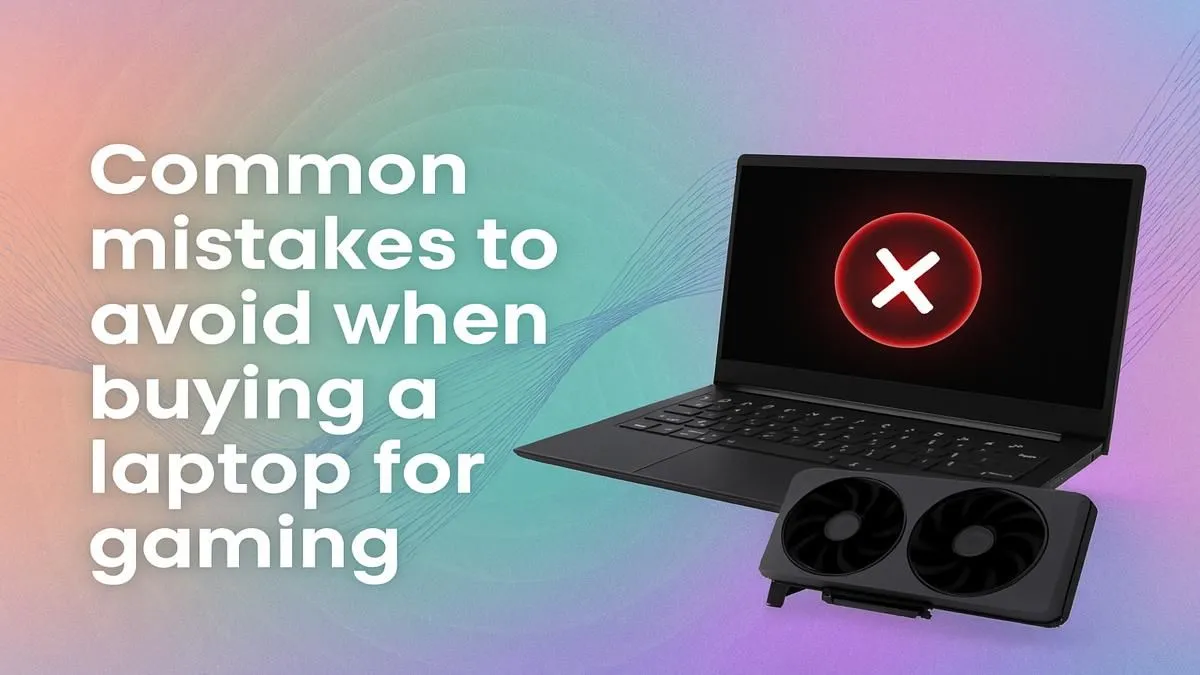
So, you’ve saved up. You’re ready to unbox that beast of a machine and dive into the latest titles with graphics cranked to ultra. But wait… the framerate is choppy, the screen looks washed out, and it sounds like a jet engine. Buyer’s remorse hits hard. Choosing a new rig is exciting, but a few common gaming laptop buying mistakes can turn that dream into a very expensive paperweight. Let's make sure that doesn't happen.
This is the single most critical component for gaming, period. One of the costliest errors to avoid is getting swayed by a high-end CPU or tons of RAM while settling for a weak GPU. The graphics card does the heavy lifting, rendering the beautiful worlds you play in. A laptop with an RTX 4070 will deliver a vastly superior experience to one with an RTX 4050, even if other specs seem similar. Don't just look at the model number; research real-world benchmarks for the games you play. Your frames-per-second (FPS) will thank you for it. Making an informed choice is key to finding the best gaming laptop deals that truly deliver.
A powerful GPU is wasted if your screen can't keep up. Another frequent gaming laptop buying mistake is focusing only on resolution (like 1080p or 1440p) and ignoring two other crucial specs:
Once you've got your new laptop, right-click your desktop, go to Display Settings > Advanced Display, and make sure your screen is actually running at its advertised refresh rate (e.g., 144Hz). Sometimes Windows defaults to 60Hz, and you could be missing out on the buttery-smooth gameplay you paid for!
While the GPU is king, the Central Processing Unit (CPU) is its essential prime minister. The CPU handles game logic, AI, physics, and feeds instructions to the GPU. If your CPU is too weak, it can't prepare frames fast enough for your powerful GPU to render, creating a "bottleneck" that tanks your performance. This is a subtle but serious mistake when buying a gaming laptop. Whether you're looking at the latest Intel-powered laptops or one of AMD's Ryzen gaming laptops, ensure the processor is well-matched to the GPU for balanced performance.
All that high-performance hardware generates a massive amount of heat. A slim, cool-looking chassis is useless if its cooling system can't handle the load. When a laptop gets too hot, it "thermally throttles"—intentionally slowing down the CPU and GPU to prevent damage. Suddenly, your high-end machine is performing like a budget model. Look at reviews that specifically test thermal performance under load. A robust cooling solution is not a luxury; it's a necessity for sustained gaming performance. ✨
Modern games are hungry for memory and storage space. Here’s a quick guide:
Do you plan to travel with your laptop, or will it mostly live on your desk? A huge 17-inch screen is incredibly immersive but can be a mission to lug around. A 15-inch model offers a great balance of screen real estate and portability. Also, be realistic about battery life. Gaming laptops are designed for performance, not longevity away from the plug. Don't expect to have a marathon gaming session during load shedding unless you're plugged into a UPS.
The final, and perhaps biggest, gaming laptop buying mistake is not having a clear plan. It's easy to either overspend on features you'll never use or underspend and end up with a machine that can't play the games you love. Define what you need to play, set a realistic budget in ZAR, and find the best possible machine within that price point. Avoiding these common gaming laptop mistakes means you invest your hard-earned cash wisely. By focusing on a balanced system, you can find incredible value across our wide range of laptop specials.
Ready to Find Your Perfect Match? Choosing a gaming laptop is a big deal, but it doesn't have to be a minefield. Armed with the right knowledge, you can dodge these costly errors. Explore our massive range of laptop specials and find the perfect rig, backed by expert advice.
The biggest mistake is focusing only on the CPU and ignoring the GPU. The Graphics Processing Unit is the most critical component for achieving high frame rates in games.
Yes, for most gamers, 16GB of RAM is the sweet spot for modern gaming. It provides excellent performance without bottlenecks in the vast majority of today's titles.
A high refresh rate (120Hz or more) is crucial for smooth, tear-free gameplay, especially in fast-paced competitive titles. It's a key feature that directly impacts your experience.
Absolutely. Overlooking laptop cooling systems is a major error. Poor cooling leads to thermal throttling, which significantly reduces gaming performance during long sessions.
For most, a 1080p or 1440p high-refresh-rate screen is better. Driving games at 4K requires a top-tier, expensive GPU, making it a common budget gaming laptop pitfall.
It depends. Most gaming laptops allow you to upgrade RAM and storage, but the CPU and GPU are almost always soldered to the motherboard and cannot be changed.
Setting Up AIO Liquid 420mm. Tested & verified settings for best FPS and visual quality on SA hardware budgets.
Read more
Intel XTU Download & Setup Guide: Intel CPU. Clear setup instructions with SA-specific considerations, troubleshooting tips & recommended components.
Read more
Cyberpunk 2077 Max Settings on RTX 4090. Tested & verified settings for best FPS and visual quality on SA hardware budgets.
Read more
The Complete Guide to GPU. Everything you need to know with SA pricing, step-by-step instructions & expert recommendations.
Read more
NVCleanstall Download & Setup Guide: NVIDIA. Clear setup instructions with SA-specific considerations, troubleshooting tips & recommended components.
Read more
to Driver Installation for Beginners. Everything you need to know with SA pricing, step-by-step instructions & expert recommendations.
Read more
AMD RX 9050 XT: Rumoured Specs, Price & Release. SA-focused analysis with local pricing data, real-world insights & actionable buying advice.
Can RTX 4080 Super Run AI Workloads for SA Developers Detailed answer with SA data, expert analysis & practical recommendations for local buyers.
Can RTX 4090 Run AI Workloads for SA Developers Detailed answer with SA data, expert analysis & practical recommendations for local buyers.
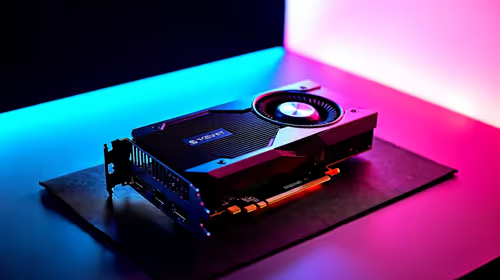
Top Settings for Intel Arc B580 at Ultrawide 1440p picks evaluated on performance, value & SA availability with current Rand pricing from Evetech.

RTX 4060 CS2 Low Settings at 1080p: FPS Results. Real-world benchmark data, FPS numbers & performance analysis. What SA gamers can actually expect.

Visual Artifacts: Possible GPU Issue Issue #1. Diagnosis steps, proven fixes & when to seek professional help. SA-specific support info included.
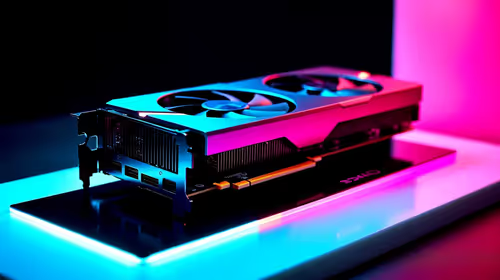
Can the RTX 4090 Handle 1440p 144Hz Gaming. Performance testing verdict with real data & practical recommendations for SA buyers.

Top ASUS GPU Under R15000 picks evaluated on performance, value & SA availability with current Rand pricing from Evetech.
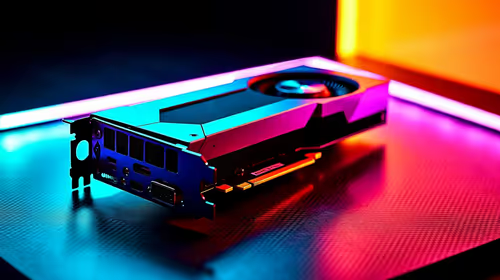
GTA 6 Max Settings on RTX 5070. Tested & verified settings for best FPS and visual quality on SA hardware budgets.
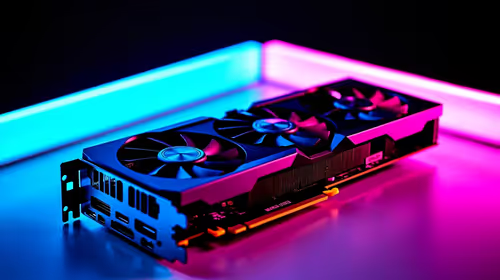
Cyberpunk 2077 Max Settings on RTX 5080. Tested & verified settings for best FPS and visual quality on SA hardware budgets.
Starfield Max Settings on RTX 5070 Ti. Tested & verified settings for best FPS and visual quality on SA hardware budgets.
Top RTX 5090 Under R5000 picks evaluated on performance, value & SA availability with current Rand pricing from Evetech.