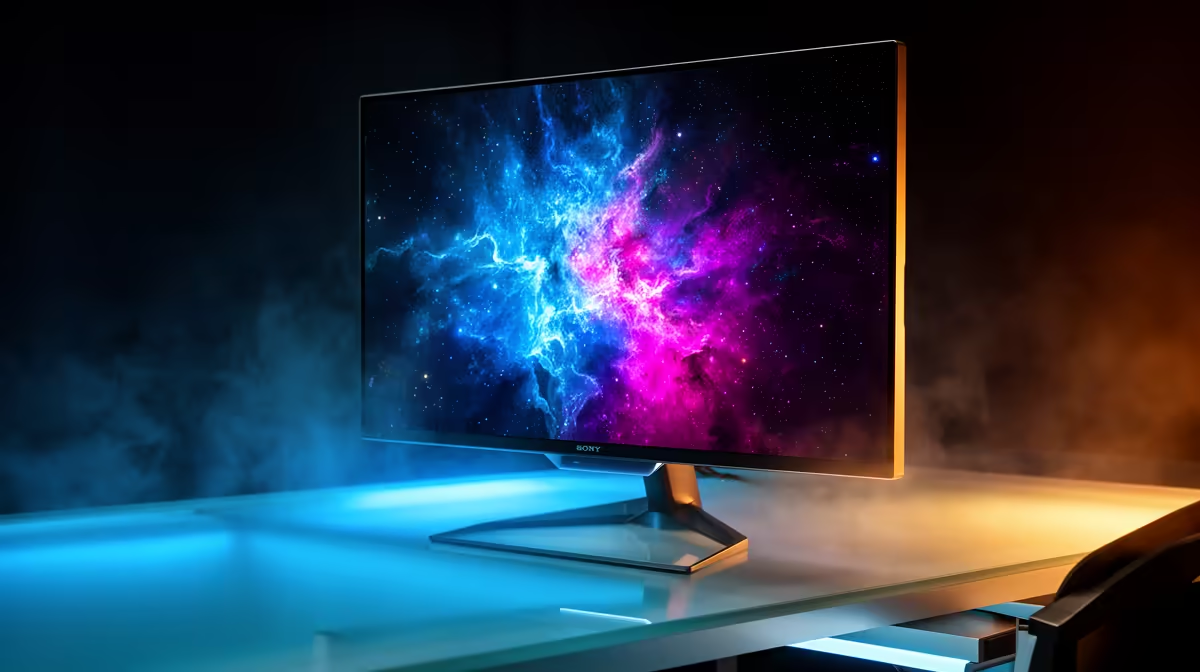
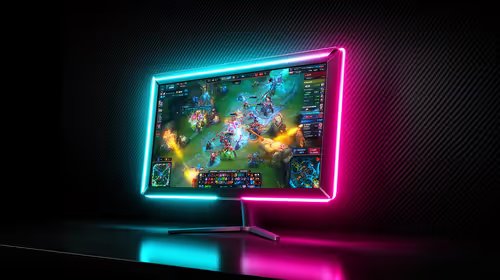
Remember the days of lugging a massive, beige CRT monitor to a LAN party? That heavy beast, with its screen flicker and sheer desk-hogging size, was once the peak of gaming. How times have changed. The gaming monitor evolution has been nothing short of spectacular, taking us from those bulky cathode-ray tubes to the jaw-droppingly brilliant OLED panels we have today. This journey isn't just about thinner screens; it's a story of speed, colour, and pure immersion.
The CRT Era: Heavyweights of the LAN Party
Before flat panels dominated, the Cathode Ray Tube (CRT) was king. For gamers in the 90s and early 2000s, these monitors were the only option. They worked by firing electron beams at a phosphorescent screen... a hefty piece of tech that could easily weigh over 20kg. ⚖️
Despite their bulk, CRTs had some impressive traits for their time: near-instantaneous response times and deep, true blacks that early flat panels struggled to match. But the downsides were significant: immense power consumption, geometric distortion, and the risk of permanent screen burn-in. The shift to newer technology was inevitable.
The LCD Revolution: Flat Panels Arrive
The arrival of Liquid Crystal Display (LCD) technology marked a pivotal moment in the evolution of gaming monitors. Suddenly, our desks had more space! These slim, lightweight screens used a backlight (initially CCFLs) shining through liquid crystals to create an image. This was a massive leap forward in design and energy efficiency, paving the way for the sleek PC monitors we see today.
However, the first generation of LCDs came with trade-offs. Gamers were quick to notice issues like motion blur (ghosting), slower response times, and less impressive contrast compared to their old CRTs. The technology needed to mature before it could truly win over the competitive gaming scene.
Refining the Formula: Faster, Brighter, Better
This is where the gaming monitor evolution truly kicked into high gear. Manufacturers began aggressively targeting gamers' pain points.
From CCFL to LED
The first major improvement was the switch from Cold Cathode Fluorescent (CCFL) backlights to Light Emitting Diodes (LEDs). This allowed for thinner designs, better brightness, and improved power efficiency. It's important to note: an "LED monitor" is still an LCD monitor, it just uses a superior backlighting method.
The Need for Speed: High Refresh Rates
The standard 60Hz refresh rate was no longer enough. The introduction of 120Hz, 144Hz, and now even 360Hz+ panels made gameplay incredibly smooth. A higher refresh rate means the screen updates more times per second, giving you a clearer picture in fast-moving games and a tangible competitive edge. This single advancement is arguably one of the most significant in the history of today's best gaming monitors.
Refresh Rate vs. Resolution ⚡
competitive FPS players (think Valorant or CS:GO), a higher refresh rate (240Hz+) on a 1080p or 1440p monitor is often more beneficial than a 60Hz 4K screen. For cinematic, single-player games, the visual fidelity of 4K might be more appealing. Your choice depends entirely on the games you play most!
New Shapes and Sharper Pictures
With speed conquered, the focus of monitor technology evolution shifted towards immersion and detail. This led to two major trends that define the modern market.
First, we saw the rise of immersive curved monitors. By wrapping the display slightly around your field of view, these screens enhance peripheral vision and can feel more natural to use, reducing eye strain during long gaming sessions.
Simultaneously, pixel counts exploded. The jump from 1080p to 1440p (QHD) and then to 4K (UHD) brought incredible sharpness and detail to game worlds. Driving these stunning 4K and 5K monitors requires a powerful graphics card, but the visual payoff is immense. This era also saw innovation in form factor, with handy portable monitors becoming a viable option for gamers on the move.
The Pinnacle of Display Tech: QLED and OLED ✨
We've now reached the most exciting phase of the gaming monitor evolution, with two premium technologies battling for the top spot.
- QLED (Quantum Dot LED): This is an advancement on traditional LED-backlit LCDs. A layer of "quantum dots" is added to enhance the backlight, allowing for a much wider and more accurate range of colours and superior brightness. QLEDs offer a vibrant, punchy image perfect for gaming in well-lit rooms.
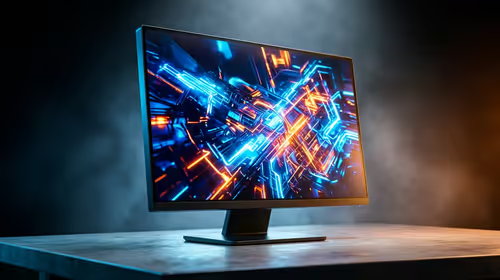
- OLED (Organic Light Emitting Diode): This is a different beast entirely. OLED panels have no backlight. Instead, each individual pixel creates its own light. This means a pixel can be turned off completely to create perfect, absolute black. The result is an infinite contrast ratio, breathtaking colours, and near-instantaneous pixel response times that eliminate ghosting.
While OLEDs represent the peak of image quality, it's crucial to pair them with the right monitor accessories, like a quality monitor arm, to create the perfect ergonomic setup for your investment.
From the glowing boxes of the past to the ultra-thin, lightning-fast displays of today, the journey has been incredible. The constant innovation ensures that the future of gaming visuals is always getting brighter. 🚀
Ready to Upgrade Your View?
The gaming monitor evolution has given us an incredible amount of choice. Whether you're after the competitive edge of a 360Hz panel or the cinematic beauty of a 4K OLED, the perfect display is waiting for you. Explore Evetech's massive range of gaming monitors and find the perfect screen to conquer your world.