

Complete Guide: Setting Up AIO Liquid 420mm
Setting Up AIO Liquid 420mm. Tested & verified settings for best FPS and visual quality on SA hardware budgets.
Read moreConfused by gaming monitor panel types? This deep dive explains the critical differences between IPS, VA, TN, and OLED technologies. Learn how color accuracy, response time, and contrast ratios impact your gameplay to choose the perfect screen for your setup. 🖥️ Elevate your visual experience!
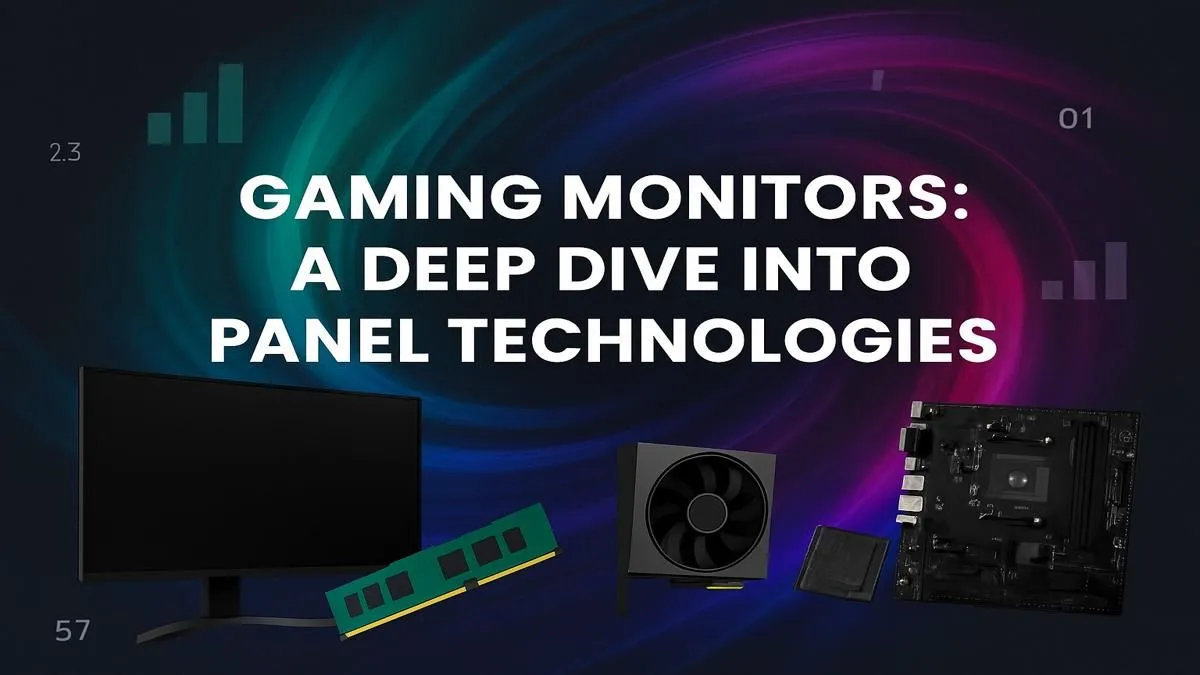
So, you're building your dream rig. You’ve picked the perfect GPU, your CPU is ready to roar, but one crucial choice remains… the screen. You dive into the specs and get hit by a wall of alphabet soup: IPS, VA, TN, OLED. What’s the difference? Choosing the right gaming monitor panel type is vital for your experience. It dictates everything from colour vibrancy to response time. Let's decode these terms and find the perfect panel for you.
Before we compare IPS vs VA vs TN, it's important to know what a "panel" is. Think of it as the core engine of your display. It's the layer of technology that creates the image you see. Each of the main gaming monitor panel types has unique strengths and weaknesses, making them better suited for different kinds of gamers in South Africa. The choice you make will directly impact how your favourite games look and feel, from the fast-paced battlegrounds of Apex Legends to the stunning landscapes of Elden Ring. With so many all gaming monitors on the market, understanding this difference is key.
If your gaming life is measured in milliseconds and your main goal is getting the drop on your opponents, a TN panel is your best friend. This is the oldest of the main LCD technologies, and its primary focus has always been one thing: speed.
For gamers who crave deep, atmospheric worlds, a VA panel delivers in spades. This panel type is all about contrast, making it a fantastic choice for cinematic single-player titles and movie watching.
Even the best panel needs a little tweak. Use Windows' built-in Display Color Calibration tool (search 'dccw' in the Start Menu) for a quick tune-up. It guides you through adjusting gamma, brightness, contrast, and colour balance for a more accurate picture right out of the box.
Once reserved for creative professionals, IPS panels have become a dominant force in the gaming world. They offer a superb balance of speed and visual fidelity, making them the go-to choice for gamers who want a monitor that can do it all.
OLED isn't an LCD panel type like the others; it's a different technology altogether. Instead of a single backlight, each individual pixel on an OLED screen creates its own light. This allows for a level of control and picture quality that LCDs simply cannot match.
There's no single "best" panel. The right choice depends entirely on you.
Once you've picked your panel, remember that a great setup goes beyond the screen itself. Investing in the right monitor accessories, like a quality VESA mount or a proper cleaning kit, can make a world of difference to your comfort and the longevity of your display.
Ready to See the Difference? Choosing between IPS, VA, TN, and OLED is the final step to visual glory. Now that you know the score, you're ready to pick the perfect screen for your rig. Explore our massive range of PC monitors and find the perfect display to dominate your world.
It depends on your gaming style. IPS panels offer superior color accuracy, TN panels provide the fastest response times for competitive play, and VA panels deliver the best contrast.
Yes, VA panels are excellent for gaming, especially for immersive, single-player titles. Their high contrast ratios create deep blacks and vibrant images for a cinematic feel.
For competitive gaming, a TN panel is often preferred. Its ultra-fast response times and high refresh rates minimize motion blur, giving you a crucial edge in fast-paced games.
The main drawbacks of IPS panels are 'IPS glow,' a faint light seen on dark backgrounds, and potentially slower response times compared to TN panels, which can affect competitive gamers.
OLED often provides a superior visual experience with true blacks, infinite contrast, and near-instant pixel response, but can be pricier and susceptible to screen burn-in.
To choose the right gaming monitor panel, match the tech to your games. Prioritize TN for speed in shooters, IPS for color in RPGs, and VA for contrast in story-driven games.
Setting Up AIO Liquid 420mm. Tested & verified settings for best FPS and visual quality on SA hardware budgets.
Read more
Intel XTU Download & Setup Guide: Intel CPU. Clear setup instructions with SA-specific considerations, troubleshooting tips & recommended components.
Read more
Cyberpunk 2077 Max Settings on RTX 4090. Tested & verified settings for best FPS and visual quality on SA hardware budgets.
Read more
The Complete Guide to GPU. Everything you need to know with SA pricing, step-by-step instructions & expert recommendations.
Read more
NVCleanstall Download & Setup Guide: NVIDIA. Clear setup instructions with SA-specific considerations, troubleshooting tips & recommended components.
Read more
to Driver Installation for Beginners. Everything you need to know with SA pricing, step-by-step instructions & expert recommendations.
Read more
AMD RX 9050 XT: Rumoured Specs, Price & Release. SA-focused analysis with local pricing data, real-world insights & actionable buying advice.
Can RTX 4080 Super Run AI Workloads for SA Developers Detailed answer with SA data, expert analysis & practical recommendations for local buyers.
Can RTX 4090 Run AI Workloads for SA Developers Detailed answer with SA data, expert analysis & practical recommendations for local buyers.
Top Settings for Intel Arc B580 at Ultrawide 1440p picks evaluated on performance, value & SA availability with current Rand pricing from Evetech.

RTX 4060 CS2 Low Settings at 1080p: FPS Results. Real-world benchmark data, FPS numbers & performance analysis. What SA gamers can actually expect.
Visual Artifacts: Possible GPU Issue Issue #1. Diagnosis steps, proven fixes & when to seek professional help. SA-specific support info included.
Can the RTX 4090 Handle 1440p 144Hz Gaming. Performance testing verdict with real data & practical recommendations for SA buyers.

Top ASUS GPU Under R15000 picks evaluated on performance, value & SA availability with current Rand pricing from Evetech.
GTA 6 Max Settings on RTX 5070. Tested & verified settings for best FPS and visual quality on SA hardware budgets.
Cyberpunk 2077 Max Settings on RTX 5080. Tested & verified settings for best FPS and visual quality on SA hardware budgets.
Starfield Max Settings on RTX 5070 Ti. Tested & verified settings for best FPS and visual quality on SA hardware budgets.
Top RTX 5090 Under R5000 picks evaluated on performance, value & SA availability with current Rand pricing from Evetech.