Killed in the final circle because your PC stuttered? We’ve all felt that pain. One moment you’re about to clutch the win, the next you’re staring at a frozen screen or, worse, your desktop. Effective gaming PC troubleshooting is a non-negotiable skill for any South African gamer. This ultimate guide will help you diagnose and fix common issues, turning your frustration into triumphant victory and getting you back into the action. Let's get that rig running smoothly. 🚀
First Steps: The Software Side of Troubleshooting
Before you start unscrewing panels, remember that most gaming PC issues are software-related. They're often the easiest to fix, so let's start here. This is the first and most crucial phase of any gaming PC troubleshooting process.
Update Your Graphics Drivers
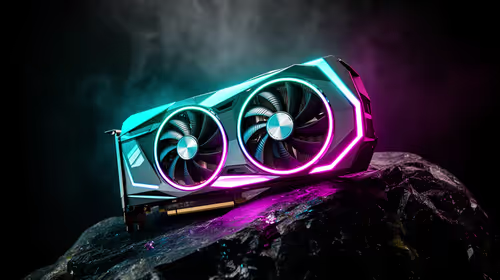
Your graphics card driver is the bridge between your hardware and your games. Outdated drivers are a leading cause of crashes, poor performance, and graphical glitches.
- NVIDIA: Head to the GeForce Experience app or their official website.
- AMD: Use the Adrenalin Software or visit AMD's driver page.
Keeping these updated ensures you have the latest performance optimisations and bug fixes, whether you're clicking heads on a purpose-built Counter-Strike 2 gaming PC or cranking 90s on a rig optimised for Fortnite.
Verify Game File Integrity
Corrupted game files are another common culprit. A failed update or a random error can leave a crucial file broken, leading to crashes on startup or during gameplay.
- On Steam: Right-click the game in your library > Properties > Installed Files > "Verify integrity of game files..."
- On Epic Games Store: Go to your Library, click the three dots on the game tile, and select "Verify".
This simple step can save you hours of complex gaming PC troubleshooting.
Check Your Temps 🌡️
Overheating is a silent performance killer. Download a free tool like HWMonitor or MSI Afterburner to check your CPU and GPU temperatures while gaming. If your CPU is hitting over 90°C or your GPU is consistently above 85°C, it's time to clean your PC's fans and consider improving your case airflow.
Intermediate Fixes: Hardware Checks
If software tweaks don't solve the problem, it's time to pop the side panel off and look at the hardware. Don't worry, this part of our gaming PC troubleshooting guide is simpler than it sounds. Always unplug your PC from the wall before touching any internal components.
Check Your Connections
Over time, vibrations can cause components and cables to become slightly loose. A poorly seated RAM stick or a loose power cable can cause all sorts of random crashes and blue screens.
- Power Down: Unplug the PC completely.
- Open the Case: Remove the side panel.
- Reseat RAM: Gently unclip and remove your RAM sticks. Blow out the slots with compressed air (if you have it) and firmly click them back into place. You should hear a distinct click.
- Check Cables: Gently push on all major power connections… the large 24-pin motherboard connector, the CPU power cable (usually top left), and the GPU power cables. Ensure they are all snug.
This is especially important for rigs running demanding titles that push every component, like those built for Cyberpunk 2077 or even a heavily modded world on a Minecraft gaming PC.
Dust Off Your Components 🔧
Dust is the enemy of cool air. It insulates components, causing them to overheat and throttle (reduce their performance to avoid damage). A can of compressed air is your best friend here. Clean out your CPU cooler, GPU fans, and case intake fans. A clean PC is a happy PC, especially when you're in a heated battle on your favourite PUBG gaming PC.
Advanced Gaming PC Troubleshooting
Still having issues? Now we're entering more complex territory. These steps can help you identify a failing component, which is often the final boss of gaming PC troubleshooting.
Reading the Signs: Blue Screens & Event Viewer
The infamous Blue Screen of Death (BSOD) isn't just a crash; it's a message. Note the "Stop Code" it displays (e.g., IRQL_NOT_LESS_OR_EQUAL). A quick Google search of this code can often point you directly to the cause, whether it's a driver conflict or a memory fault. For more subtle issues, Windows Event Viewer can provide clues about what crashed and why. A stable system is critical for competitive play on an Overwatch 2 gaming PC or exploring the detailed world on a GTA V-ready machine.
When to Suspect a Failing Part
- Random Restarts/Shutdowns: Often points to a failing Power Supply Unit (PSU).
- Graphical Artifacts (weird colours/shapes): Your GPU might be on its last legs.
- Failure to Boot/Frequent BSODs: Could be RAM, the motherboard, or your storage drive.
Diagnosing a failing component can be tricky. It often involves swapping parts with known good ones… a luxury not everyone has. This is where the frustration can really set in, especially when all you want to do is fly over your house in a Microsoft Flight Simulator gaming PC without a hitch. Sometimes, the best fix is a fresh start. Whether you're dropping into Al Mazrah on a Call of Duty: Warzone 2.0 gaming PC or any other title, reliability is key.
Tired of Troubleshooting and Just Want to Game?
This gaming PC troubleshooting guide can solve many problems, but sometimes an old rig is just not worth the headache. A new, professionally built PC from Evetech gives you peace of mind, expert support, and the power to play without interruption.
Explore our incredible range of custom gaming PCs and find the perfect machine to dominate your favourite games.