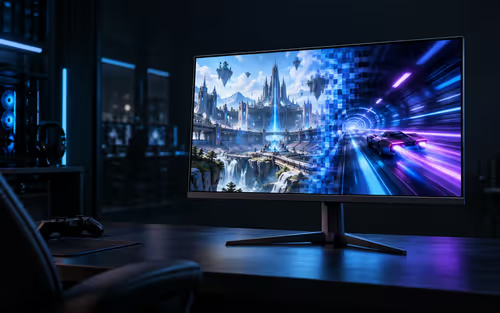
So, you’ve just unboxed your shiny new mid-tier gaming monitor. The box promised glorious HDR, but after booting up Helldivers 2, the colours look… flat. Washed out, even. Sound familiar? You’re not alone. The secret is that High Dynamic Range (HDR) isn't plug-and-play. But don't stress, a few minutes of simple setup is all it takes. This guide provides the essential steps for proper HDR calibration for gaming to unlock the stunning visuals you paid for.
Understanding Why Your HDR Looks Underwhelming
Not all HDR is created equal. That "DisplayHDR 400" spec on your monitor means it can hit a peak brightness of 400 nits. While that’s a definite step up from older Standard Dynamic Range (SDR) screens, it’s a world away from the 1000+ nits of a premium OLED TV. This is why out-of-the-box settings often disappoint. Your PC makes a guess about your monitor's capabilities, and it's usually a poor one.
The good news? You can teach it. Proper calibration tells Windows and your games exactly what your monitor can and can't do, optimising the picture for its specific hardware. This simple process is key to getting the most out of the vast range of PC monitors available today.
A Step-by-Step Guide to HDR Calibration for Gaming 🔧
Getting a perfectly calibrated image is easier than you think. Forget expensive hardware; all you need is a free app and about five minutes of your time.
Step 1: Get the Right Tool
First things first, head to the Microsoft Store on your PC and download the "Windows HDR Calibration" app. It's free, official, and absolutely essential. This tool creates a custom colour profile (an ICC profile) that’s perfectly tailored to your monitor's unique characteristics, forming the foundation for great in-game visuals.
Step 2: Run the Calibration Process
Once installed, open the app and follow the simple on-screen instructions. It will present you with three crucial tests:
- Minimum Luminance: Adjust the slider until the pattern is barely visible. This sets your black levels, ensuring you don't lose detail in dark shadows.
- Maximum Luminance: Do the opposite for the bright white pattern. This test measures your monitor's peak brightness for those brilliant highlights.
- Colour Saturation: Tweak the final slider to push your monitor's colour vibrancy to its limit without colours becoming oversaturated and "bleeding" into each other.
Save the profile when you’re done. Windows will now automatically apply this correction to all HDR content. ✨
Pro Tip: Calibrate Once, Tweak In-Game ⚡
Your new Windows HDR profile works system-wide, but many modern games have their own detailed HDR settings. Always perform the Windows calibration first. Then, use the in-game sliders (often called 'Paper White' or 'Peak Brightness') for final, fine-tuned adjustments to match the game's specific art style.
Step 3: Fine-Tune in Your Favourite Games
With your system-level calibration complete, it's time to boot up a game. Navigate to the graphics or display settings and find the HDR options. Because you've already done the heavy lifting, the required HDR calibration for gaming here will be minimal. Your goal is to ensure bright elements like explosions or a sunset feel impactful without blowing out all the detail. This process is vital across all our gaming monitors, but it's especially rewarding on stunning 4K monitors where every pixel counts.
Final Tweaks and Common Pitfalls
Before you call it a day, a few final checks can prevent common issues. Dive into your monitor's own menu (the On-Screen Display, or OSD) and disable any image processing like "Dynamic Contrast," "Black Boost," or preset "Game/Cinema" modes. A standard or neutral picture mode is the best foundation for calibration.
A faulty or old cable can also cause headaches. Ensure you're using a quality, certified DisplayPort 1.4 or HDMI 2.1 cable; it's one of the most important monitor accessories like certified cables you can own. These principles apply to every type of display, from the ultra-immersive worlds offered by curved monitors to the compact convenience of portable monitors for your laptop setup. Your effort will be rewarded with a richer, more accurate gaming experience every time.
Ready for a True Visual Upgrade?
A few minutes of calibration can completely transform your gaming experience, revealing the vibrant colours and deep contrast you were promised. The first step is always the right hardware. Explore our best PC monitor deals and find the perfect screen to bring your games to life.