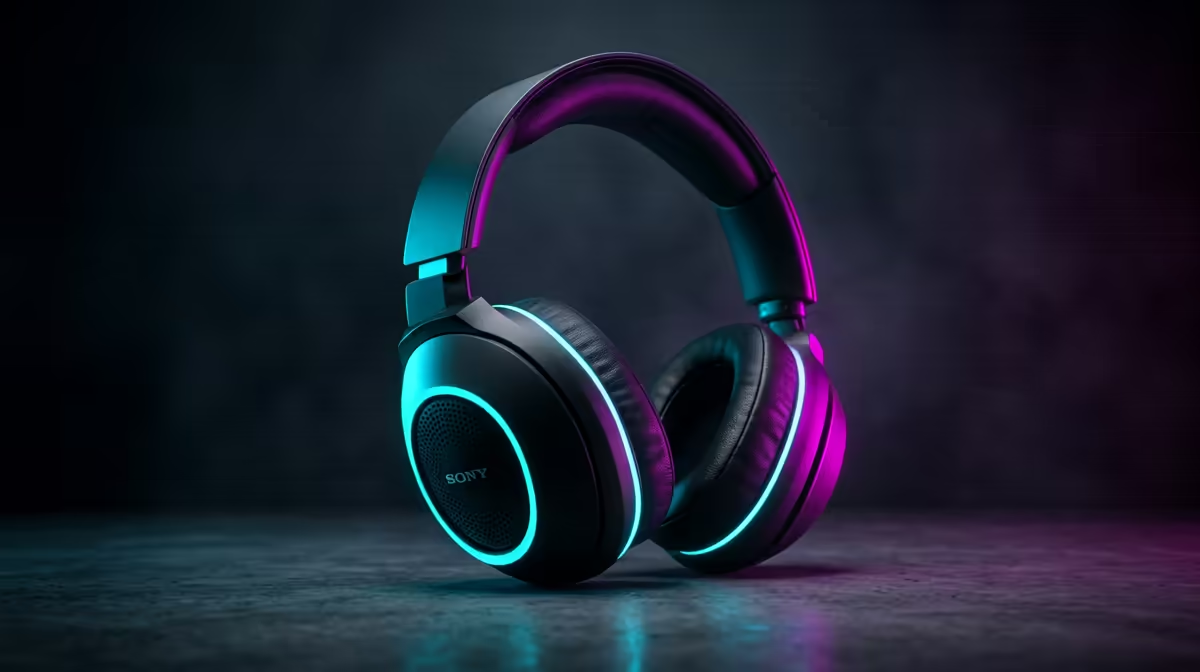
A headset decision tree balances three things buyers often weigh wrongly: audio quality, microphone clarity, and comfort over long sessions. The right order depends on whether you play competitively or for immersion.
Quick Answer
Choose a gaming headset by your priority: competitive players should weight accurate positional audio and a clear mic, while immersion-led players can favour richer sound and comfort. Good options in SA run from about R700 for solid wired sets to R3,500 for premium wireless models with around 30-hour battery life.
The Decision Branches
Branch one is connection. Wired sets offer zero-doubt low latency at lower cost; wireless adds freedom and modern units last 20 to 40 hours per charge. Branch two is audio profile: open-back designs give a wider soundstage for footstep cues, while closed-back seals out room noise.
Branch three is the microphone, which many buyers underrate. A clear boom mic matters for team play and streaming, and a detachable mic keeps the headset usable as everyday headphones.
Comfort Over Long Sessions
Clamp force, earcup material, and weight decide whether a headset is comfortable after three hours. Lightweight builds with breathable pads suit marathon sessions in warm SA summers. Try to test fit, since head shape varies widely.
FAQ
Are open-back headsets better for competitive games?
Their wider soundstage can sharpen positional cues, but they leak sound and offer no isolation. In a noisy room, closed-back may serve you better.
Is wireless battery life a concern for daily gaming?
Most current wireless headsets last 20 to 40 hours, so a single weekly charge often suffices. Wired sets sidestep the issue entirely.
How much does the microphone quality matter?
For team play and streaming, a great deal. A clear, detachable boom mic is worth prioritising if you communicate often.
versus immersion first; it cleanly sorts the field between accurate positional sets and richer, comfort-led ones.