Is your fibre connection blazing fast but your Wi-Fi feels like it's stuck in the dial-up era? You're not alone. For many South Africans, a powerful internet line is only half the battle. A poor home network setup can cripple your productivity during remote work and turn a gaming session into a laggy nightmare. 💻 This guide will help you diagnose the bottlenecks and build a reliable network that just works.
The Foundation of Your Home Network Setup
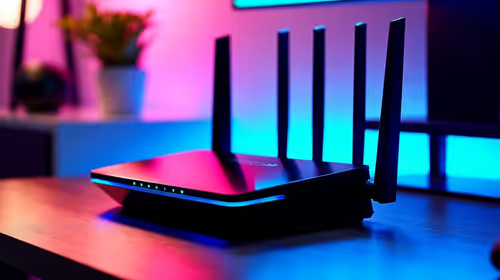
Think of your router as the traffic controller for all your internet data. The free one your ISP gave you is often built to a budget and might struggle with multiple devices streaming, gaming, and video calling at once. If your connection drops frequently or slows to a crawl during peak hours, the router is the first place to look. A proper home network setup in South Africa starts with a solid core.
For a household with several users, upgrading your wireless router is one of the most effective investments you can make. Modern routers offer better range, support for more devices, and advanced features like MU-MIMO (Multi-User, Multiple-Input, Multiple-Output) to ensure everyone gets a stable slice of the bandwidth.
Banishing Wi-Fi Dead Zones in Your SA Home
South African homes, with their classic thick brick walls, can be kryptonite for Wi-Fi signals. Do you find yourself losing connection when you move to the patio or the upstairs office? You've found a "dead zone." These are areas where your router's signal is too weak to provide a stable connection, and they are a common frustration for anyone trying to optimise their home network setup.
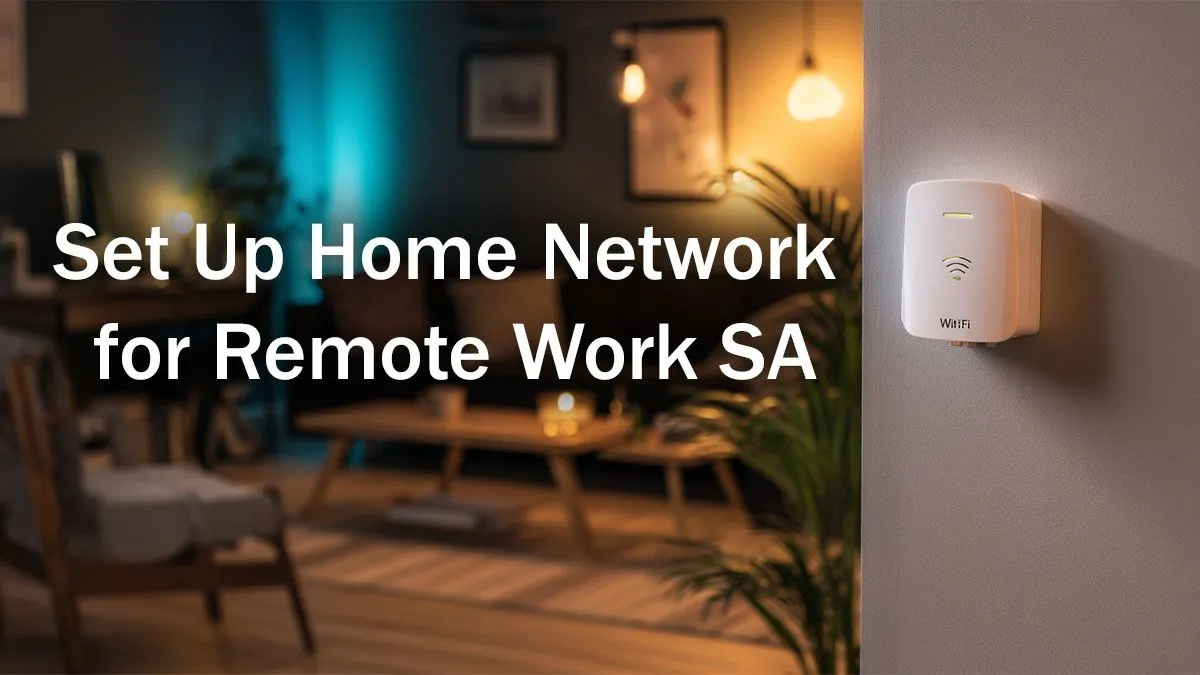
Instead of moving your entire desk closer to the router, a simpler solution is to use Wi-Fi range extenders. These devices pick up your existing Wi-Fi signal and rebroadcast it, effectively pushing the boundaries of your network's coverage. For larger homes, a mesh Wi-Fi system provides seamless coverage under a single network name. ✨
Productivity Pro Tip ⚡
Many modern routers have a feature called Quality of Service (QoS). You can configure it to prioritise traffic for specific devices or applications. For example, you can tell your router to give your work laptop or your gaming console top priority, ensuring your Zoom calls are crystal clear and your pings are low, even when someone else is streaming 4K video.
Connecting All Your Devices
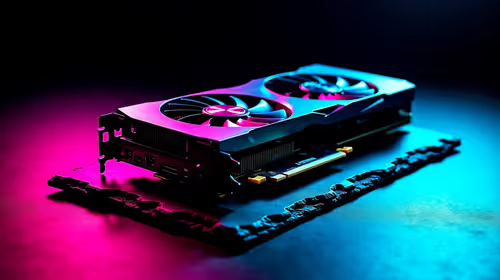
What about that powerful desktop PC you built for gaming or video editing that doesn't have built-in Wi-Fi? Running a long, messy Ethernet cable across the house isn't always practical. This is where wireless adapters come in. They are a crucial part of a flexible home network setup, allowing any device with a USB port or PCIe slot to connect to your wireless network.
Modern quality wireless adapters support the latest Wi-Fi standards (like Wi-Fi 6), offering speeds that can rival a wired connection without the clutter. They are perfect for desktop PCs, older laptops, or any machine that needs a wireless boost.
Optimising Your Setup for Work and Play 🚀
Building the perfect home network setup in South Africa is about more than just buying new hardware. It's about making smart choices to create a stable, fast, and reliable digital environment. Start by identifying your main bottleneck—is it the router, the range, or a specific device's connectivity?
From there, you can make targeted upgrades. Sometimes, a single new router is enough. Other times, a combination of extenders and adapters is needed. By investing in the right complete wireless networking gear, you create a foundation for seamless remote work and epic, lag-free gaming sessions.