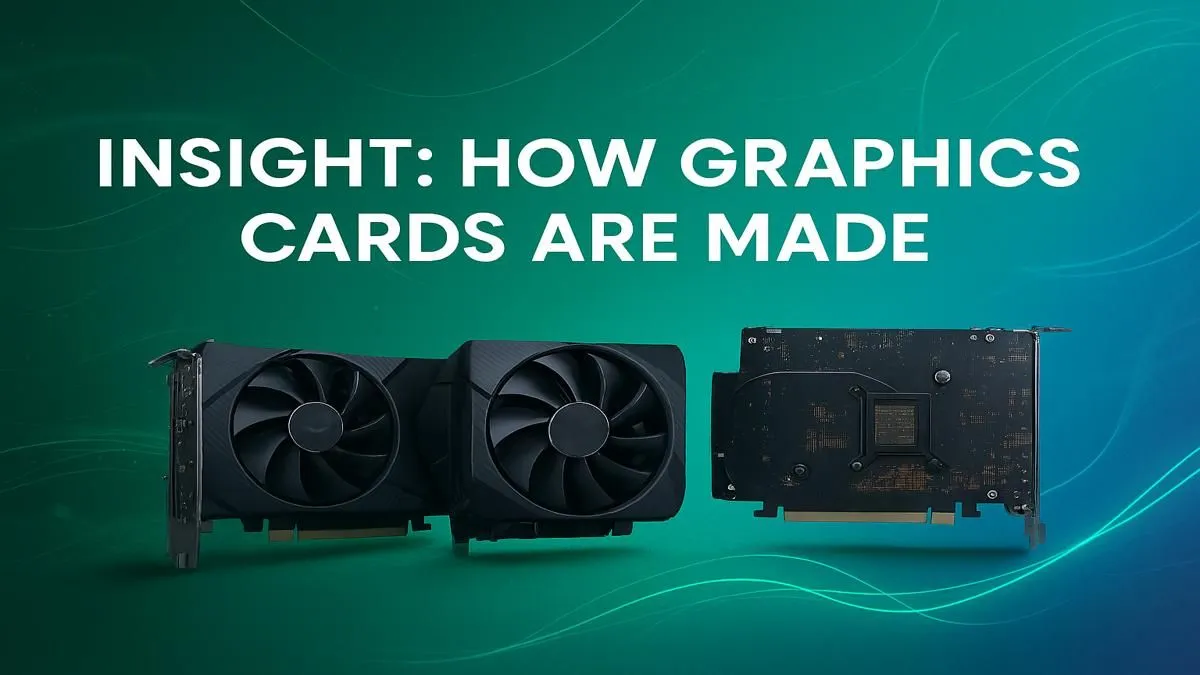
Ever wondered what’s inside that pixel-pushing beast in your gaming PC? It’s more than just a fancy fan and some plastic. The journey of a graphics card is an epic tale of science and engineering, starting from a humble grain of sand. We’re diving deep into exactly how graphics cards are made, from raw silicon to the powerhouse that renders every glorious frame in your favourite game. Let's get started. 🚀
The Journey Begins: How a GPU Starts as Silicon
Believe it or not, the story of your GPU begins at the beach... sort of. The primary ingredient is silicon, which is extracted from quartz sand by heating it to incredibly high temperatures. This raw silicon is then purified to an astonishing 99.9999% purity, a level called electronic grade.
This ultra-pure silicon is melted and slowly pulled into a massive, single-crystal cylinder called an ingot. This perfect crystal structure is crucial for the flawless flow of electricity. The ingot, which can weigh over 100kg, is then sliced into incredibly thin, perfectly polished discs known as wafers. Each wafer is the canvas upon which hundreds of future GPUs will be born.
Crafting the Brains: The Graphics Card Manufacturing Process
This is where the real magic happens. The process of creating the GPU's intricate circuitry on the silicon wafer is called photolithography. In simple terms, it's like a highly advanced photographic printing process that works on a microscopic scale.
A layer of light-sensitive material (photoresist) is applied to the wafer. Ultraviolet light is then shone through a mask, which acts like a stencil for a single layer of the GPU's design. The light hardens the exposed photoresist, and the unexposed parts are washed away, creating a perfect pattern. This process is repeated dozens of times, with chemical etching and the addition of other materials, to build up the billions of transistors that form the complex brain of a modern GPU, following the intricate blueprints of the latest AMD Radeon designs. 🔧
From Wafer to GPU Die: Testing and Cutting
Once the photolithography process is complete, the wafer holds hundreds of identical squares, each a potential GPU core, known as a "die." Before they're cut, each die on the wafer is tested by an automated probe to check for defects.
Not all dies are created equal. Some will have minor imperfections, while others will be flawless. This is where "binning" comes in. The highest-performing, most efficient dies are reserved for the most powerful cards, like the top-tier NVIDIA GeForce cards, while others might be used for mid-range or entry-level models. After testing, a diamond saw precisely cuts the wafer, separating the individual dies.
Cooler is Better! ❄️
When choosing a graphics card, look at the cooler design. Cards from partners like MSI, ASUS, or Gigabyte often have superior cooling to reference models. A beefier heatsink and more fans can lead to lower temperatures, quieter operation, and even higher sustained boost clocks for better performance in the long run.
Building the Beast: Assembling the Final Graphics Card
The tiny, fragile GPU die is now ready to become part of a full-sized graphics card. It's carefully mounted onto a substrate, which is then soldered onto the main Printed Circuit Board (PCB). This green board is the backbone that connects everything.
Next, other critical components are added:
- VRAM (Video RAM): Memory chips are placed around the GPU to store textures and other essential game data.
- VRMs (Voltage Regulator Modules): These components ensure the GPU receives stable, clean power.
- Display Outputs: The HDMI and DisplayPort sockets you plug your monitor into are soldered on.
Finally, the all-important cooling solution—the heatsink, heat pipes, and fans—is mounted on top to keep the powerful GPU from overheating during intense gaming sessions. ✨
The Final Hurdle: Reaching Your PC
The fully assembled card goes through one last round of rigorous testing to ensure everything works perfectly under load. Once it passes, it's packaged up and shipped out to retailers like Evetech.
The entire process, from a grain of sand to a final product, is a marvel of modern manufacturing. It involves mind-boggling precision and cutting-edge technology. The next time you boot up a game and marvel at the stunning visuals, you'll know the incredible journey that little chip has taken to get to your PC. If you're curious about what this technology can do for you, you can always check out the latest graphics card deals available right here in South Africa.