

Black Myth: Wukong 2 Ultrawide Support: 21:9 and 32:9 Setup Guide
Black Myth: Wukong 2 Ultrawide Support: 21:9 and. Clear setup instructions with SA-specific considerations, troubleshooting tips & recommended components.
Read moreEver wonder how budget GPUs work to deliver impressive gaming on a dime? We break down the science of affordable graphics, from shader cores and VRAM to the clever architecture that makes it all possible. Unlock the secrets behind entry-level performance! 🎮💡
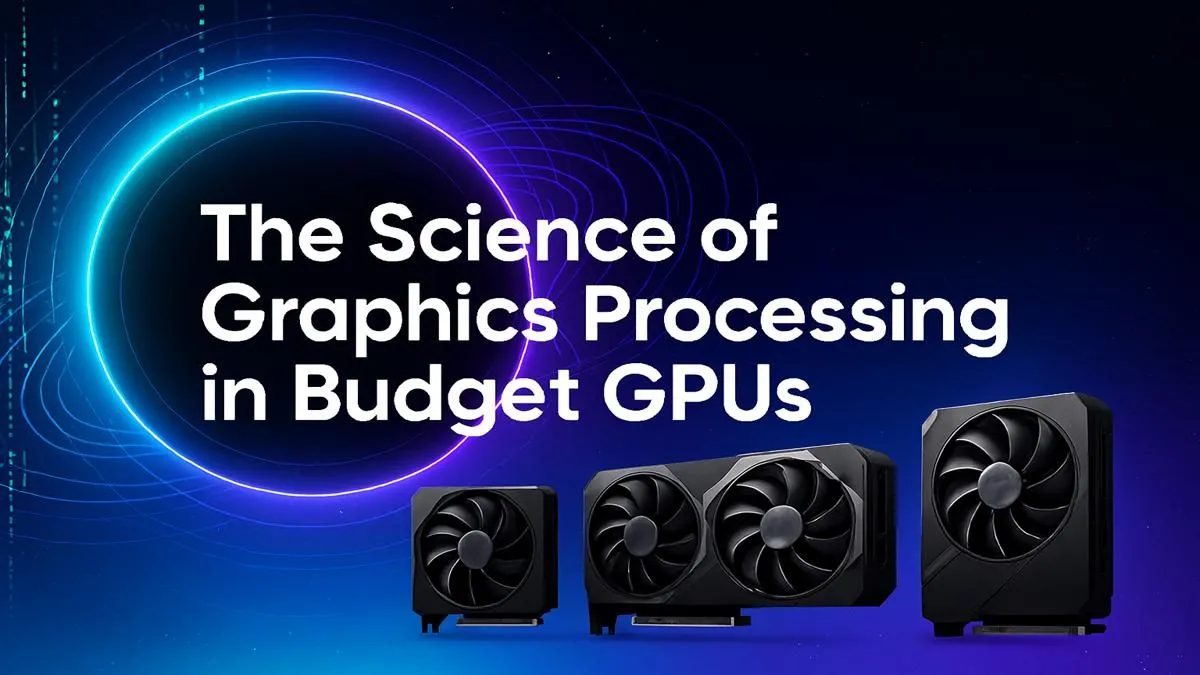
Tired of sticker shock when eyeing a new graphics card, Mzansi? Dreaming of smooth frame rates without breaking the bank? You're not alone. Many South African gamers believe top-tier visuals demand a top-tier budget. But what if we told you the science of affordable graphics means you can enjoy your favourite titles, even esports, without selling a kidney? Let's dive into how budget GPUs work and unlock the secrets to smart spending.
At its core, a graphics processing unit (GPU) is a specialised co-processor designed for parallel computation—perfect for rendering the millions of pixels you see on screen. Budget GPUs aren't simply "bad" versions of their high-end siblings; they're masterpieces of strategic design. Manufacturers make clever compromises to hit attractive price points while still delivering respectable performance. This often involves using a smaller number of processing units (CUDA cores for NVIDIA, Stream Processors for AMD), slightly lower clock speeds, and sometimes a narrower memory bus with less VRAM. The goal is to balance these factors so that the card can still run popular games at acceptable frame rates, typically at 1080p resolution.
The true "science" behind affordable graphics lies in optimising every component and process. It starts with silicon manufacturing. Older, more mature fabrication nodes (the tech used to build the chip) are cheaper to produce. While they might not be as power-efficient as the latest nodes, they keep costs down significantly. Additionally, manufacturers leverage "binning," where chips with minor imperfections that don't meet top-tier specs can still be used for budget GPUs, further reducing waste and cost.
Software plays a crucial role too. Modern drivers are constantly optimised, squeezing out extra performance from every chip. Technologies like AMD's FidelityFX Super Resolution (FSR) and Intel's Xe Super Sampling (XeSS) allow lower-tier cards to render games at a lower internal resolution and then intelligently upscale them to your display's native resolution, providing a substantial FPS boost with minimal visual degradation. Even older NVIDIA cards can benefit from DLSS where supported, pushing the boundaries of what budget hardware can achieve.
When exploring your options, you'll find a wide selection of graphics cards for every budget at Evetech, including popular choices. For Team Red loyalists, AMD Radeon's range often provides excellent performance-per-rand in the mid-to-lower tiers. Or perhaps the new kid on the block, Intel Arc graphics cards, offers compelling features and value, especially for those who appreciate their strong media encoding capabilities.
Owning a budget GPU doesn't mean settling for a poor experience. It means you become a smart, savvy gamer. Here’s how to squeeze every last drop of performance from your affordable graphics card:
Lower your shader quality, shadow detail, and anti-aliasing for a significant FPS boost without drastic visual sacrifices. Experiment to find your sweet spot and enjoy smoother gameplay!
While the focus is often on gaming, the principles of how budget GPUs work also apply to general computing and even light productivity tasks. Many affordable graphics cards offer excellent display output capabilities, hardware-accelerated video decoding, and improved responsiveness compared to integrated graphics. For users who primarily browse, stream, or handle office tasks, a budget GPU can significantly enhance the user experience. However, if your needs lean more towards professional applications like intense video editing or 3D rendering, consider dedicated workstation graphics cards for optimised performance and reliability, as they are engineered for different workloads entirely.
The market for affordable graphics is vibrant, with options from all major players. Whether you're after a robust MSI graphics card or another reputable brand like Gigabyte, ASUS, or Sapphire, understanding the specific features and compromises each model makes is key. Always check reviews, benchmark comparisons for the games you play, and ensure the card fits your power supply and case. With the right research, you'll find a graphics card that perfectly balances cost and performance, delivering a truly lekker gaming experience.
Upgrade Your Rig, Not Your Budget Ready to upgrade your rig without emptying your wallet? Understanding how budget GPUs work means you can make an informed decision and get incredible value. Don’t settle for less performance than you deserve... Shop the latest budget graphics cards at Evetech and experience affordable power today.
A budget GPU is defined by its price and design. This includes fewer shader cores, a narrower memory bus, and less VRAM compared to high-end cards, all aimed at solid 1080p performance.
They are optimized for 1080p resolution. By adjusting in-game settings to medium or high, you can achieve smooth, playable frame rates in most current titles without breaking the bank.
While balance is key, VRAM is crucial. Aim for at least 6GB-8GB in budget GPUs to handle modern game textures and avoid performance bottlenecks, especially for 1080p gaming.
Budget GPU architecture is a scaled-down version of its high-end counterpart. It features fewer processing units and a simpler memory interface to reduce cost while maintaining efficiency.
Yes, significantly. A dedicated budget GPU has its own VRAM and more powerful processing cores, offering far better gaming and content creation performance than graphics built into a CPU.
Some entry-level GPUs support basic ray tracing, but performance is very limited. The hardware lacks dedicated RT cores, often resulting in unplayable frame rates without DLSS or FSR.
Black Myth: Wukong 2 Ultrawide Support: 21:9 and. Clear setup instructions with SA-specific considerations, troubleshooting tips & recommended components.
Read more
Setting Up HDMI 2.1 Cable. Tested & verified settings for best FPS and visual quality on SA hardware budgets.
Read more
Every spec on PCIe 5.0 explained in plain English. What matters for gaming and creator work in 2026, what's marketing fluff, and how each number translates to real-world performance.
A head-to-head look at WiFi 7: real-world performance, ZAR pricing and which option delivers better value for SA builders. The clear answer — no fluff.

Everything you need to set up and tune PCIe 5.0 properly: the prep work, the settings that actually matter, and the mistakes to skip. Written for SA builders in 2026.

Everything you need to set up and tune X870E Motherboard properly: the prep work, the settings that actually matter, and the mistakes to skip. Written for SA builders in 2026.
Wondering what a 512GB SSD capacity really holds? This guide breaks down how many games, photos, and documents fit on 512GB, with real-world ranges 📦💾
Every spec on vrm explained in plain English. What matters for gaming and creator work in 2026, what's marketing fluff, and how each number translates to real-world performance.
Every spec on motherboard explained in plain English. What matters for gaming and creator work in 2026, what's marketing fluff, and how each number translates to real-world performance.

Premium vs Midrange Motherboards in South Africa: real-world performance, SA pricing, power draw and which one delivers better value for your build for SA buyers. The clear answer — without the fluff.
Wondering what a 512GB SSD capacity really holds? This guide breaks down how many games, photos, and documents fit on 512GB, with real-world ranges 📦💾
Every spec on PCIe 5.0 explained in plain English. What matters for gaming and creator work in 2026, what's marketing fluff, and how each number translates to real-world performance.
A head-to-head look at WiFi 7: real-world performance, ZAR pricing and which option delivers better value for SA builders. The clear answer — no fluff.
Every spec on USB4 explained in plain English. What matters for gaming and creator work in 2026, what's marketing fluff, and how each number translates to real-world performance.