That satisfying thock, click, or thump from your mechanical keyboard isn't magic… it's precision engineering. Ever wondered what's inside those tiny mechanisms under your keycaps? The journey of how keyboard switches are made is a fascinating blend of high-speed robotics, material science, and meticulous design. It’s a process that transforms simple raw materials into the heart and soul of your gaming experience, defining how every single keystroke feels and sounds.
The Anatomy of a Switch: From Concept to Component
Before a single switch rolls off the production line, it begins as a design. Engineers decide on its core personality: will it be linear, tactile, or clicky? This decision dictates the shape of its key components.
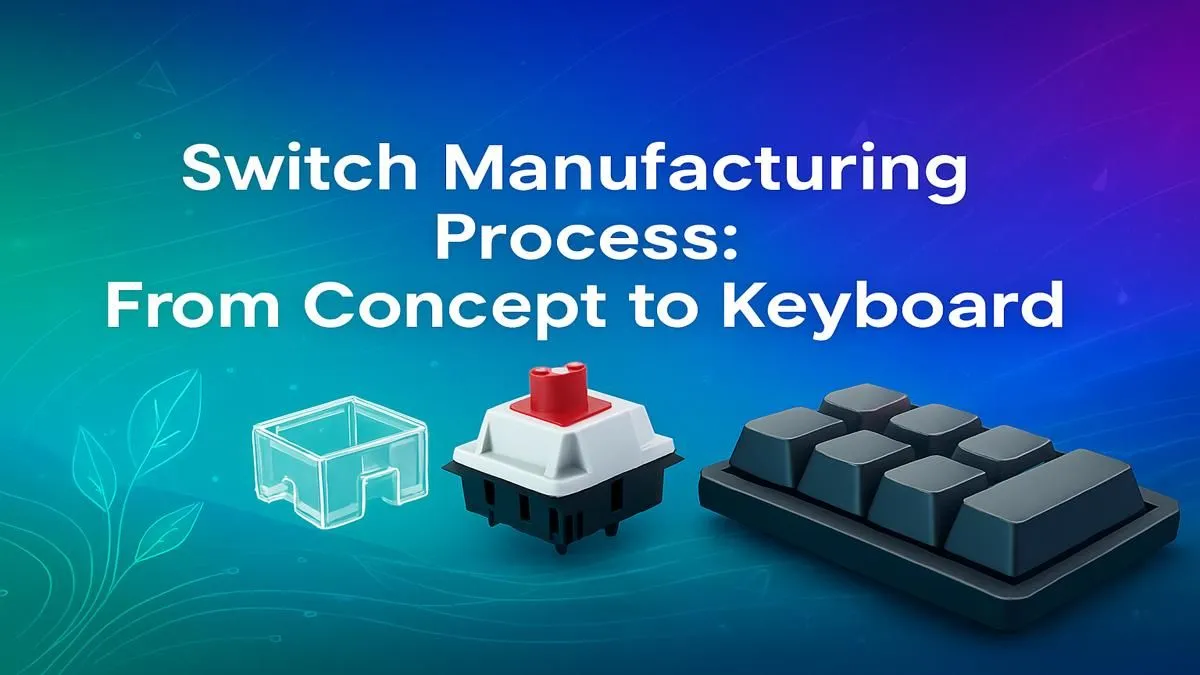
At its core, every switch contains four key parts:
- The Top Housing: Protects the internal parts and guides the stem.
- The Stem: The moving part your keycap sits on. Its shape, particularly the design of its "legs," creates the tactile bump or linear feel.
- The Spring: This coil of metal determines the actuation force—how hard you need to press. Heavier springs offer more resistance, while lighter ones feel faster.
- The Bottom Housing: Holds the metal contact leaves and the spring in place.
The subtle interplay between these parts is what separates a mushy, unsatisfying keypress from a crisp, responsive one. Understanding this helps you find the right board in our list of the best gaming keyboard deals.
The Factory Floor: How Keyboard Switches Are Actually Made
The keyboard switch manufacturing process is a marvel of modern automation. It's a high-volume, high-precision operation that ensures consistency across millions of units. 🔧
Step 1: Injection Moulding
The process starts with tiny plastic pellets—often materials like Polyoxymethylene (POM), Polycarbonate (PC), or Nylon. These are melted down and injected into hyper-precise steel moulds to form the top housing, bottom housing, and stem. The choice of plastic isn't just for colour; it dramatically affects the switch's sound profile and smoothness.
Step 2: Metal Stamping & Spring Winding
Simultaneously, machines are stamping the tiny copper contact leaves. These are the electrical components that register your keystroke when they touch. In another part of the factory, fine wire is wound into the springs that provide resistance. The consistency of this winding is crucial for ensuring every key feels the same.
Step 3: Assembly & Quality Control
This is where it all comes together. Automated assembly lines combine the components with incredible speed: bottom housing, metal contacts, spring, and stem are all snapped together, and the top housing seals the unit. Each switch is then tested for actuation and durability before being packaged. For hot-swappable keyboards, you can often buy keyboard switches individually to create your dream setup.
DIY Switch Lubing ⚡
For an even smoother feel, many enthusiasts lubricate their switches. Using a fine brush and a purpose-made lubricant like Krytox 205g0, you can apply a thin layer to the stem legs and bottom housing rails. This reduces friction, creating a much more satisfying and quieter keystroke. It's a game-changer for linear switches!
Beyond the Production Line: Testing and Customisation
The journey doesn't end on the assembly line. Reputable manufacturers put their switches through gruelling tests, using machines to actuate them 50 million, 80 million, or even 100 million times to guarantee a long lifespan.
This commitment to quality is what allows the customisation scene to thrive. Knowing the base switch is reliable gives gamers the confidence to modify them. You can pair them with custom keyboard keycaps to complete the look, and don't forget a comfortable wrist rest for those long gaming sessions. ✨
Does How a Switch is Made Affect Your Game?
Absolutely. The precision in the making of a keyboard switch directly impacts your performance and enjoyment. A well-made switch provides consistent actuation, meaning you know exactly when your action will register in-game. The choice of materials affects the sound, turning your keyboard into a personalised instrument.
Understanding the manufacturing process helps you appreciate the difference between switch types. A linear switch made from smooth POM plastic is perfect for fast-paced FPS games, while a tactile switch provides essential feedback for typing or strategy games. Even the cheapest gaming keyboard in South Africa can be elevated by a well-manufactured set of switches. Of course, a great keyboard is often best paired with a great mouse, so be sure to check out these keyboard and mouse combos for a complete package deal.
Ready to Feel the Difference?
The journey of how a keyboard switch is made reveals the incredible precision behind every keystroke. From buttery-smooth linears to satisfying tactiles, the perfect switch is waiting to upgrade your setup. Explore our massive range of gaming keyboards and find the perfect board to conquer your world.