One hour of 4K ProRes 422 lands at roughly 110GB. Shoot a weekend, import it onto a MacBook with soldered storage, and you watch a 1TB drive evaporate before the edit even starts. The fix is not deleting footage or buying a bigger Mac. The fix is editing ProRes off an external SSD, keeping your media and scratch files on a fast drive while the internal storage handles only the OS, apps and swap. Done right, your MacBook stops choking and your projects scale past its built-in capacity.
Quick Answer
Route all project media and the scratch drive to a fast external SSD over Thunderbolt or USB 3.2 Gen 2x2, and keep only macOS, your apps and swap on the internal drive. At about 110GB per hour for 4K ProRes 422, a 2TB external holds roughly 18 hours of footage, costs a fraction of upgrading internal Mac storage, and edits smoothly when the drive can sustain real read speeds above 500MB/s.
Why MacBook Internal Storage Fills So Fast
ProRes is an editing codec, not a delivery codec. It keeps quality high and decode load low by storing far more data per second than the H.265 your camera might offer. That trade is deliberate: your timeline scrubs instantly because the Mac is not straining to decompress every frame. The price is size, and 4K ProRes 422 at around 110GB per hour stacks up brutally across multi-day shoots.
Modern MacBook storage is soldered to the logic board, so you cannot add an internal drive later. Worse, going from 1TB to 4TB at purchase costs a serious premium. Filling the internal drive also hurts performance, because macOS needs free space for swap and caching. Once you understand both constraints, moving media off the internal drive stops being a workaround and becomes the correct workflow.
Choosing the External SSD That Keeps Up
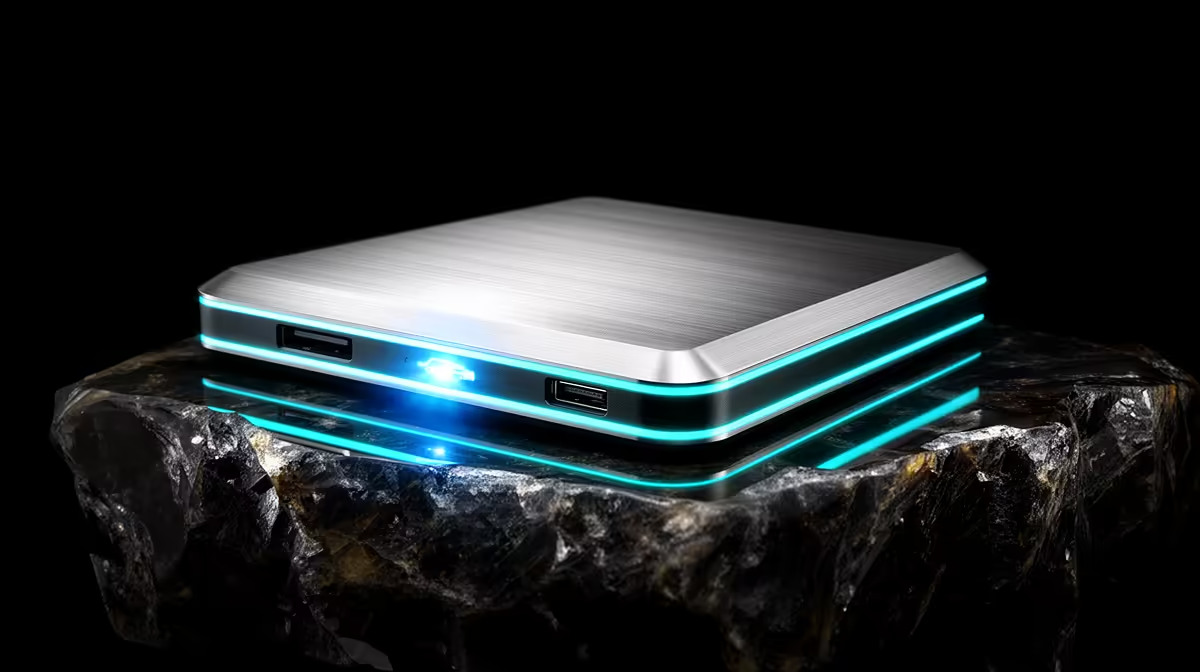
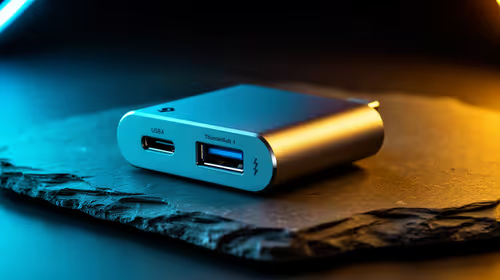
Speed is the whole game. A drive that cannot sustain real-world reads will drop frames on multicam or high-bitrate timelines. Aim for a portable NVMe SSD in an enclosure that supports your Mac's fastest port. Thunderbolt drives reach the highest throughput; a good USB 3.2 Gen 2x2 NVMe drive is more affordable and still comfortable for single-stream 4K ProRes.
Avoid older portable drives that quote big numbers but throttle after a few minutes, and steer clear of slow spinning disks for active editing entirely. A spinning drive is fine for cold archive, not for a live timeline. When you are sizing the machine itself, the MacBook range that creators pair with external media shows which models carry the Thunderbolt ports that make this workflow fly.
How Much Capacity You Actually Need
Do the maths in hours, not gigabytes. At 110GB per hour, a 1TB drive holds about 9 hours of 4K ProRes 422, a 2TB holds roughly 18 hours, and a 4TB stretches past a full multi-day shoot. Buy one size up from your typical project so you are not juggling files mid-edit. Many editors run a working drive for the active project and a separate larger drive for completed archives.
Setting Up the ProRes Workflow
The structure is simple once you commit to it. Import every project to the external SSD, not the desktop. In your editor, point the project library, media cache and scratch or render locations to that same external drive. In Final Cut Pro, store the library externally; in Premiere Pro or DaVinci Resolve, set the project and cache paths to the SSD. The goal is that nothing large ever lands on the internal drive by default.
Keep the Internal Drive Lean
Reserve internal storage for macOS, applications and swap. Leave a healthy buffer of free space, ideally 15 to 20 percent, so the system always has room to breathe under heavy export loads. Empty render caches between projects, and do not let "just this once" imports pile up on the desktop. A disciplined internal drive stays fast for years.
Back Up Before You Trust One Drive
A single SSD holding your only copy of a shoot is a risk, not a workflow. Keep at least one duplicate of irreplaceable footage on a second drive, and ideally an offsite or cloud copy of finished work. SSDs are reliable, but no single drive earns blind trust with client footage on it.
When an External SSD Is Not Enough
For multicam 4K ProRes, several high-bitrate streams at once, or 6K and 8K work, a single portable SSD may bottleneck. At that point editors move to a Thunderbolt enclosure with multiple NVMe drives or a fast network store. For the vast majority of solo creators cutting single-stream 4K, though, one quality external SSD on a fast port solves the storage crunch cleanly and cheaply. To see how editors spec the rest of the laptop around that drive, the laptops creators reach for most give a sense of the memory and port choices that matter.
Frequently Asked Questions
Will editing off an external SSD slow down my edit?
Not with the right drive. A fast NVMe SSD over Thunderbolt or USB 3.2 Gen 2x2 sustains read speeds well above what single-stream 4K ProRes needs. The danger is slow or throttling drives; a quality SSD on a fast port performs close to internal storage for editing.
How much footage does 1TB hold in 4K ProRes 422?
About 9 hours, since 4K ProRes 422 runs near 110GB per hour. A 2TB drive holds roughly 18 hours and a 4TB drive covers a multi-day shoot. Buy a size up from your typical project so you are not managing space during an edit.
Should I move the scratch and cache files too?
Yes. Pointing media cache, scratch and render locations to the same external SSD keeps the internal drive lean and avoids hidden files quietly filling it. Set these paths once per project so nothing large defaults to the internal storage.
Is USB enough or do I need Thunderbolt?
A good USB 3.2 Gen 2x2 NVMe drive is fine for single-stream 4K ProRes. Thunderbolt is worth it for multicam, very high bitrates, or 6K and 8K work where you need more sustained bandwidth. Match the drive and port to your heaviest realistic timeline.
Can I just buy a MacBook with more internal storage instead?
You can, but it costs a steep premium and the storage is soldered, so you cannot expand it later. An external SSD is cheaper per terabyte, portable between machines and easy to upgrade. Most editors get a sensible internal size and scale capacity externally.
Want a MacBook that handles 4K ProRes without filling up? Check the Thunderbolt-equipped MacBooks at Evetech, pair one with a fast external SSD, and keep your internal storage free for the work that needs it.