Quick Answer
Daisy-chained AIO fans reduce cable count from three separate runs to one, simplifying routing but requiring you to plan the chain exit point to align with the nearest motherboard fan or hub header. Shortened tubing limits radiator placement flexibility, so decide mounting position before routing any cables.
How Daisy-Chained AIO Fans Change Your Cable Plan 🔧
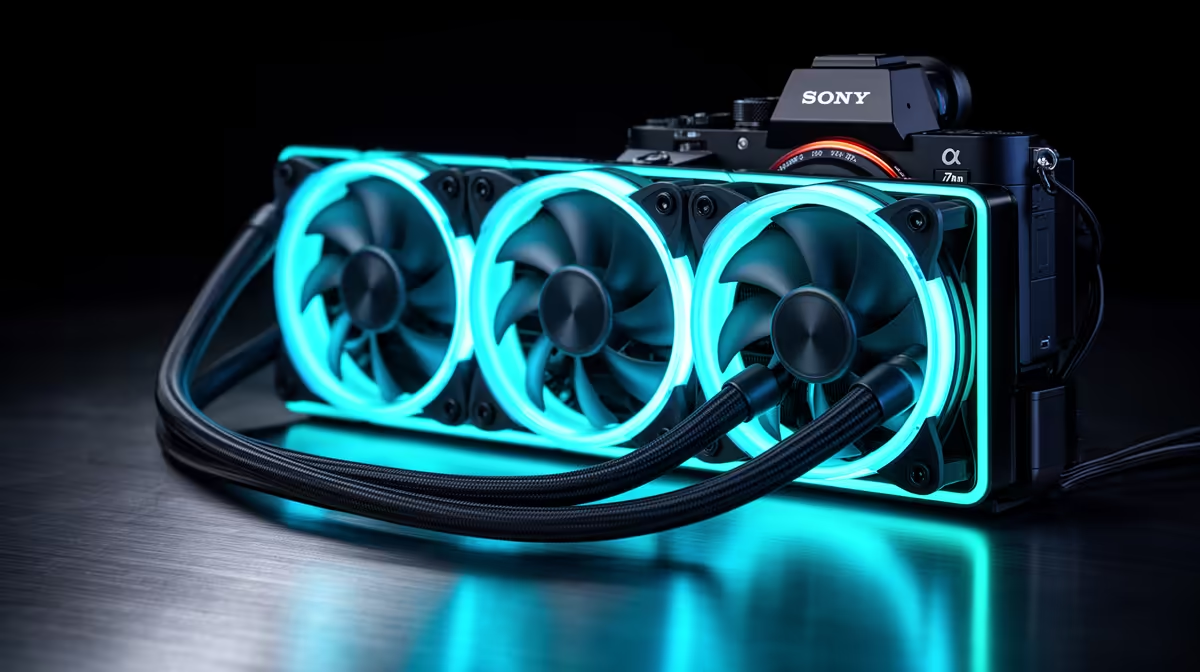
Standard AIO fan setups include three 120mm fans for a 360mm radiator, each with its own PWM cable and optionally an individual ARGB cable. Without daisy-chaining, that means three fan cables and potentially three ARGB cables routed from the radiator to the motherboard or hub. Modern AIO fans with daisy-chain connectors link fan to fan in series, so only one PWM cable and one ARGB cable exit the chain and need routing to the motherboard or hub. This reduces the cable bundle from the radiator zone from six lines to two, dramatically simplifying top-panel routing. The planning requirement shifts to identifying the chain exit point: where the last fan's output terminates and where that single cable must travel to reach the CPU_FAN or hub header.
Managing Shortened Tubing in Your Layout 💡
Some premium AIOs ship with shortened tubing runs, typically 300mm to 380mm, versus the 400mm to 450mm found on standard models. Shorter tubes offer a cleaner look and reduced risk of tube kinking, but they constrain radiator placement. Before installing, perform a dry run: hold the pump head in position on the CPU socket, route the tubes to the radiator mounting location, and verify the tubes can reach without pulling taut or bending sharply. If the tubes are taut with a front-mount configuration, a top-mount may suit that specific case and AIO combination better.
Routing the Daisy-Chain Cable Through the Case 🌬️
With the radiator fan chain producing only one PWM cable to route, the most effective path in a mid-tower top-mount installation is down through the top cable routing grommet nearest the back panel, behind the motherboard tray, and back through the grommet closest to the CPU_FAN or AIO_PUMP header. The ARGB daisy chain follows the same physical path but connects to the nearest ARGB header or hub port. Keep both cables bundled together with a velcro tie at the point they exit the grommet to prevent them separating inside the main chamber.
Label the Daisy-Chain Exit Fan Before Routing ⚡
In a daisy-chain setup, the single exit cable comes from whichever fan is at the end of the chain. Label that fan with a small piece of tape before installing it on the radiator so you know which fan's cable to route to the motherboard header. If the chain is reversed during installation, the exit cable may end up at the wrong end of the radiator, requiring a longer cable run.
FAQ
Does daisy-chaining AIO fans affect their PWM speed control?
No, as long as the motherboard or hub sees the daisy chain as a single connected fan load. Modern daisy-chain implementations pass PWM signals through the chain, so all fans respond to the same speed command simultaneously.
Can daisy-chained fans be controlled individually?
In most hardware implementations, daisy-chained PWM fans share a single control signal. Some AIO companion software platforms (NZXT CAM, Corsair iCUE) provide software-layer individual fan control through the USB link to the pump controller, effectively emulating independent control via software rather than the motherboard header.
What is the maximum cable length a daisy-chain should cover?
Standard PWM and ARGB signal integrity is maintained over cable runs up to approximately one metre without active boosting. A 360mm AIO in a standard mid-tower case produces cable runs well within this limit. Signal degradation in daisy-chain setups is extremely rare and typically indicates a damaged cable rather than a distance problem.
Planning a clean 360mm AIO installation with minimal cable clutter?
Browse Evetech's AIO cooler range including models with daisy-chained fans and ARGB integration, stocked locally for your next build or upgrade.