Ever stared at that buffering wheel during a critical game, even with "fast" fibre? You're not alone. In South Africa, our WiFi battles thick walls, double-storey homes, and the occasional an unexpected outage blues. But understanding how WiFi works is the first step to conquering lag for good. It’s simpler than you think, and it all starts with a little box humming away in the corner of your room, turning your internet connection into invisible magic. ✨
How WiFi Works: The Invisible Magic Explained
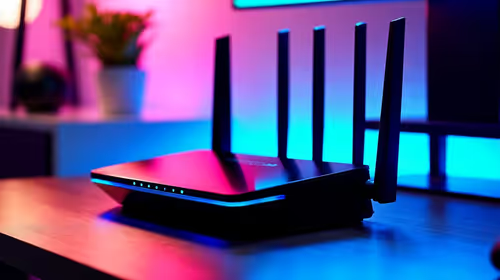
So, how does WiFi work in a nutshell? Think of your router as a tiny, very fast radio station. It takes the wired internet signal from your fibre or ADSL line and translates it into radio waves. These waves shoot out in all directions, carrying data.
Your devices—like your PC, phone, or console—have built-in receivers (or adapters) that act like radios. They "listen" for the router's signal, grab the data, and translate it back into the website, stream, or game you see on your screen. It’s a constant, two-way conversation happening at incredible speeds.
The Key Players in Your Home Network
Your home WiFi setup isn't just one thing; it's a team of components working together. Understanding each part helps you pinpoint problems and find the right upgrades.
The Router: Your Network's Heartbeat
The most important piece of the puzzle is the router. It manages all the traffic, assigns addresses to your devices, and broadcasts the signal. An old, underpowered router from your ISP can be a major bottleneck, no matter how fast your internet package is. Upgrading to a modern unit can drastically improve speed, range, and stability for your whole home. For a solid foundation, check out the latest high-performance wireless routers that can handle multiple devices without breaking a sweat.
The Adapters: Your Device's Connection
For your PC to join the network, it needs a way to talk to the router. Most laptops have built-in WiFi, but for desktop PCs, you'll often need a dedicated adapter. These can be internal cards that plug into your motherboard or simple USB dongles. If you're experiencing drops only on your PC, an outdated adapter could be the culprit. A new one is an affordable and effective fix, and you can browse a great selection of wireless adapters to get your rig connected reliably.
Quick WiFi Boost 🚀
Your router's position is everything! Avoid placing it on the floor or in a cupboard. For best results, put it in a central, elevated location, away from thick walls and other electronics like microwaves. This simple change can dramatically improve how WiFi works across your entire home.
Solving Common WiFi Problems in SA Homes
Even with the right gear, the unique layout of South African homes can present challenges. Here’s how to tackle the most common issues.
Pesky Dead Zones
Does your WiFi signal disappear the moment you step out onto the braai patio or head upstairs? Brick walls and concrete slabs are the natural enemies of radio waves. Instead of moving your whole setup, a simple fix is a range extender. These nifty devices pick up your existing WiFi signal and rebroadcast it, effectively eliminating dead zones. You can easily find powerful wireless range extenders to push your signal into every corner of your property. 🔧
Network Congestion
In a busy household, with multiple people streaming, gaming, and working, your WiFi network can get crowded. Modern routers help solve this with dual-band technology (2.4GHz for range, 5GHz for speed). By connecting your high-priority devices like your gaming PC or smart TV to the 5GHz band, you can often sidestep interference from other household gadgets.
Now that you understand the fundamentals of how home WiFi works, you can start making smart, targeted upgrades. Building a stable and fast network doesn't have to be complicated or expensive. It's about finding the right components for your space and needs, and you can find it all in our comprehensive wireless networking section.
Ready for Lag-Free Living?
Understanding how WiFi works is half the battle. The other half is having the right gear. From powerful routers to signal-boosting extenders, we have everything you need to build a rock-solid network. Explore our complete wireless networking range and say goodbye to buffering for good.