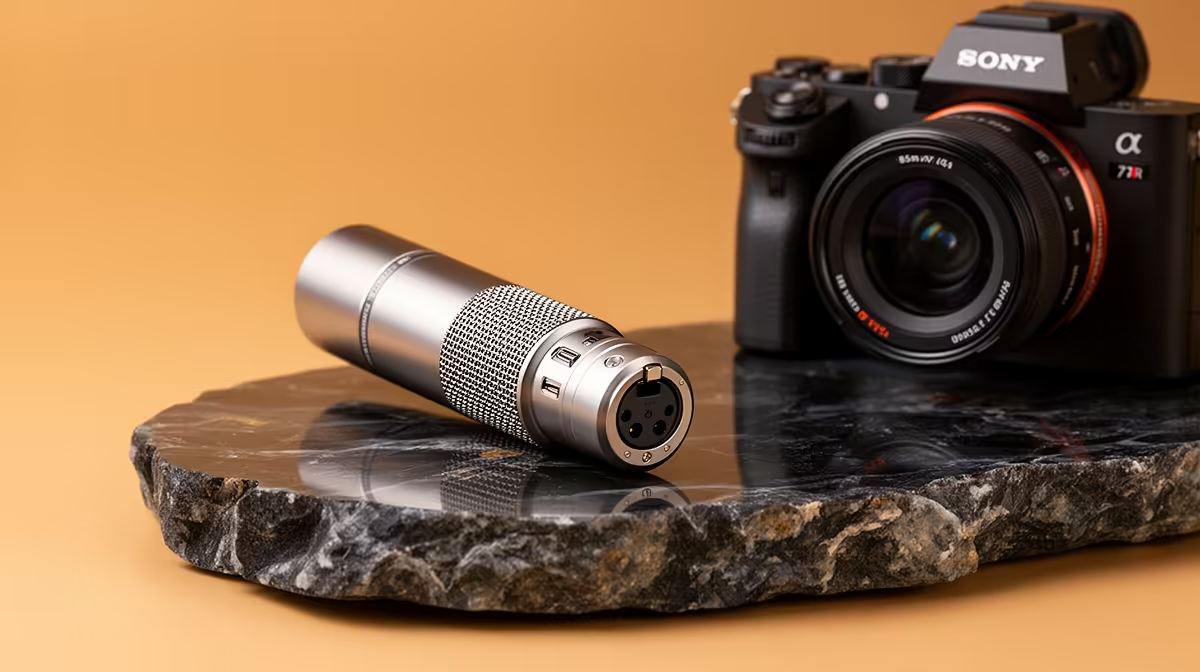
Buying two microphones to do the job one should do is a common and unnecessary expense. A USB-only mic serves you well until you build a studio chain, then becomes redundant the moment you add an audio interface. A pure XLR mic needs the interface on day one, adding cost and complexity before your show has earned it. Hybrid USB/XLR microphones remove that either-or decision entirely, and for South African creators working across a range of budgets, the long-term Rand case for owning one is straightforward to make.
Quick Answer
A hybrid USB/XLR mic uses one capsule and one body for both connection types. USB works today with zero extra hardware. XLR scales to an interface when your studio grows. At roughly R3,000, a hybrid saves the R2,000 to R3,500 you would spend replacing a USB-only mic with an XLR one later.
🔌 One Capsule, Two Signal Paths
The core of a hybrid microphone is simpler than the dual-connector design suggests. A single capsule captures your voice regardless of which port is active. What changes between modes is the electronics that process the capsule's output.
In USB mode, the microphone contains its own analogue-to-digital converter. The capsule output runs through the mic's internal preamp, then through the onboard converter, and the digital signal exits over USB ready for your PC to record. No interface required.
In XLR mode, the mic outputs an analogue signal directly through the XLR socket into a mixer, audio interface, or portable recorder. The conversion happens in the external device, which typically has a higher-quality preamp than the one built into the mic body.
Both paths use the same capsule, so content recorded across both modes is tonally consistent. If you record a solo episode over USB and then bring in a second host through an XLR chain, the voice signatures match.
💰 The Rand Maths of Not Replacing
A USB-only cardioid condenser at R2,000 and a hybrid at R3,000 look like a R1,000 difference at the point of purchase. Over two to three years, the USB-only streamer who outgrows that mic buys a standalone XLR mic at R2,500 to R3,500. Total outlay: R4,500 to R5,500, plus the disruption of reconfiguring mid-stride.
The hybrid user spends R3,000 upfront and adds an interface at R1,500 to R2,000 when ready. Total outlay: R4,500 to R5,000. The Rand cost is similar or lower, but the hybrid user has invested in one quality capsule rather than two cheaper ones.
At the R3,500 hybrid tier the capsule grade is genuinely good, the body is metal, and USB mode delivers 24-bit audio indistinguishable from the XLR path in typical streaming environments. The R3,500 hybrid used over five years against two R2,500 replacements costs less per year of quality use.
Where the Saving Is Not Automatic
The Rand saving assumes you actually move to XLR eventually. If your setup stays permanently USB-only, a high-quality USB-only mic at the same capsule grade often costs slightly less than a hybrid at equivalent sound quality. If you have no plans to ever add an interface, a dedicated USB mic is worth considering. For most growing creators, though, the hybrid is the safer bet precisely because you cannot predict when the studio will scale.
🎙️ How the XLR Path Improves the Signal
Running a hybrid mic through an XLR interface lowers the noise floor compared to the onboard USB electronics. The interface's dedicated preamp is designed for one job -- amplifying a microphone signal cleanly -- and does it with less self-noise than the chip built into the mic casing.
The improvement is typically several decibels on the noise floor. In a quiet room that difference is audible under headphones. In a streaming context with background activity it is less critical, but it matters most in post-production: a lower noise floor gives editors more headroom to compress and EQ without the noise floor rising into audibility.
Phantom power at 48 volts, supplied through the XLR interface, is available on some hybrid condenser mics and further stabilises the capsule's output. Confirm whether your specific hybrid accepts phantom power through its XLR path, since not all do. Dynamic hybrid mics never need it.
Pro Tip ⚡
When you switch from USB to XLR mode, spend five minutes matching the gain levels so your recorded levels stay consistent across both setups. A note with the interface gain position for your normal recording level, kept taped to your desk, saves the calibration step every time you swap modes for different recording sessions.
🔧 Practical Limitations Worth Knowing
Most hybrid mics do not run both ports simultaneously. USB and XLR are switched modes, not parallel outputs. This matters if you want to record to a PC over USB while sending signal to a hardware recorder over XLR as a backup. A small number of professional-tier hybrids offer split-mode operation, but they sit above the R4,500 threshold where most streaming budgets operate.
The hybrid body is slightly heavier than a comparable USB-only mic. The additional circuit board and reinforced casing push weight to roughly 500 to 700 grams for most mid-range models. Verify your boom arm is rated above that weight, including the shock mount, before buying. A plastic arm rated for 400 grams will sag and drift under a 600-gram hybrid body within weeks.
🚀 The Podcaster and Streamer Use Case
Podcasters who move from solo to co-hosted formats benefit directly. A solo podcaster on a hybrid USB mic can add a second presenter by moving to an interface with two XLR inputs, independent gain controls, and no new microphones needed for either host.
Streamers who branch into voice-over work or YouTube commentary benefit similarly. USB mode stays convenient for daily streaming. XLR mode activates for dedicated recording sessions where signal quality is the priority. Two modes, one body, no compromise on either use case.
Frequently Asked Questions
Does the same capsule run on both USB and XLR?
Yes. One capsule feeds both the internal USB electronics and the XLR output. The core sound -- frequency response, sensitivity, and off-axis character -- stays consistent regardless of which port is active. What changes is the electronics downstream: onboard converter for USB, external interface preamp for XLR.
How much does hybrid save versus buying two mics?
A hybrid at R3,000 versus a USB-only mic at R2,000 followed by an XLR mic at R2,500 to R3,500 represents a saving of roughly R1,500 to R2,500 over the studio lifecycle. The hybrid also preserves capsule consistency across both modes, which two separate mics cannot guarantee.
Can I use USB and XLR at the same time?
Most hybrids are switched modes, not simultaneous outputs. A small number of high-end hybrids support split-mode recording, but these sit above the R4,500 tier typical for streaming setups. The practical workaround for a backup recording is to use a second physical mic rather than a split-mode hybrid.
Will an XLR interface improve the hybrid's sound?
It typically lowers the noise floor by several decibels compared to the mic's onboard USB electronics. The improvement is most audible in quiet environments under headphones. For typical streaming content the difference is present but not dramatic. For podcast editing and voice-over work where post-production matters, the cleaner floor makes a meaningful difference.
Should a podcaster choose hybrid over pure XLR?
For most solo podcasters starting out, yes. A hybrid lets you record solo episodes today over USB with no additional hardware, and supports the move to XLR when a second presenter joins and a mixer becomes necessary. A pure XLR mic delivers marginally better signal-path purity but requires the interface from day one.
Ready to future-proof your mic purchase?
Browse the hybrid USB and XLR microphone range at Evetech and find the body that starts serving your stream today and scales with your studio for years to come.