Quick Answer
For SA shoppers, an internal NVMe SSD is the default choice for any modern build: Gen4 drives hit 5,000-7,000MB/s and a 1TB model often sits around R1,500. Choose a SATA SSD only for older machines without an M.2 slot, where the 550MB/s ceiling still beats any hard drive.
Choosing the right internal SSD
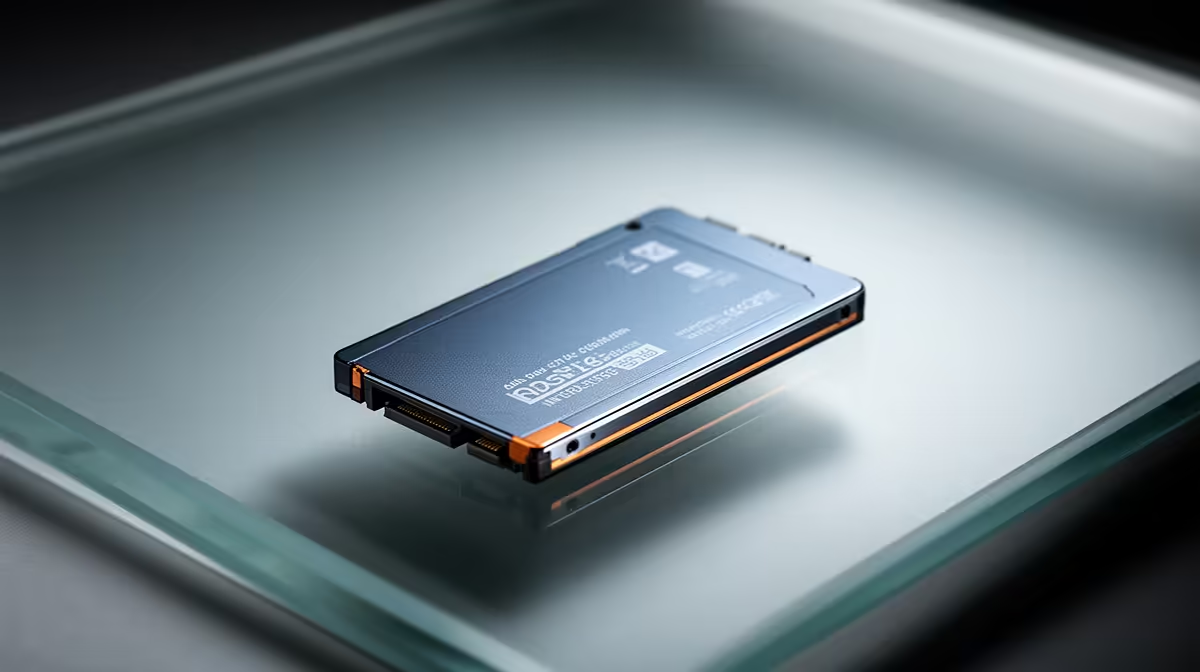
Internal SSDs come in two main types: NVMe drives in an M.2 slot and SATA drives in either M.2 or 2.5-inch form. NVMe Gen4 reaches 5,000-7,000MB/s, ideal for fast boots, quick game loads and large file work, while SATA caps at 550MB/s. For most current motherboards, NVMe is the clear pick since the slot is built in and no extra cables are needed. Gen5 drives push past 10,000MB/s but cost more and bring little real-world gain for gaming today.
Plan for capacity around your game library, since modern titles take 80-120GB each, so a 1TB drive suits most users while a 2TB drive better fits large Steam collections. Add a heatsink if your board lacks one for sustained heavy writes.
Value and capacity for SA builds
At Evetech, a 1TB Gen4 NVMe drive often sits around R1,500, the sweet spot for a boot and game drive. For large Steam libraries, a 2TB drive offers better cost per gigabyte. Check your motherboard's M.2 slots and their PCIe generation, since plugging a Gen4 drive into a Gen3 slot caps its speed. Add a heatsink for sustained heavy writes, as many high-end drives run warm under long transfers.
FAQ
Is NVMe worth it over SATA?
Yes for modern builds, since NVMe Gen4 is several times faster at 5,000-7,000MB/s. SATA only makes sense for older machines lacking an M.2 slot.
What capacity should I buy?
A 1TB Gen4 drive near R1,500 suits most users. Step up to 2TB for large game libraries, where cost per gigabyte improves.
Do I need a Gen5 SSD?
Not for gaming today, as Gen4 already loads games near-instantly. Gen5 costs more for gains most users will not notice in real use.
Confirm your M.2 slot's PCIe generation, then pick a 1TB Gen4 NVMe drive and contact Evetech for a build that boots fast.