Quick Answer
For cinematic story games, both ITX and mATX builds run them beautifully; choose ITX for the smallest footprint and mATX for cheaper parts and easier cooling. The trade-off costs roughly R1,500 to R2,500 more for an equivalent ITX build due to pricier small-form parts.
What Changes Between ITX And mATX
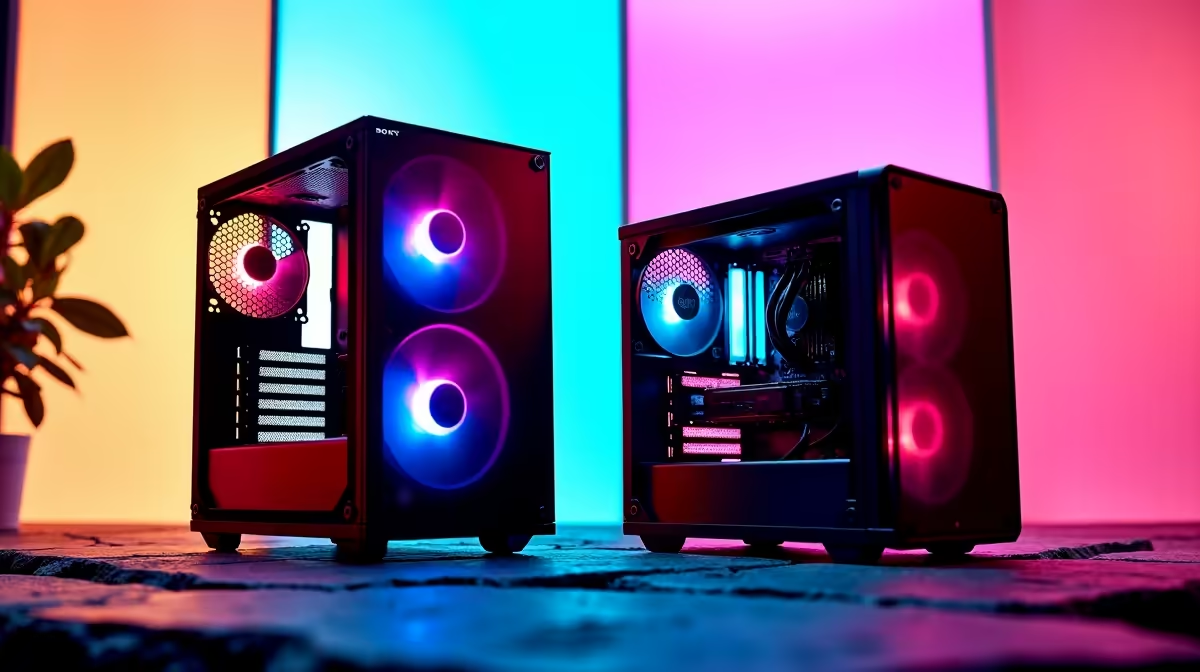
Story-driven games lean on the GPU and a smooth 60fps, which both formats handle equally with the same graphics card. The real differences are size, cost and thermals. ITX gives a tiny, lounge-friendly box but uses pricier mini boards and small coolers that run hotter. mATX is a little larger yet uses cheaper, more available boards, fits bigger air coolers, and leaves room for an extra drive or fan. For a cinematic single-player rig that sits on a desk or by a TV, the choice is mostly about space versus value.
Picking The Right Format For Story Games
If your space is tight or you want a console-sized box near the TV, ITX is worth the premium, just plan cooling carefully for the GPU. If value and quiet cooling matter more than size, mATX delivers the same frame rates for less and runs cooler. Either way, put the saved or spent rand into the GPU, since that is what drives the lush visuals these games are bought for.
FAQ
Does ITX or mATX run story games better?
Neither; with the same GPU they perform identically. The difference is size, cost and cooling, not frame rates in cinematic single-player games.
Why does ITX cost more?
Mini boards, small-form coolers and compact power supplies carry a premium, adding roughly R1,500 to R2,500 over an equivalent mATX build.
Which format runs cooler?
mATX, generally; its larger volume fits bigger air coolers and more fans, so the GPU and CPU run cooler and quieter than in a cramped ITX case.
Pick ITX only if a tiny footprint truly matters; otherwise mATX runs the same story games cooler and cheaper, leaving more budget for the GPU.