Aim, movement and abilities do not punish delay in the same way. Comparing keyboard latency vs mouse latency should follow the actions your game repeats most, then measure both devices inside the complete input-to-screen path.
Quick Answer
Mouse and keyboard latency matter according to the action. A mouse carries continuous aim and click timing in a shooter. A keyboard carries movement, counter-strafes, abilities and rhythm. Neither device wins every genre, and one extra millisecond is rarely the largest problem in isolation. Test the complete input-to-display chain. Upgrade the device with inconsistent reports, unwanted filtering, poor fit or a latency result that falls behind your frame and display setup. Shape, switches, software and control matter beside raw speed.
Latency begins before the game sees input
A mouse switch or keyboard key registers through its sensing method and firmware. Mechanical contacts can use debounce. Optical or magnetic designs use other filters and thresholds.
The device scans its controls and prepares a report. USB polling or wireless scheduling decides when that report reaches the host.
Published polling rate is not complete click latency. Firmware processing and report consistency can make two 1000Hz devices behave differently.
Mouse latency affects continuous aim
Mouse movement produces a stream of position reports. A late or uneven report can affect tracking, flick timing and the frame that captures a click.
Sensor behaviour, motion sync, polling stability and wireless placement matter. Shape and weight also decide whether you can make the intended movement.
A fast sensor cannot rescue a hand that fights the shell. Fit is part of real aim performance.
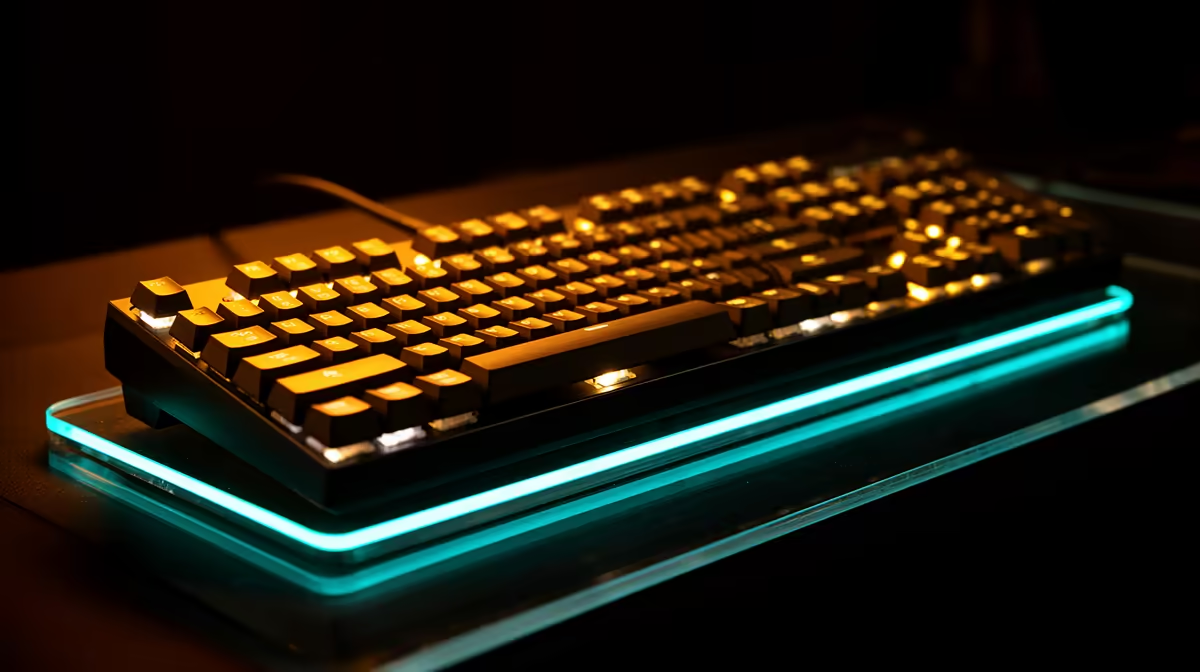
Keyboard latency affects movement timing
Movement keys decide when a strafe begins and ends. In a tactical shooter, that timing can influence when a player becomes accurate.
MOBA and MMO abilities can have longer game or server windows, but a missed or inconsistent key still matters. Rhythm games can expose scan and actuation consistency.
Rapid trigger and adjustable actuation change physical thresholds. They can reduce travel, while extreme values create unintended inputs.
Game genre changes the priority
Aim-heavy shooters put the mouse under constant use. A reliable click and clean sensor path deserve attention.
Movement-heavy arena play, rhythm games and titles with rapid ability sequences can make keyboard response more visible. A fighting game on keyboard can depend on direction handling and tournament rules.
Strategy and turn-based games give both devices more timing room. Comfort, layout and fatigue can outweigh a tiny latency gap.
Frame time can dominate both
The game samples input during its update and render loop. A 30ms frame-time spike delays mouse and keyboard together.
Use a stable frame cap, close background work and watch the graph. Do not buy a second input device to solve a CPU or shader hitch.
Display refresh and processing add the final visible wait. Confirm the correct refresh rate and low-latency display mode.
Compare devices with one method
Independent latency tests need a clear trigger, high-speed capture or specialised equipment and repeated samples. Look for method and variation.
Avoid comparing a manufacturer's best-case keyboard number with a reviewer mouse result from another setup. Use like-for-like sources where possible.
At home, run a repeatable aim drill and movement drill. Human performance will not measure a millisecond, but it can reveal fit, missed inputs and unstable wireless behaviour.
Check the mouse path
Set 1000Hz as a stable baseline, use the supported receiver or cable and turn off angle snapping for raw aim where the game benefits.
Test motion sync on and off when the mouse exposes it. Keep the mode with smooth reports and clean frame time.
Verify click debounce at defaults. A double-clicking switch is a reliability fault before it is a latency tune.
Check the keyboard path
Use a conventional profile with macros and SOCD automation disabled. Set a moderate actuation point and test every movement key.
For wireless boards, compare receiver and cable mode. Bluetooth can suit work while a low-latency receiver gives ranked play a stronger baseline.
Save profiles onboard and test after closing the app. Software that loads the wrong profile can matter more than the hardware number.
Upgrade the weaker experience
Replace the mouse first when aim shape is wrong, sensor reports stutter or clicks fail. Replace the keyboard first when keys chatter, rollover fails, layout blocks actions or movement settings cannot stay stable.
If both devices pass, improve frame rate, display or practice before chasing another millisecond. A balanced chain beats one flagship peripheral beside a broken layer.
There is no universal reasonable target that fits every test method. Compare against the frame budget, refresh rate and credible complete-device measurements.
Use a two-column decision
For the mouse, record sensor skips, click faults, wireless drops, shape discomfort and measured latency. For the keyboard, record missed keys, repeats, rollover, profile errors, actuation stability and measured response.
Mark each issue as absent, occasional or match-breaking. The device with a match-breaking fault comes first, even when the other has a slower published number.
If neither side fails, borrow or try a known device before buying. A change in shape can improve aim, while a layout change can hurt movement until you adapt. Give the test enough time to separate learning from latency.
Match upgrade cost to the rest of the chain
A low-latency keyboard beside a 60Hz television with processing enabled will not deliver the advertised complete response. A flagship mouse on a CPU-stalled game also waits for the next frame.
Allocate the budget across stable FPS, display mode and input reliability. Replace a broken switch before raising polling, and fix a loose wireless receiver before changing sensor class.
Keep the old device until the new one passes every binding and a full week. A known backup is useful at a LAN and during warranty service.
Complete the keyboard side
Browse gaming keyboard deals for switch, polling and profile details. The keyboard best-seller selection can help compare established layouts and ownership features.
Keep a balanced test sheet
Write device mode, polling, frame cap, display refresh, drill and errors. Change the mouse, keyboard or display layer one at a time.
Keep the upgrade that removes a repeatable problem. Return to the old setting when the only improvement lives in the product box.
FAQ
Does mouse latency matter more?
It often matters more for continuous aim, while keyboard timing drives movement and abilities. The game and fault decide.
Can a cheap keyboard hold back a good mouse?
It can when it misses keys, has unstable latency or poor rollover. Price alone does not prove any of those faults.
Which should you upgrade first?
Choose the device with the measured inconsistency, poor fit or missing control. Fix shared frame and display delay before replacing both.
Run one aim drill and one movement drill with stable frame time, then upgrade the input that shows a real fault rather than the smaller marketing number.